










Programming controllers for kinetic light sculptures
Practical guide to programming controllers for kinetic light sculptures using DMX, Art‑Net, sACN and pixel protocols. Covers hardware selection, mapping, motion sync, safety, commissioning and maintenance, plus FENG-YI's capabilities for Kinetic Light projects.
- Programming controllers for kinetic light sculptures
- Why controller programming matters for kinetic lights
- Core control architectures for kinetic lights (and when to use them)
- Quick comparison table of controller types
- Understanding protocols: DMX512, Art‑Net, sACN and pixel protocols
- Wiring, grounding and power distribution for moving installations
- Motion control and kinematics: translating choreography into actuator commands
- Mapping, addressing and visual programming for kinetic lights
- Programming workflows and software: from prototype to show release
- Testing, commissioning and debugging kinetic lights
- Safety, maintenance and lifecycle considerations for Kinetic Light projects
- FENG-YI: capabilities and how we support Kinetic Light projects
- Example: tying together motion and pixel effects using Madrix + Art‑Net
- Deployment checklist for a Madrix + motion controller setup
- FAQ — Programming controllers for kinetic light sculptures
- Q: Which protocol should I choose for 5000 RGB pixels in a public installation?
- Q: How do I ensure repeatable motion for choreography?
- Q: Can I program kinetic lights remotely?
- Q: What are the most common causes of jittery LEDs during motion?
- Q: Do I need a professional installer for kinetic light projects?
- Contact and product CTA
- Sources and references
Programming controllers for kinetic light sculptures
Why controller programming matters for kinetic lights
Kinetic lights combine motion and illumination to create responsive, dynamic sculptures. The controller is the brain that coordinates motor positions, light states, timing, and interactive elements. Proper programming of controllers for kinetic light sculptures ensures smooth motion, reliable playback, precise timing with visual effects, and safe operation. If you are commissioning, specifying, or programming a kinetic lights installation, understanding the tradeoffs between different control architectures and workflows will save time and budget and reduce long‑term maintenance headaches.
Core control architectures for kinetic lights (and when to use them)
Choosing the right controller architecture is the first practical decision. Typical architectures fall into three categories: centralized lighting consoles/media servers, distributed embedded controllers (pixel/motion nodes), and microcontroller/PLC-based motion controllers. Each has advantages depending on scale, required precision, budget, and integration needs.
- Lighting console / media server (e.g., grandMA, Madrix, Resolume) — best for large shows, tight timeline sync, and complex pixel effects. Pros: powerful timeline/timeline cues, professional support, robust networking. Cons: higher cost and steeper learning curve.
- Distributed pixel/motion nodes (Art‑Net / sACN nodes + motor controllers) — ideal for mid-to-large installations where art modules are spread out. Nodes handle local decoding; a central server or console drives effects with high scalability.
- Microcontrollers and PLCs (Arduino, ESP32, industrial PLCs) — suitable for custom, cost-sensitive projects or where bespoke sensor loops and firmware are required. Pros: flexible and low-cost; Cons: requires firmware development and more testing for reliability.
Quick comparison table of controller types
| Controller Type | Best For | Scalability | Latencies & Precision | Typical Cost |
|---|---|---|---|---|
| Lighting console / media server | Large shows, pixel effects, timeline sync | Very high | Very low latency, professional timing | High |
| Distributed Art‑Net/sACN nodes | Distributed installations, modular setups | High | Low (depends on network) | Medium |
| Microcontroller / PLC | Custom motion control, low-budget builds | Medium | Variable (depends on firmware) | Low to Medium |
Sources for comparison: ESTA E1.11/E1.31 standards, Art‑Net documentation, product pages from MA Lighting, Madrix, ENTTEC.
Understanding protocols: DMX512, Art‑Net, sACN and pixel protocols
Protocol choice affects wiring, addressing, latency, and ease of programming. For kinetic lights, you will commonly use DMX512 for conventional fixtures and motorized drivers, Art‑Net or sACN for large numbers of pixels and distributed nodes, and vendor-specific pixel protocols (WS2811/WS2812, APA102) for LED strips.
Practical notes:
- Use DMX512 for direct control of traditional fixtures and many motor controllers. DMX is reliable for hundreds of channels within short cable runs.
- Use Art‑Net or sACN to carry many DMX universes over Ethernet—this simplifies cabling for large kinetic grids and allows remote nodes to host local decoders.
- For individually addressable LEDs, choose controllers that map pixels to Art‑Net/sACN or to a media server (Madrix is a common solution) to simplify effect creation.
Note: Always follow the electrical and termination guidelines of each protocol to avoid signal corruption and unpredictable motion responses.
Wiring, grounding and power distribution for moving installations
Physical wiring for kinetic lights differs from static lighting due to moving cables and power demands of both motors and LEDs. Pay attention to cable management (drag chains, slip rings for continuous rotation), separate power & signal paths where appropriate, and ensure voltage drop calculations for long runs.
- Use slip rings when continuous rotation is required to avoid cable fatigue.
- Keep DMX and low-voltage data cables separated from high-current motor cables to reduce EMI.
- Calculate power distribution for LEDs (amps per meter) and motor stall currents; design breakers and fuses accordingly.
Motion control and kinematics: translating choreography into actuator commands
Kinetic sculptures require accurate motion profiles—acceleration, deceleration, and mechanical limits must be programmed into controllers to prevent damage and ensure artistic intent. There are two common approaches:
- Use motion controllers or motor drivers with built-in motion profiles (stepper/servo drivers) and let higher-level software send position/time waypoints.
- Implement motion profiling in a real-time controller (PLC or MCU) that runs closed-loop feedback using encoders and limit switches.
Key programming tips:
- Always include soft and hard limits in firmware to prevent out-of-range motion.
- Design acceleration curves (S-curve) to minimize jerk that could fatigue mechanical components.
- Synchronize motion with light cues via timestamps or centralized timeline control to ensure repeatable choreography.
Mapping, addressing and visual programming for kinetic lights
Mapping is the process of assigning light/motor channels to spatial positions in your control software. This step directly affects how designers create visual effects. Use a consistent addressing scheme and document it.
Workflows:
- In a pixel-based workflow, export a pixel map (X,Y,Z) from CAD or the physical layout into the media server or lighting software. Many tools accept CSV or JSON mappings.
- For motorized elements, map logical actuator IDs to physical axes and record calibration offsets so motion cues are portable across systems.
Tools like Madrix, Resolume and some consoles provide intuitive visual mapping interfaces; for custom systems, you may build a small utility that translates CAD coordinates into controller addresses.
Programming workflows and software: from prototype to show release
A repeatable programming workflow reduces errors and shortens commissioning time. A recommended pipeline:
- Prototype effects on a bench with representative hardware (one module of motors + LEDs).
- Develop and version-control control scripts/patches and mapping files.
- Create timeline-based cues for show playback in the media server or console, and store motion profiles as reusable assets.
- Conduct staged integration: electronics → mechanical → full lighting integration → safety checks → dress rehearsal.
Madrix and other media servers excel at pixel effects and can output Art‑Net/sACN to distributed nodes; lighting consoles excel at cue lists and complex timelines. Many projects benefit from combining both: use a media server for continuous pixel effects and a lighting console for show cues and external sync.
Testing, commissioning and debugging kinetic lights
Testing should cover electrical, data integrity, motion ranges, thermal behavior, and network load. A checklist approach is effective:
- Verify power rails under full load; measure voltages at farthest fixtures.
- Load test network traffic (Art‑Net/sACN) and monitor for packet loss or jitter.
- Run full-motion sequences at reduced speed to validate mechanical clearances and timing before increasing speed.
- Check for EMI between motor drivers and data lines and add shielding or separation if required.
For debugging, use packet sniffers (Wireshark with Art‑Net/sACN filters), DMX testers, and scope measurements on motor driver lines when diagnosing intermittent behavior.
Safety, maintenance and lifecycle considerations for Kinetic Light projects
Kinetic light sculptures have moving parts and should follow risk assessment procedures. Incorporate the following into both programming and operation plans:
- Emergency stop integration at hardware and software levels; ensure E‑stop immediately disables both motion power and effects that could mask failure.
- Regular maintenance schedules for bearings, drag chains, slip rings, and LED modules. Log firmware updates and keep a spare parts inventory for critical components.
- Limit operational duty cycles in software if the system is prone to heat buildup; monitor LED temperature where applicable.
FENG-YI: capabilities and how we support Kinetic Light projects
Since its establishment in 2011, FENG-YI has been continuously innovating and has grown into a creative kinetic light manufacturing service provider with unique advantages. The company is committed to exploring new lighting effects, new technologies, new stage designs, and new experiences. Through professional Kinetic Light art solutions, we empower emerging performance spaces, support the development of new performance formats, and meet the diverse needs of different scenarios.
Located in Huadu District, Guangzhou, the company currently has 62 employees, including an 8-member professional design team and 20 highly experienced technical service staff. FENG-YI has become a High Quality user of Madrix software in mainland China, offering both on-site installation & programming as well as remote technical guidance services for Kinetic Light projects.
With a total area of 6,000㎡, FENG-YI owns China’s largest 300㎡ art installation exhibition area and operates 10 overseas offices worldwide. Our completed Kinetic Light projects have successfully reached over 90 countries and regions, covering television stations, commercial spaces, cultural tourism performances, and entertainment venues.
Today, FENG-YI is recognized as a leading kinetic lights scene solution provider in the industry, delivering innovative lighting experiences that integrate technology and creativity.
How FENG-YI helps your controller programming needs:
- Turnkey Kinetic Light solutions combining mechanical design, power architecture, and control programming.
- On-site installation and programming to integrate Madrix-based pixel workflows with motor controllers and standard lighting consoles.
- Remote technical guidance for commissioning and firmware updates to support global deployments across 90+ countries.
Example: tying together motion and pixel effects using Madrix + Art‑Net
A common, practical approach is to use Madrix for pixel effects and Art‑Net to distribute those pixel universes to nodes, while a lighting console or a motion controller handles motor axes and show cues. Program motion waypoints into the motion controller with triggers linked to the lighting console’s cue list. Use network time protocols (e.g., NTP or the console’s internal timing) to synchronize playback across systems.
Deployment checklist for a Madrix + motion controller setup
- Prepare pixel mapping CSV from CAD and import into Madrix.
- Patch Art‑Net universes in Madrix to your nodes and verify pixel order on a test pattern.
- Configure motion controller to accept show triggers from the console (MIDI, TCP, or OSC) and test sync on slow motion pass.
- Run full show and record logs for performance tuning; adjust acceleration profiles to match visual effects timing.
FAQ — Programming controllers for kinetic light sculptures
Q: Which protocol should I choose for 5000 RGB pixels in a public installation?
A: Use Art‑Net or sACN to carry many universes across Ethernet. Combine with distributed pixel nodes (Ethernet-to-pixel decoders) to reduce cable runs. For effects software, Madrix or a media server that supports Art‑Net/sACN is a good match.
Q: How do I ensure repeatable motion for choreography?
A: Use closed-loop motor drivers with encoders, store calibrated positions, and use time-stamped cues from a central timeline (console or media server). Implement soft/hard limits and motion profiles (S-curve) in the controller firmware.
Q: Can I program kinetic lights remotely?
A: Yes—many projects use secure remote access to update mappings, firmware, and effects. Ensure robust fallback procedures (local safe-state mode) in case of network loss, and protect access with VPNs and credential management.
Q: What are the most common causes of jittery LEDs during motion?
A: Common causes include network packet loss (Art‑Net/sACN), EM interference from motor drivers, power supply sag, or insufficient grounding. Diagnose by isolating systems, monitoring network performance, and checking power rails under load.
Q: Do I need a professional installer for kinetic light projects?
A: For installations of any complexity—especially public or permanent works—professional design, installation and commissioning are strongly recommended. Professionals handle mechanical tolerances, safety certifications, and long-term maintenance planning.
Contact and product CTA
Ready to design or commission a Kinetic Light project? Contact FENG-YI for a consultation, on-site programming, or remote technical support. View our Kinetic Lighting solutions and schedule a demo in our 300㎡ exhibition space to experience how motion and lighting can transform your venue.
Sources and references
- ESTA E1.11 (DMX512) and E1.31 (sACN) protocol standards — Entertainment Services & Technology Association.
- Art‑Net protocol specification — Artistic Licence.
- Madrix product documentation and workflow guides.
- MA Lighting product pages (grandMA consoles) and technical specifications.
- ENTTEC product pages for Art‑Net/sACN nodes and pixel decoders.
- Arduino and Espressif (ESP32) technical documentation for microcontroller-based control nodes.
Tags
kinetic led line lights
kinetic led line lights
Kinetic LED lights
Kinetic LED lights
kinetic triangle moving led light panel
kinetic triangle moving led light panel
kinetic triangle led wall panels for stage
kinetic triangle led wall panels for stage
interactive kinetic light art
interactive kinetic light art
waterproof stage lighting
waterproof stage lighting
Recommended for you
How to photograph and film kinetic lighting installations
Waterproof Profile Light: Ultimate Buying Guide 2026
Future innovations in kinetic lighting technology
Choosing LEDs and Drivers for Waterproof Profile Lights
Prdoucts Categories
Question you may concern
Logistics Services
Can on-site installation services be provided? How is the installation fee calculated?
On-site installation services are supported, and the fee is calculated based on the installation difficulty and region:
▪ Regular installation (e.g., bar PAR lights, front lights in small studios): 50-100 RMB/unit in prefecture-level cities and above, 80-150 RMB/unit in county-level regions.
▪ Large-scale installation (e.g., elevating lights in stadiums, moving head light groups for music festivals): Quoted based on the overall project (including travel expenses of installers and tool usage fees). Specific details require providing the installation site floor plan and the number of lights, and the engineering team will formulate a plan before quoting.
What logistics method is used by default for products? What is the delivery time for different regions in China?
Dedicated line logistics (e.g., Anneng, Best Express) is used by default. Express delivery (e.g., SF Express, JD Express) or full-truck transportation can also be arranged according to customer needs. Delivery time:
▪ East China/South China/Central China: 3-5 days.
▪ North China/Southwest China: 5-7 days.
▪ Northeast China/Northwest China: 7-10 days.
▪ Remote areas (e.g., Xinjiang, Tibet): 10-15 days, with an additional remote area freight charge (calculated by weight, specific details to be confirmed with the logistics department).
After-Sales Support
Can technical training be provided? For example, teaching customers how to debug DMX consoles and set light addresses.
Free technical training is supported:
▪ Online training: Operation video tutorials and live teaching (e.g., a "DMX Light Control Practical Course" once a month) are provided.
▪ Offline training: For wholesale customers (with a single purchase of ≥ 100 units), technicians can be arranged for on-site training (1-2 days, including console debugging, address setting, and fault troubleshooting).
▪ Customized training: For large-scale projects (e.g., stadium lighting projects), on-site technical guidance can be provided (charged based on the project cycle, specific details to be negotiated).
Products
What is the service life of LED lamp beads? Is professional personnel required for later replacement?
All our lights adopt imported LED chips, with a service life of ≥ 50,000 hours under normal use (8 hours of daily use can last for 17 years). The replacement of lamp beads requires professional operation—due to the involvement of wire soldering and heat dissipation adaptation, unprofessional operation may cause short circuits or uneven light effects. You can contact the after-sales team for on-site replacement or repair-by-mail services.
You may also like
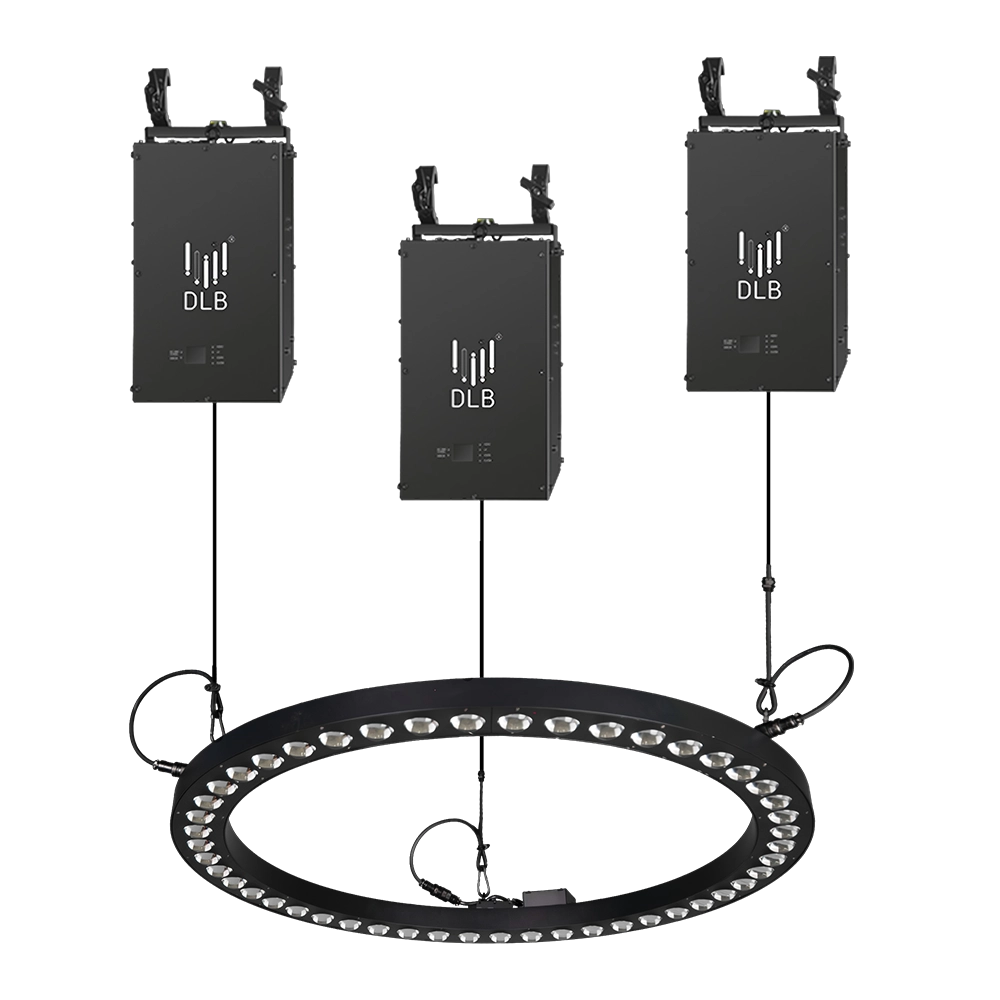
Kinetic Halo Ring——Ideal for a wide range of large-scale events: commercial spaces, TV shows, concerts, nightclubs, and various other settings.
Experience dynamic illumination with the FENG-YI Kinetic Halo Ring. This versatile kinetic light is perfect for large-scale events—commercial spaces, TV shows, concerts, and nightclubs—delivering stunning kinetic ring light effects that captivate every audience.
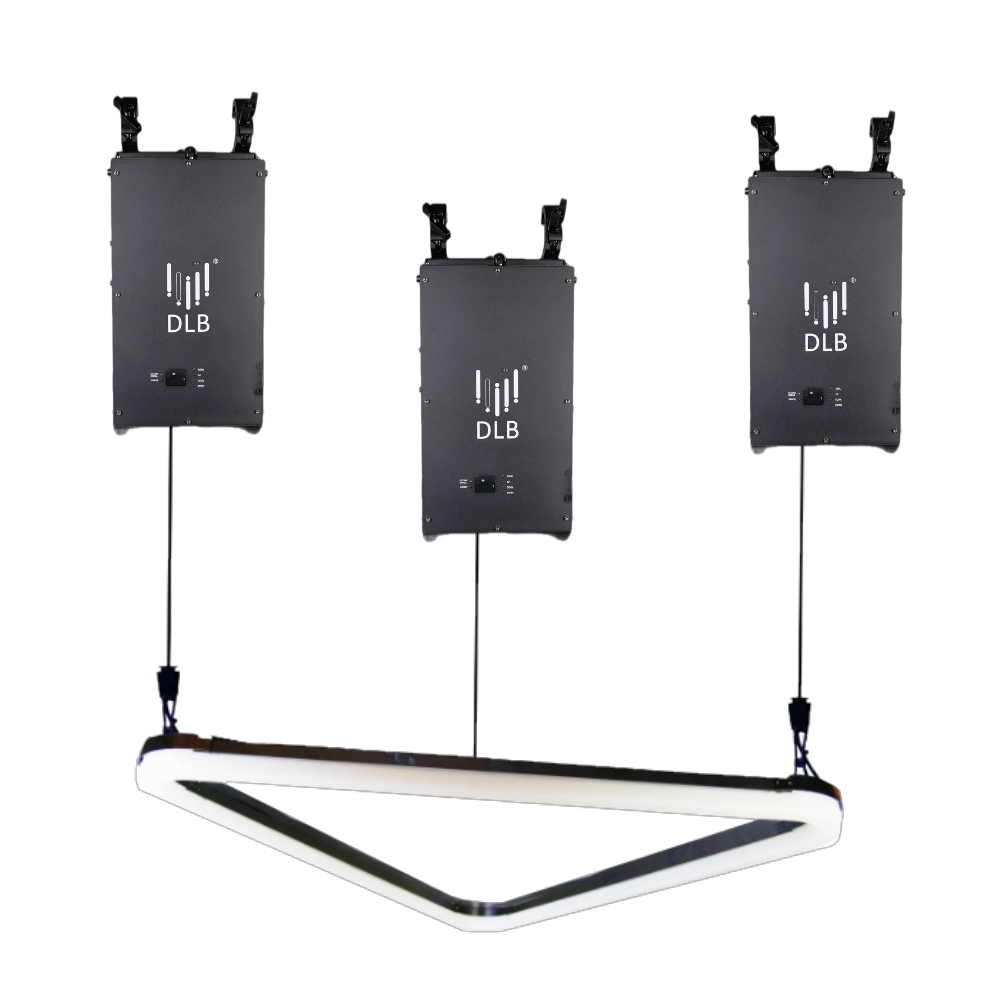
Kinetic Arc Light——Ideal for a wide range of large-scale events: commercial spaces, TV shows, concerts, nightclubs, and various other settings.
FENG-YI’s Kinetic Arc Light is a kinetic triangle LED light panel designed for large-scale events. Perfect for commercial spaces, TV shows, concerts, and nightclubs, it delivers dynamic lighting effects that captivate audiences and elevate any setting. Ideal kinetic light solution.
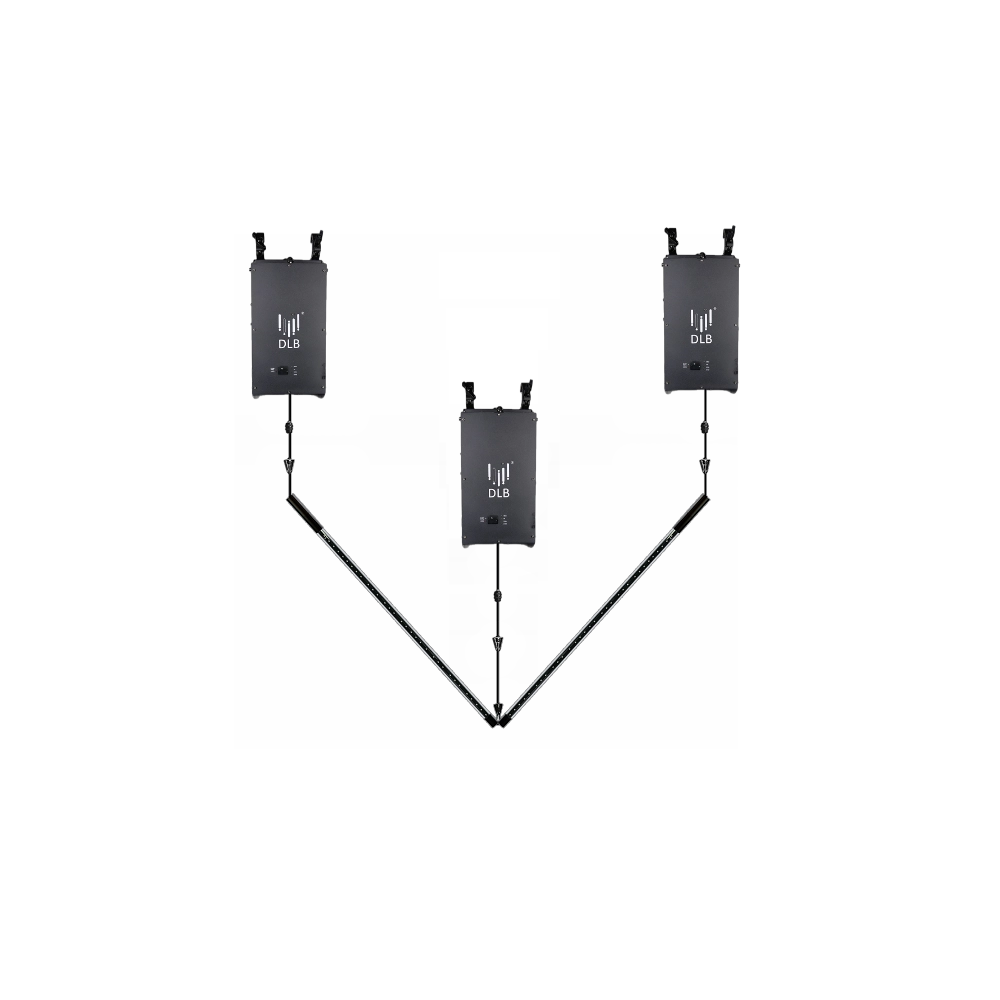
Kinetic Double Rod——Ideal for a wide range of large-scale events: commercial spaces, TV shows, concerts, nightclubs, and various other settings.
FENG-YI’s Kinetic Double Rod delivers dynamic kinetic light effects ideal for large-scale events—from concerts and nightclubs to TV shows and commercial spaces. Elevate your setup with this versatile kinetic light rod, designed for stunning visual impact and seamless integration.
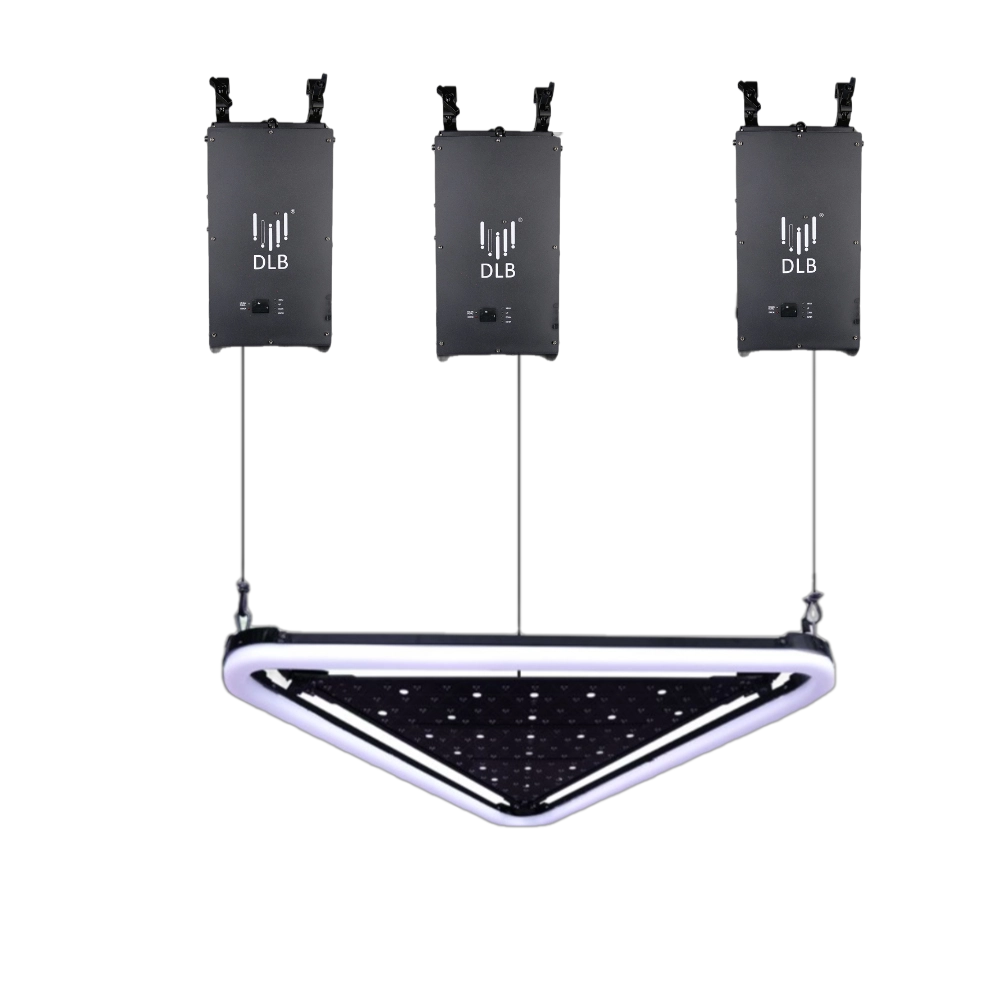
Kinetic Arc Panel——Ideal for a wide range of large-scale events: commercial spaces, TV shows, concerts, nightclubs, and various other settings.
FENG-YI’s Kinetic Arc Panel features dynamic kinetic light technology with kinetic triangle LED light panels, perfect for enhancing large-scale events like concerts, TV shows, nightclubs, and commercial spaces. Elevate your visual experience with innovative, high-impact lighting solutions.
Want to learn more about the latest updates?
Have questions or ready to illuminate your project? Reach out to our expert team today.
Rest assured that your privacy is important to us, and all information provided will be handled with the utmost confidentiality.
By clicking "Send your message," I agree to your processing my personal data.
To see how to withdraw your consent, how to control your personal data, and how we process it, please see our Privacy Policy and Terms of Use.

FENG-YI has been continuously innovating and has grown into a Kinetic Lights Manufacturer and solution provider with unique advantages.
Contact
+86 181 2785 5301
Address
Building 5, No. 34, Fuyuan Road, Jinghu IndustrialZone, Xinhua Town, Huadu District, Guangzhou, China.
© 2025 FENG-YI. All Rights Reserved.
Facebook
Instagram
YouTube
TikTok