









Kinetic Lighting Design Services for Custom Venues and Stages
FENG-YI develops kinetic lighting concepts for stages, entertainment venues, TV studios, exhibitions, and commercial spaces. We help project teams define motion effects, fixture types, suspension layouts, control requirements, and technical documentation before production. Share your venue drawings, ceiling conditions, preferred visual effect, quantity, control platform, and schedule to receive a practical design direction for your project.
Turn Creative Ideas into Practical System Plans
A successful kinetic lighting design connects the visual concept with venue conditions, equipment capability, control logic, installation access, budget, and project timing. FENG-YI organizes these inputs into a design direction that helps owners, production teams, contractors, and integrators compare options before purchasing. The goal is to reduce specification gaps, clarify responsibilities, and provide a practical basis for quotation, production, installation, and programming coordination.
↳ Contact the Design Team
Kinetic Lighting Design Workflow
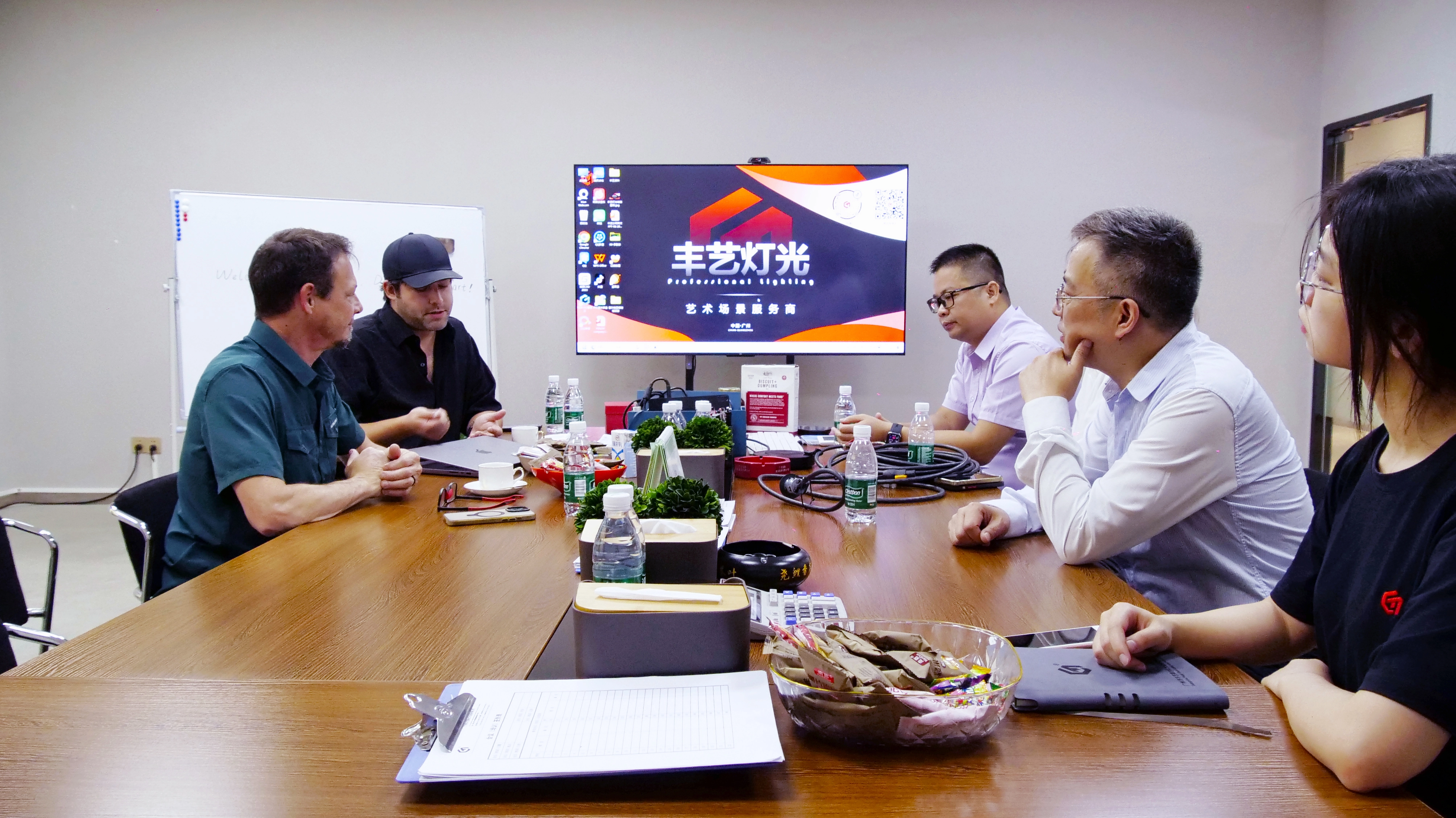
Each project moves through requirement review, equipment selection, layout planning, technical data coordination, and scheme confirmation. The scope can be adjusted according to venue type, system complexity, available drawings, local engineering responsibilities, and the level of visualization required. Clear review points help the customer and project team confirm specifications before production begins.
01. Select Fixtures and Winches for the Project
FENG-YI compare fixture shape, suspended weight, movement range, speed, grid density, control channels, venue clearance, maintenance access, and intended use. Recommendations are matched to the visual concept and confirmed project conditions rather than fixed product bundles. For custom elements, provide dimensions, materials, weight, power requirements, mounting details, and finish expectations so the team can evaluate a suitable winch and system direction.
▪ Selection Logic: Screen equipment in accordance with the principle of "core functions → scenario adaptation → budget matching" to avoid over-configuration.
▪ Selection Requirements: All equipment shall comply with CE/ROHS standards. For customized equipment (e.g., special-angle brackets), "production cycle + testing standards" shall be specified.
▪ Equipment Selection Examples for Common Scenarios:
| Performance Type | Core Luminaire Selection | Supporting Equipment |
| Small and medium-sized dramas |
Front lights (4 units of 200W LED front lights, Color temperature 5600K), Spotlights (2 units of 300W imaging spotlights with adjustable light spots) |
DMX console (Good MA2 mini), 1 signal amplifier |
| Stadium concerts |
Moving head lights (12 units of 280W beam lights), Kinetic light (4 sets of hydraulic kinetic light frames, 3 color lights per set), 7-unit 60W color lights (10 units, for coloring around the stage) |
Large DMX console (MA3), 1 terminator per circuit, Backup power supply (1 unit of 200 kW generator) |
02. Plan the Layout, Circuits, and Control Network
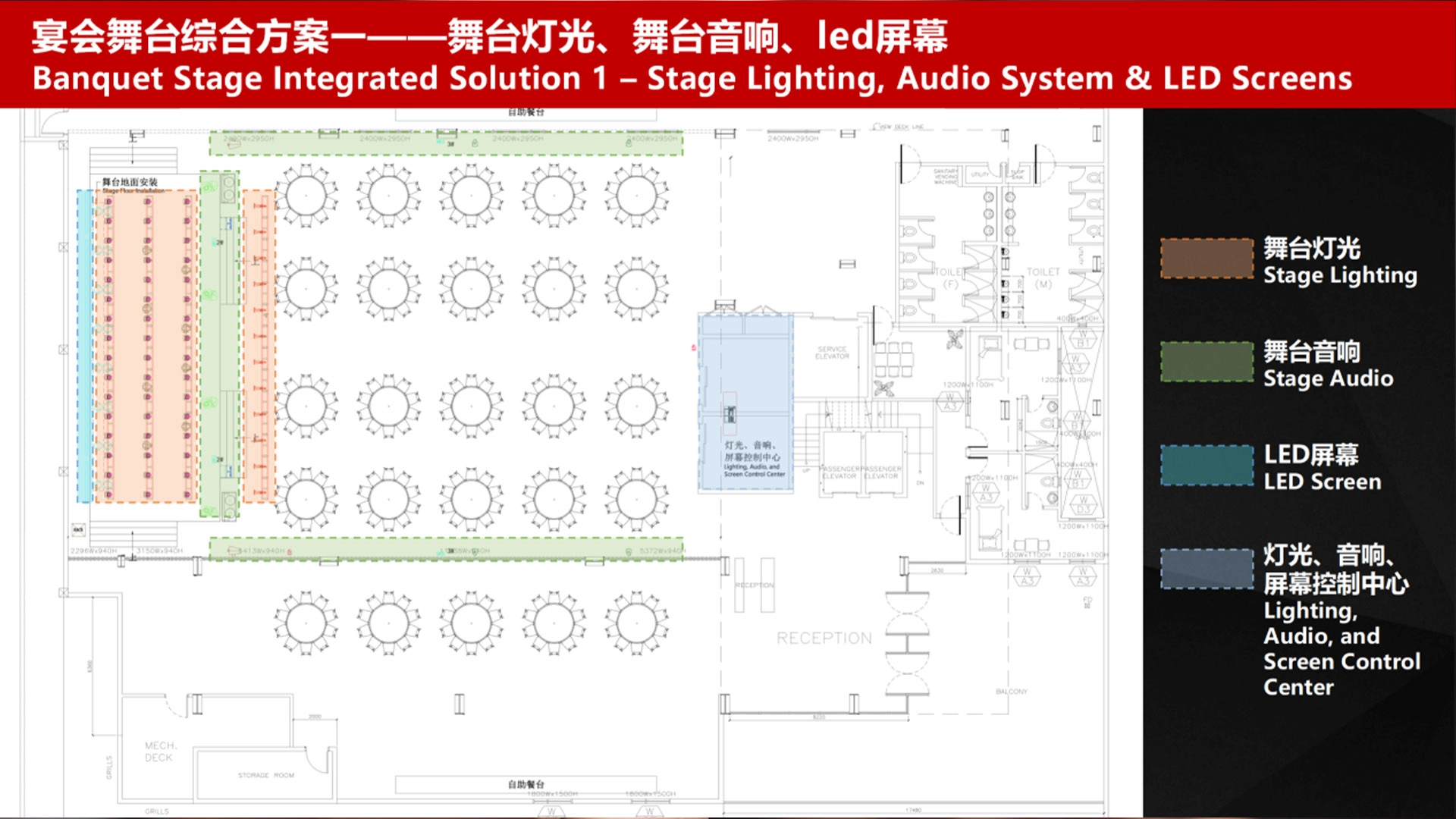
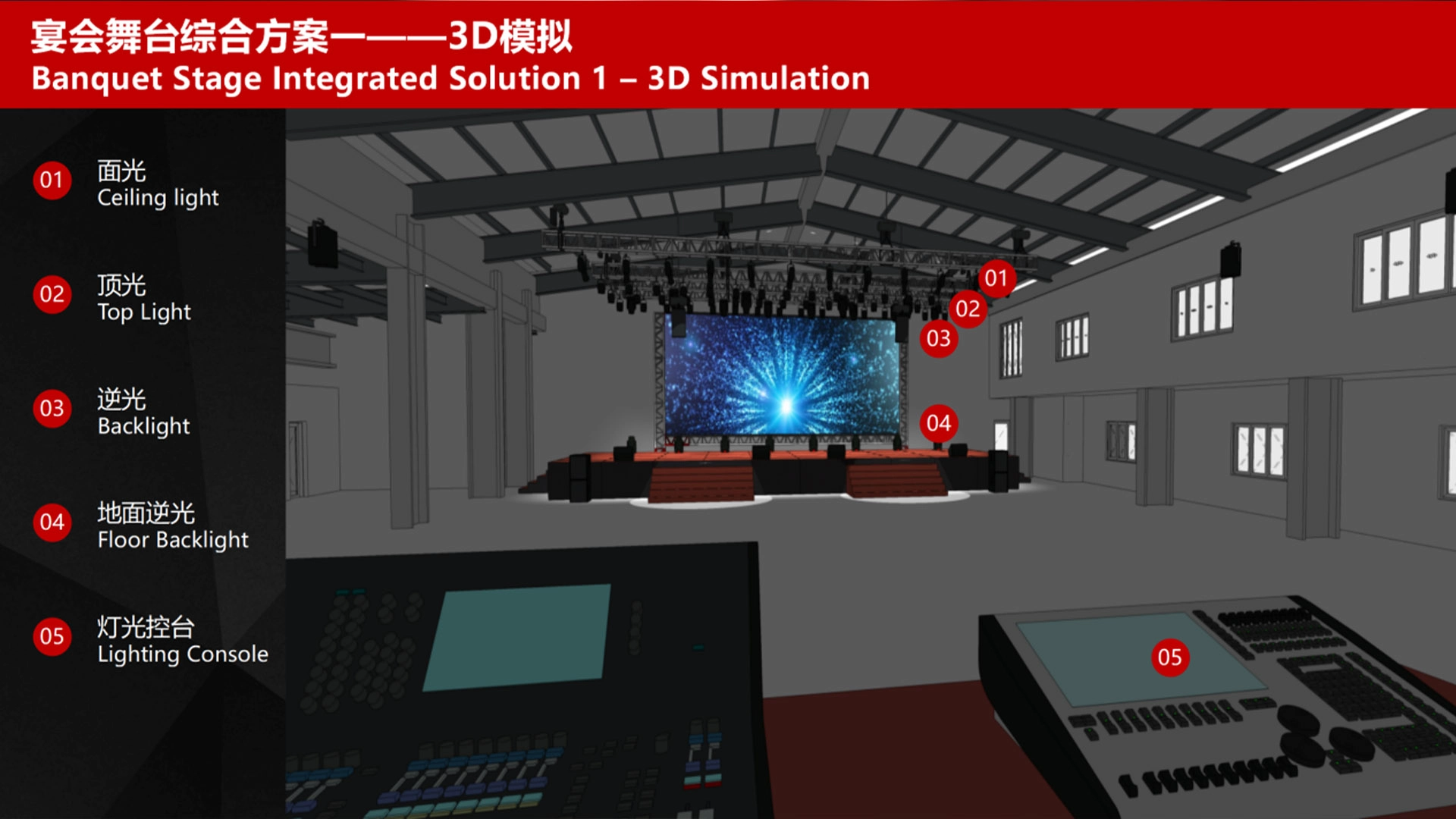
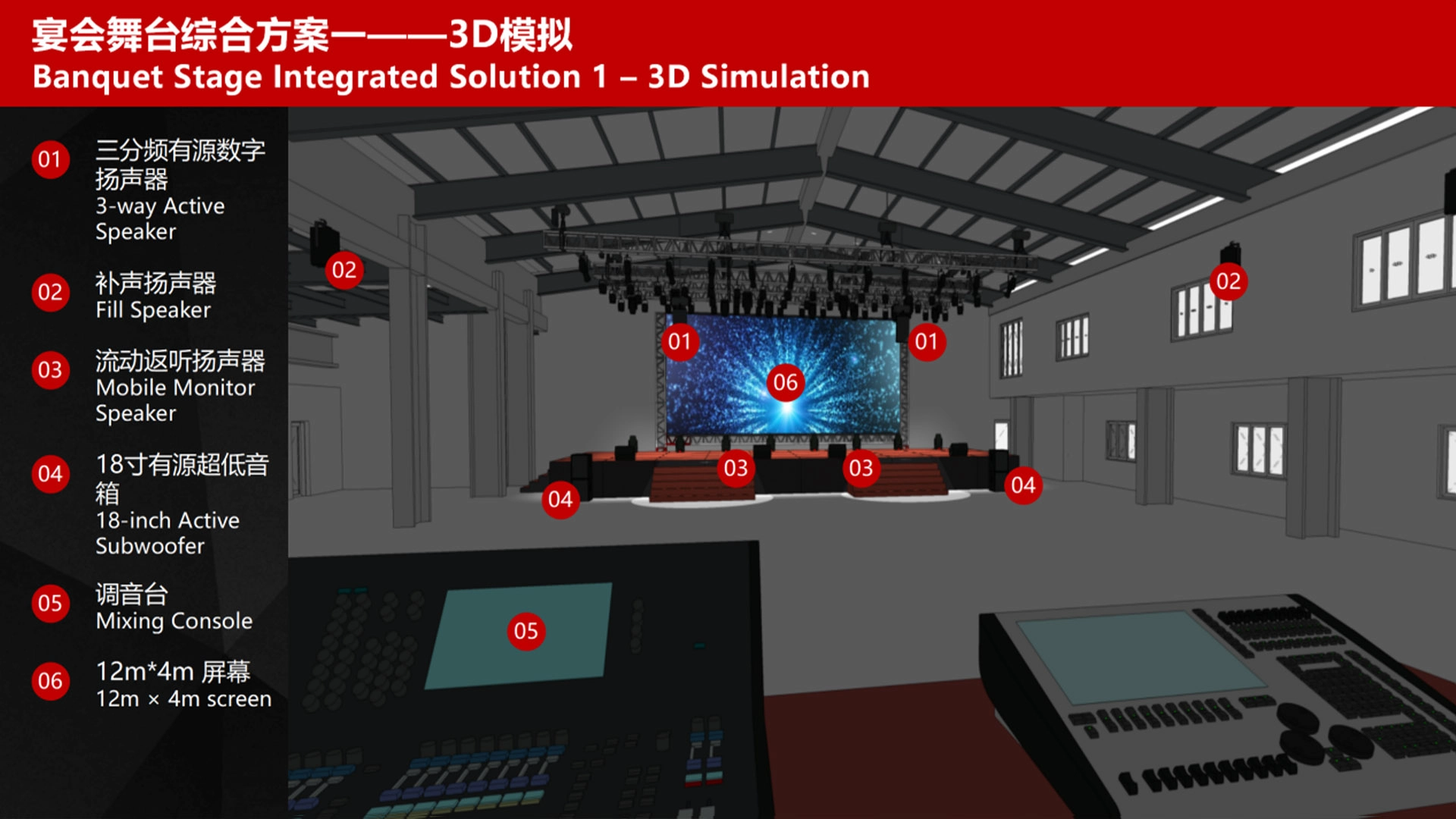
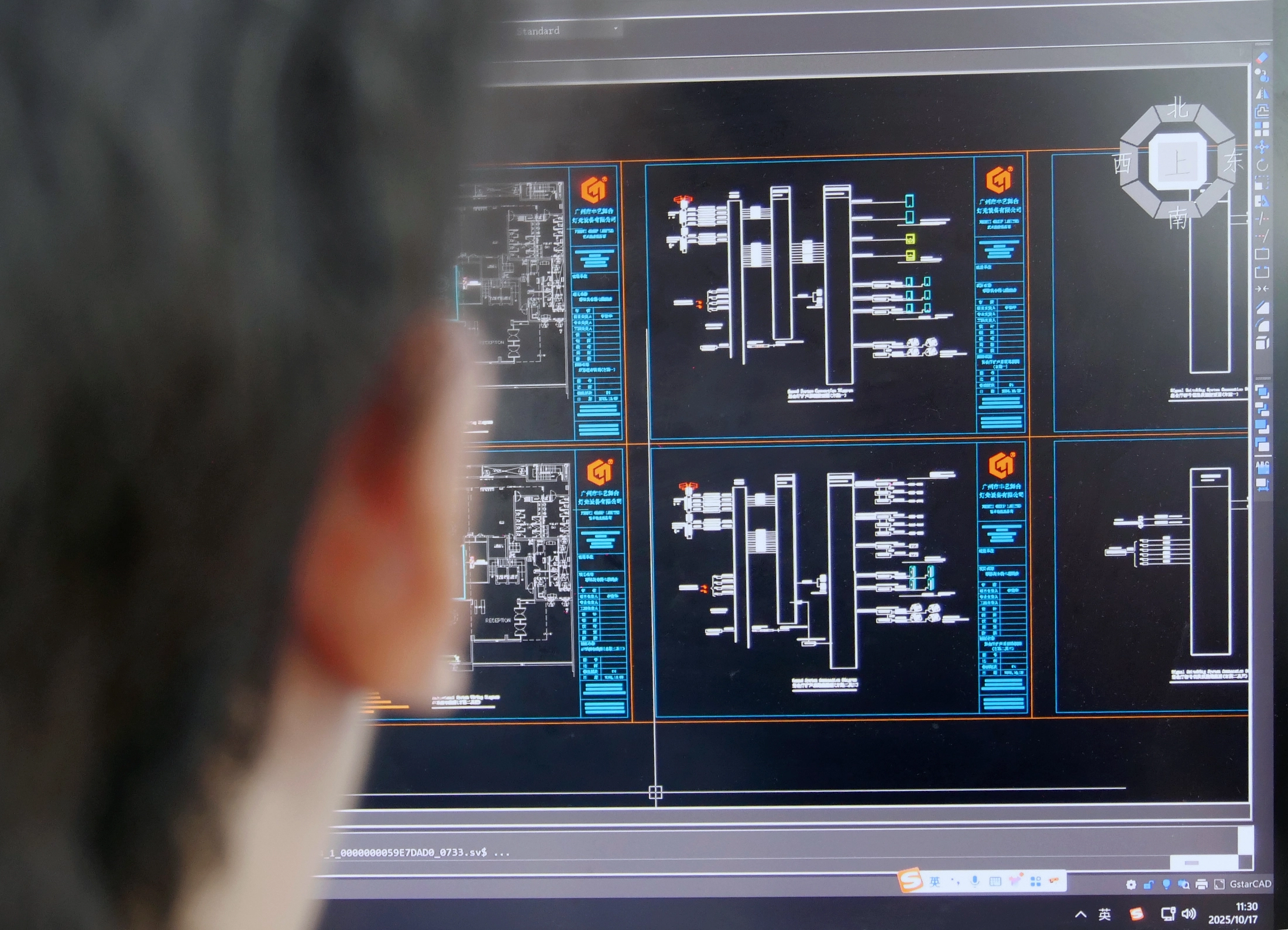
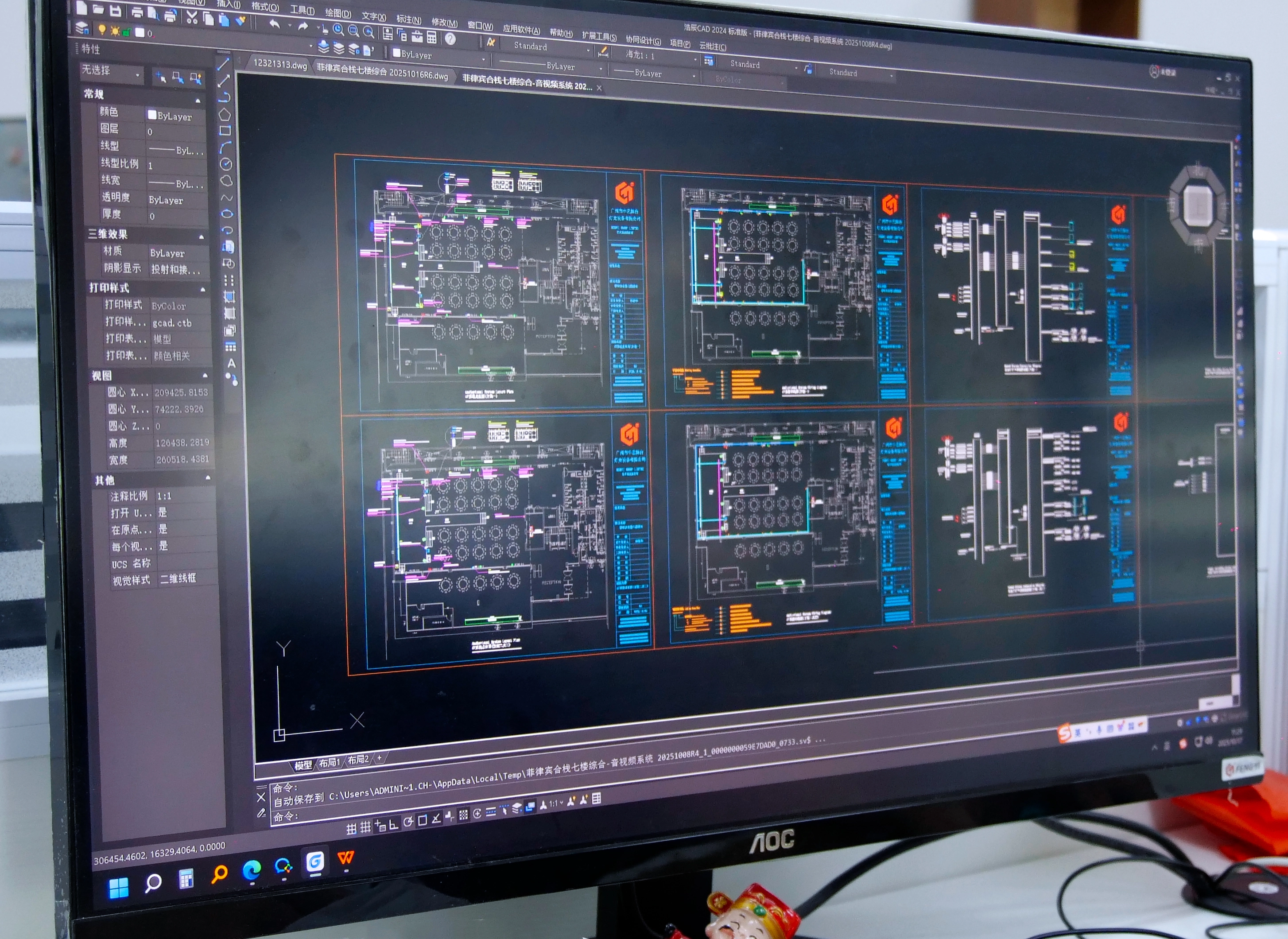
Layout planning considers fixture positions, suspension points, movement zones, power distribution, signal routes, controller locations, access paths, and interaction with other stage or architectural systems. Depending on the project scope, FENG-YI can prepare layout references and 3D visualizations using available design tools. Final structural, electrical, fire-safety, and rigging approval should be completed by qualified local professionals where required.
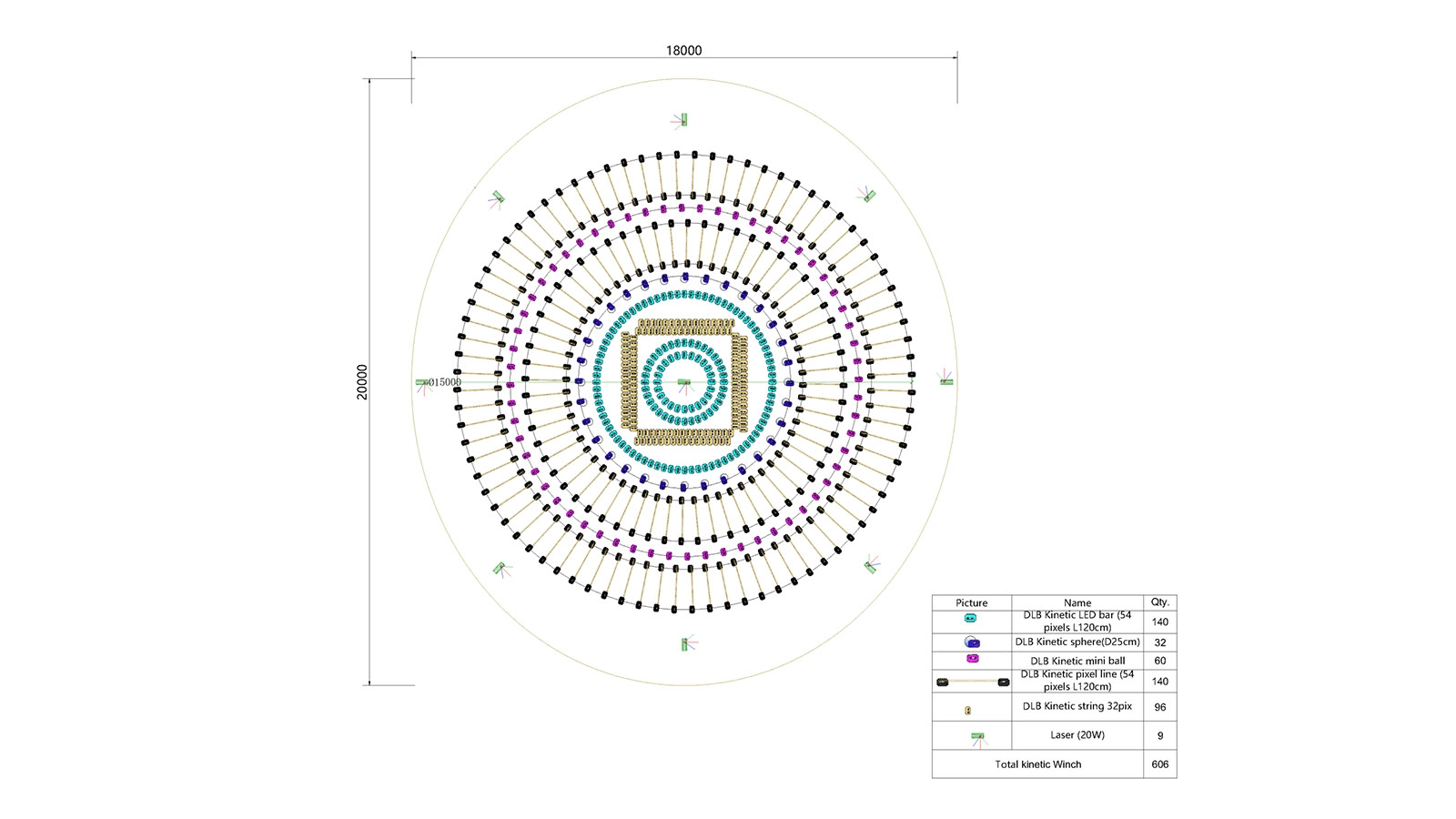
▪ Tools: DIALux (for lighting effect simulation), AutoCAD (for layout drawing), Wysiwyg (for 3D visualization demonstration);
▪ Layout Design:
◦ Mark the positions of luminaires: e.g., "Install a moving head light at position 1 of the truss above the stage, with an angle of 30° to illuminate the middle area of the stage," "Install 60W color lights on the ground on both sides of the stage, with an angle of 45° to color the background backdrop";
◦ Circuit Planning: Route power cables (red) and signal cables (blue) separately with a spacing of ≥30cm (to avoid signal interference). Mark the circuit direction (e.g., "From the power box on the left side of the stage → truss power distribution box → each luminaire") and wire diameter (e.g., "Main wire: 6 mm², branch wire: 2.5mm²").
▪ 3D Visualization: Output 3D renderings (including daytime/nighttime lighting effects) to enable customers to intuitively perceive the final presentation effect.
03. Confirm Loads, Channels, and System Capacity
Technical calculations should be based on the selected equipment, actual cable lengths, local electrical conditions, structural information, operating mode, and applicable regulations. FENG-YI can provide product weights, rated loads, power data, channel requirements, and configuration information to support project planning. Universal safety factors or power allowances should not be applied without engineering review; qualified local professionals should confirm structural capacity, electrical protection, rigging, and code compliance.
▪ Power Load Calculation: Total power = sum of the power of all equipment × 1.2 (20% redundancy reserved). For example, "If the total power of equipment is 80 kW, the venue power supply shall be ≥96 kW." If the power is insufficient, a generator shall be added;
▪ DMX Channel Allocation: Allocate channels according to "luminaire type + position." For example, "Allocate channels 1-12 to moving head light No. 1 and channels 13-24 to moving head light No. 2" to avoid channel conflicts;
▪ Load-Bearing Calculation: Load-bearing capacity of a single point = (weight of the luminaire + weight of the bracket) × 1.5 (safety factor). For example, "One moving headlight weighs 15kg + bracket weighs 5 kg, so the load-bearing capacity of the point shall be ≥30kg".
04. Review the Design and Confirm Deliverables
Before production, the customer and project team should confirm the selected fixtures, layout direction, control platform, quantities, custom specifications, installation responsibilities, schedule, and quotation. Depending on scope, deliverables can include a design brief, equipment list, layout reference, 3D visualization, technical data, channel plan, packaging information, and installation guidance. The approved documents become the reference for production and project coordination.
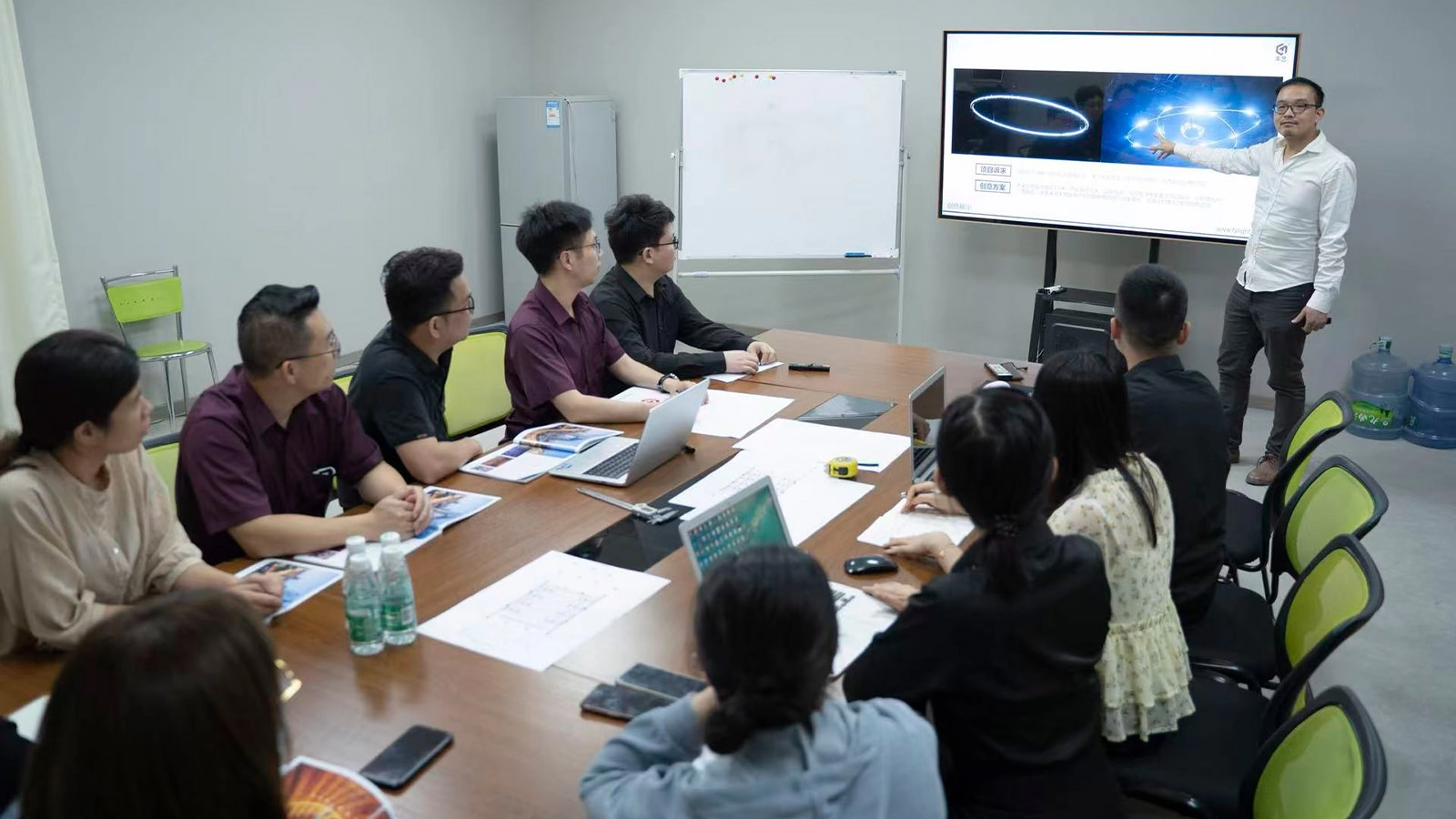
▪ Review Participants: Customer, company technical director, scheme designer, and installation team leader;
▪ Review Content: Whether the effect meets the requirements, whether the budget is controllable, whether safety compliance is achieved, and whether the time matches;
▪ Output Documents: Stage Lighting Technical Scheme Book (including layout drawing, equipment list, parameter calculation table, and renderings) and Project Quotation Sheet. The project will be officially initiated after being signed and confirmed by the customer.
Kinetic Lighting Design FAQs
Project buyers often need to confirm the required design inputs, proposal scope, visualization, integration, schedule, and installation support before ordering. The answers below use conservative wording so each service item can be confirmed against the actual project scope.
Nightclub Lighting
What information is required to start a kinetic lighting design?
Provide the venue type, drawings, dimensions, ceiling height, suspension conditions, installation area, visual references, fixture preference, required movement, quantity, control platform, project location, budget range, and target date. Available structural, power, and access information will help the team identify design constraints early.
Products
What can be included in a kinetic lighting design proposal?
Depending on the confirmed scope, a proposal can include a design brief, fixture and winch recommendations, quantity and configuration, layout references, 3D visualizations, technical data, control requirements, quotation information, and installation guidance. The exact deliverables should be listed before the project starts.
How are noise-sensitive venues considered during design?
For TV studios, galleries, commercial spaces, or other noise-sensitive environments, share the acoustic requirements and operating conditions. FENG-YI can help evaluate suitable product configurations, movement settings, mounting considerations, and control strategies. Final noise performance should be confirmed against the selected equipment and site conditions.
Wedding & Parties Lighting Solutions
How are design and production timelines confirmed?
Timing depends on the completeness of the brief, project complexity, customization, review rounds, quantity, production planning, and logistics. After the drawings, specifications, required deliverables, and target date are reviewed, FENG-YI can provide a project-specific schedule instead of a fixed general lead time.
Wholesale Cooperation
Can installation guidance and technical handover be included
FENG-YI can provide installation guidance, system setup coordination, programming communication, operating instructions, and maintenance recommendations according to the confirmed scope. On-site availability, local contractor responsibilities, travel, cost, and schedule should be confirmed separately for each project.
Request a Kinetic Lighting Design Proposal
Send your venue drawings, ceiling height, installation area, visual references, fixture preference, movement range, quantity, control platform, project location, and target schedule. FENG-YI can review the requirements and respond with a suitable design direction, configuration questions, and quotation information based on the confirmed scope.
Rest assured that your privacy is important to us, and all information provided will be handled with the utmost confidentiality.
By clicking "Send your message," I agree to your processing my personal data.
To see how to withdraw your consent, how to control your personal data, and how we process it, please see our Privacy Policy and Terms of Use.

Global Kinetic Lighting Solution Partner for Creative Industries
Contact
Address
Building 5, No. 34, Fuyuan Road, Jinghu IndustrialZone, Xinhua Town, Huadu District, Guangzhou, China.
© 2026 FENG-YI. All Rights Reserved.
Facebook
Instagram
YouTube
TikTok
FENGYI Kinetic Lights Solution