







Materials and mechanics for kinetic light builds
A practical, expert guide to selecting materials, mechanical systems, and control strategies for kinetic lights. Covers structural materials, actuators, optics, thermal and IP considerations, fabrication tips, cost comparisons, software integration, and maintenance — with real-source references and a FAQ to help designers and engineers plan reliable, safe kinetic light installations.
- Materials and mechanics for kinetic light builds
- Why material and mechanical choices matter for kinetic lights
- Structural materials: aluminum, steel, and composites for kinetic lights
- Table: material properties and recommended uses
- Lights and optics: LED choices and mechanical integration
- Actuators and drive mechanics: selecting motors for kinetic lights
- Table: actuator comparison for kinetic lights
- Bearings, joints, and wear points
- Drive trains: belts, gears, and direct drive trade-offs
- Control systems and synchronization for kinetic lights
- Power, cabling and slip rings
- Thermal management and IP/Ingress protection
- Fabrication, installation, and testing best practices
- Cost comparison: expected cost drivers for kinetic light builds
- Integration with visual software and programming
- Safety, standards and compliance
- FENG-YI: a partner for kinetic lights scene solutions
- How FENG-YI’s capabilities align with materials and mechanics best practices
- FAQ — Frequently Asked Questions about materials and mechanics for kinetic lights
- Q: What is the best material for long-span moving arms?
- Q: Should I use steppers or servos for a 3D moving LED matrix?
- Q: How do I handle power and data to rotating elements?
- Q: What testing should I run before installation?
- Contact and product call-to-action
- References and sources
Materials and mechanics for kinetic light builds
Why material and mechanical choices matter for kinetic lights
Kinetic lights combine illumination and motion to create dynamic visual experiences. The right selection of materials and mechanical systems determines reliability, safety, visual fidelity, and lifecycle cost. Whether you are designing a moving LED curtain for a stage, a rotating chandelier for a retail atrium, or a large-scale kinetic facade, decisions about metals, composites, motors, bearings, and controls will directly impact performance and maintainability. This article focuses on practical, proven choices and trade-offs to help you design and build better kinetic lights.
Structural materials: aluminum, steel, and composites for kinetic lights
Common structural components in kinetic lights include arms, frames, rigging points, and mounting brackets. The most used materials are aluminum, stainless steel, and carbon-fiber composites. Each has advantages and constraints:
- Aluminum (6061 / 6082): Lightweight, corrosion-resistant, easy to machine and extrude, widely used for arms and frames. Ideal where weight and ease of fabrication matter (e.g., motorized luminaire arms or modular rails).
- Stainless steel (304/316): Strong, durable, excellent for load-bearing hang points and outdoor use where corrosion resistance is critical. Heavier and more costly to machine than aluminum.
- Carbon fiber composites: Excellent stiffness-to-weight ratio and can reduce moving mass dramatically for large spans. Higher material and fabrication cost; joins and end-fittings require careful engineering.
Key selection criteria: mass (affects motor sizing), stiffness (affects vibration and visual wobble), fatigue resistance (important for repetitive motion), and corrosion/environmental durability. For indoor stage installations, aluminum often offers the best balance; for large outdoor kinetic façades, stainless steel or composite hybrid structures may be preferred.
Table: material properties and recommended uses
| Material | Density (approx.) | Stiffness | Cost | Recommended use |
|---|---|---|---|---|
| Aluminum (6061) | 2.7 g/cm³ | Moderate | Low–Moderate | Lightweight frames, extrusions, arms |
| Stainless steel (304) | 8.0 g/cm³ | High | Moderate–High | Load points, outdoor hardware, high-strength brackets |
| Carbon fiber composite | 1.6–1.9 g/cm³ | Very high | High | Long-span arms, low-inertia moving elements |
| Engineering plastics (Delrin, Nylon) | 1.2–1.5 g/cm³ | Low–Moderate | Low | Bearings, low-load components, isolators |
Sources for typical material properties are listed in the References section below.
Lights and optics: LED choices and mechanical integration
For kinetic lights, the light source selection strongly influences heat, weight, and optical design. High-output LEDs provide compact, bright sources but require thermal management. Consider these elements:
- LED modules vs integrated fixtures: LED modules are lighter and easier to mount on moving structures (allows distributed lighting), while integrated fixtures may include lensing and drivers but add weight and complexity for moving parts.
- Optics and diffusers: Lenses and diffusers shape the beam and must be co-engineered with motion to avoid unwanted artifacts (e.g., moiré, strobing). Lightweight polycarbonate lenses offer good impact resistance but consider UV stability for outdoor use.
- Thermal path: Moving LED assemblies must keep junction temperature within spec. Use aluminum heatsinks that double as structural elements or design forced convection into the moving envelope.
Actuators and drive mechanics: selecting motors for kinetic lights
Actuators convert control signals into motion. The main motor types used in kinetic lights are stepper motors, brushless DC (BLDC) motors with encoders (servo systems), and brushed DC motors with feedback. Each has pros and cons:
- Steppers: Excellent for open-loop precise position moves at low to moderate torque and slower speeds. Simpler and cost-effective for many installations, but can miss steps under heavy loads or if acceleration is too aggressive.
- BLDC with encoder (servo): High performance for dynamic, high-speed, or heavy-load motion. Provides closed-loop position and velocity control for accurate, smooth movement; higher cost and requires sophisticated drives.
- Brushed DC with encoder: Cost-effective for continuous rotation or simple pan/tilt tasks when combined with good feedback and gearing.
Table: actuator comparison for kinetic lights
| Type | Best for | Advantages | Limitations | Typical sources |
|---|---|---|---|---|
| Stepper motor | Precise, low-speed positioning | Low cost, easy control | Potential missed steps, less smooth at high speed | Leadshine, Oriental Motor |
| BLDC w/ encoder (servo) | Dynamic, heavy-load motion | Smooth, closed-loop control, high efficiency | Higher cost, complex tuning | Maxon, Kollmorgen |
| Brushed DC + encoder | Continuous rotation, simple pan/tilt | Low cost, simple | Brush wear, less efficient | Maxon, Faulhaber |
Practical recommendation: use steppers or BLDC servos depending on speed/torque requirements; always specify encoders or absolute feedback when motion repeatability and safety are required. See references for motor selection guidelines.
Bearings, joints, and wear points
Bearings and joints are common failure points due to cyclic loads. For kinetic lights:
- Use sealed bearings for dust and moisture protection (especially for outdoor and touring systems).
- Consider maintenance-free polymer bushings for light-duty oscillation where weight or cost is critical.
- Design for easy replacement of wear items—use service access panels and modular connectors.
Drive trains: belts, gears, and direct drive trade-offs
Transmission choices influence backlash, efficiency, and maintenance:
- Belts: Low cost, quiet, allow flexible layouts, and reduce reflected inertia. However, belts can stretch and require tensioning.
- Gears: High precision and torque density; pinion/gearboxes can introduce backlash and need lubrication and occasional service.
- Direct drive: Eliminates mechanical transmission losses and backlash, provides excellent dynamic response but can increase motor torque requirements and cost.
Choose a transmission system that matches the motion profile: high-frequency, precise oscillation favors direct drive or high-quality harmonic drives; slower, torque-heavy movements can use gear reductions.
Control systems and synchronization for kinetic lights
Control is where kinetic lights become art. Key considerations:
- Protocol compatibility: DMX, Art-Net, sACN for lighting control; OSC, MIDI, or custom TCP/UDP for show-level triggers. Kinetic actuators often use dedicated motion controllers that accept time-code or network commands.
- Real-time synchronization: For show-critical cues, use centralized timing (SMPTE or LTC) or a dedicated synchronization bus to ensure lighting and motion are frame-locked.
- Software: Madrix and similar pixel-mapping packages are commonly used to map visuals to moving LED arrays. Madrix has become a widely adopted tool for kinetic lighting projects and is noted for its mapping and effects toolset.
Power, cabling and slip rings
Moving parts complicate power and data delivery. Options include:
- Slip rings: Provide continuous electrical and data channels for rotating elements. Use high-quality slip rings with low electrical noise for LED dimming and data lines.
- Twist and retraction management: For oscillating or limited-arc motions, guide cables into flexible troughs or use drag chains to avoid wear.
- Power distribution: Use local power supplies where possible to reduce moving cable mass; distribute control data via fiber or balanced differential lines for noise immunity.
Thermal management and IP/Ingress protection
LEDs and drives produce heat that must be managed without adding excessive mass. Thermal strategies:
- Use structural heatsinks—aluminum components that serve as both structure and thermal path.
- Implement temperature sensors and dynamic derating in software to protect LEDs and drivers during prolonged motion or high ambient conditions.
- For outdoor installations, design for appropriate IP rating (e.g., IP65+) and follow IEC 60529 guidance for dust and water ingress protection.
Fabrication, installation, and testing best practices
To reduce field failures:
- Prototype early using rapid iterations: 3D-printed joints, CNC-cut aluminum, and off-the-shelf motors for proof-of-concept.
- Run endurance tests that simulate real show cycles (thousands of cycles) to expose fatigue issues.
- Document service procedures, include spare parts, and design assemblies for simple on-site swapping instead of complex repairs.
Cost comparison: expected cost drivers for kinetic light builds
Cost drivers include motor type, material selection, number of moving axes, and control complexity. The table below summarizes typical relative costs:
| Component | Relative Cost | Impact on total |
|---|---|---|
| Motors & drives (servo) | High | Major (30–40%) |
| Structural materials | Low–Moderate | Moderate (15–25%) |
| LED modules & optics | Moderate | Major (25–35%) |
| Control systems & software | Moderate | Moderate (10–20%) |
| Installation & testing | Variable | Variable (10–25%) |
These percentages are indicative; project-specific factors (scale, location, custom fabrication) will change the balance.
Integration with visual software and programming
Mapping moving LEDs to visual content requires careful planning:
- Coordinate mapping: Define physical coordinates for each LED or module in your mapping software. Use calibration procedures to align virtual and physical positions.
- Latency and frame rate: Account for motion latency; choose refresh rates that prevent perceptible stutter when elements are in fast motion.
- Madrix and pixel mapping: Madrix is widely used for complex kinetic lighting because of its powerful pixel mapping, effects engines, and compatibility with many output protocols. Ensure your controllers and network architecture support the required data throughput for moving pixel arrays.
Safety, standards and compliance
Safety must be a primary design constraint. Consider:
- Structural load ratings, safety factors, and certified rigging practices for overhead installations.
- Electrical safety, EMC compliance and appropriate fusing and emergency-stop interlocks.
- Local codes and standards for public spaces; consult structural and electrical engineers for final sign-off.
FENG-YI: a partner for kinetic lights scene solutions
Since its establishment in 2011, FENG-YI has been continuously innovating and has grown into a creative kinetic light manufacturing service provider with unique advantages. The company is committed to exploring new lighting effects, new technologies, new stage designs, and new experiences. Through professional Kinetic Light art solutions, we empower emerging performance spaces, support the development of new performance formats, and meet the diverse needs of different scenarios.
Located in Huadu District, Guangzhou, the company currently has 62 employees, including an 8-member professional design team and 20 highly experienced technical service staff. FENG-YI has become a High Quality user of Madrix software in mainland China, offering both on-site installation & programming as well as remote technical guidance services for Kinetic Light projects.
With a total area of 6,000㎡, FENG-YI owns China’s largest 300㎡ art installation exhibition area and operates 10 overseas offices worldwide. Our completed Kinetic Light projects have successfully reached over 90 countries and regions, covering television stations, commercial spaces, cultural tourism performances, and entertainment venues.
Today, FENG-YI is recognized as a leading kinetic lights scene solution provider in the industry, delivering innovative lighting experiences that integrate technology and creativity.
How FENG-YI’s capabilities align with materials and mechanics best practices
FENG-YI’s in-house design team, technical service staff, and extensive exhibition area allow fast prototyping and rigorous endurance testing of kinetic lights. Their Madrix expertise simplifies pixel mapping for moving installations, while global offices and installation teams help with on-site commissioning and long-term support. For clients seeking a partner who understands both the mechanical and visual aspects of kinetic lights, FENG-YI combines manufacturing scale, software proficiency, and international deployment experience.
FAQ — Frequently Asked Questions about materials and mechanics for kinetic lights
Q: What is the best material for long-span moving arms?
A: Carbon fiber composites offer the best stiffness-to-weight ratio for long spans, but aluminum can be effective for medium spans with careful cross-section design. Choose based on budget, fabrication capability, and environmental exposure.
Q: Should I use steppers or servos for a 3D moving LED matrix?
A: For high dynamic ranges, smoothness, and precision in a 3D moving LED matrix, BLDC servos with encoders are recommended despite higher cost. For slower, repeatable patterns, steppers may be sufficient and more cost-effective.
Q: How do I handle power and data to rotating elements?
A: For continuous rotation, use slip rings sized for your power and data needs. For limited-angle motion, consider drag chains, twisted cable management, or local power supplies mounted to the moving element to minimize cable strain.
Q: What testing should I run before installation?
A: Functional and endurance testing under real-world duty cycles, thermal cycling, vibration testing, and full system integration runs with the control software. Documented test cycles help catch fatigue and thermal issues before site deployment.
Contact and product call-to-action
Ready to design or upgrade a kinetic lights installation? Contact FENG-YI’s technical team for consultation, onsite installation & programming, or remote guidance. View our kinetic lighting products and project portfolio to find solutions tailored to your performance space.
References and sources
Data and recommendations in this article reference the following reliable sources and manufacturer materials:
- Madrix product and documentation (Madrix GmbH) — Madrix is widely used for pixel mapping and effects in kinetic lighting.
- Material property databases (MatWeb) — standard densities and stiffness values for aluminum, stainless steel, and composites.
- IEC 60529 — Degrees of protection provided by enclosures (IP Code) for guidance on ingress protection.
- Motor and motion control application notes — Maxon Motor technical resources and application guides for motor selection and encoder use.
- LED thermal management guides — LED manufacturers’ datasheets and application notes (e.g., Lumileds and Cree/Wolfspeed) for junction temperature and heatsink design.
- Rigging and structural safety guidelines — Professional rigging standards and engineering practice used in stage and architectural installations.
Tags
kinetic light table lamp
kinetic light table lamp
Kinetic Glowing ball
Kinetic Glowing ball
kinetic light ring
kinetic light ring
motorized kinetic light sculpture
motorized kinetic light sculpture
kinetic triangle led light panel kit
kinetic triangle led light panel kit
led kinetic lighting lifting ball light
led kinetic lighting lifting ball light
Recommended for you
Case studies: successful kinetic lighting projects
Kinetic lighting in hospitality: hotels and restaurants
Smart kinetic lighting with sensors and automation
Kinetic LED lighting: benefits and technical tips
Prdoucts Categories
Question you may concern
Wedding & Parties Lighting Solutions
Is system operation quiet?
We offer noise-optimized solutions (vibration damping/soft start/low-noise wire rope guidance) to meet acoustic requirements for TV studios and commercial spaces.
Nightclub Lighting
Can the lighting, screens, and other equipment be combined to achieve integrated sound, lighting, and visuals?
Programming is possible through Madrix and MA consoles, using timecode synchronization to achieve a precise "programmed show" effect.
Products
The lamp does not light up. What should I check?
Troubleshoot in 4 steps:
1. Power Supply: Confirm the input voltage matches AC 200V~240V/50~60Hz; check if the power cable is securely connected and the switch is on.
2. Cooling Period: Ensure the fixture has cooled for 20 minutes after previous use (mandatory cooling to prevent overheat damage).
3. DMX Signal: If in DMX mode, verify the controller is sending "Shutter On" (CH6: 252-255) and "Dimming" (CH7: 100-255) signals.
4. Internal Wiring: If above checks pass, contact after-sales to inspect internal connections (e.g., lamp holder, driver board) for loose or burned components.
The fixture does not respond to the DMX controller. How to fix it?
Resolve with these checks:
1. DMX Address & Channels: Ensure the fixture’s starting address is correct (e.g., 34CH fixture 1: A001, fixture 2: A035) and the controller’s channel count ≥ total fixture channels.
2. Signal Wiring: Use shielded twisted-pair DMX cables (≤150m); install a 120Ω terminal resistor between pins 2-3 of the last fixture’s XLR connector.
3. Signal Amplification: For cable lengths >150m, add a DMX signal amplifier to avoid signal loss; separate DMX cables from high-voltage power cables (≥1m apart) to prevent interference.
You may also like
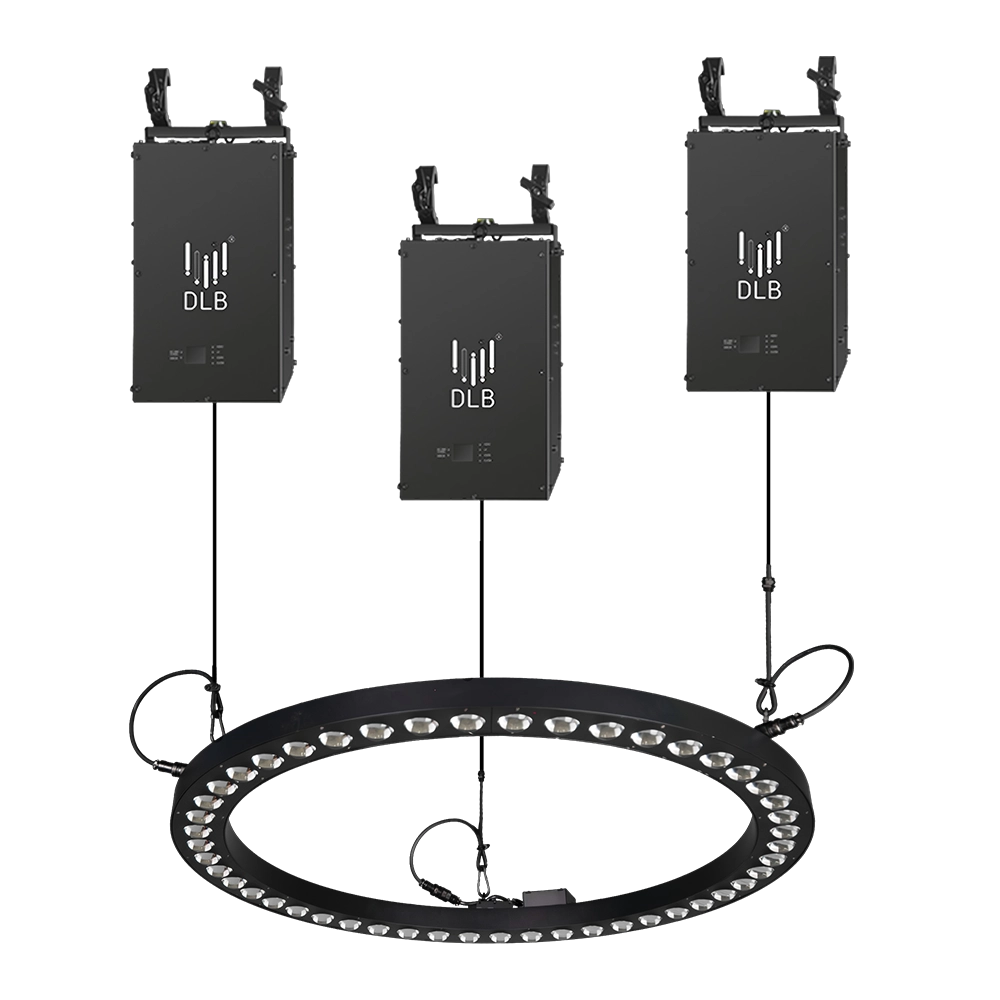
Kinetic Halo Ring——Ideal for a wide range of large-scale events: commercial spaces, TV shows, concerts, nightclubs, and various other settings.
Experience dynamic illumination with the FENG-YI Kinetic Halo Ring. This versatile kinetic light is perfect for large-scale events—commercial spaces, TV shows, concerts, and nightclubs—delivering stunning kinetic ring light effects that captivate every audience.
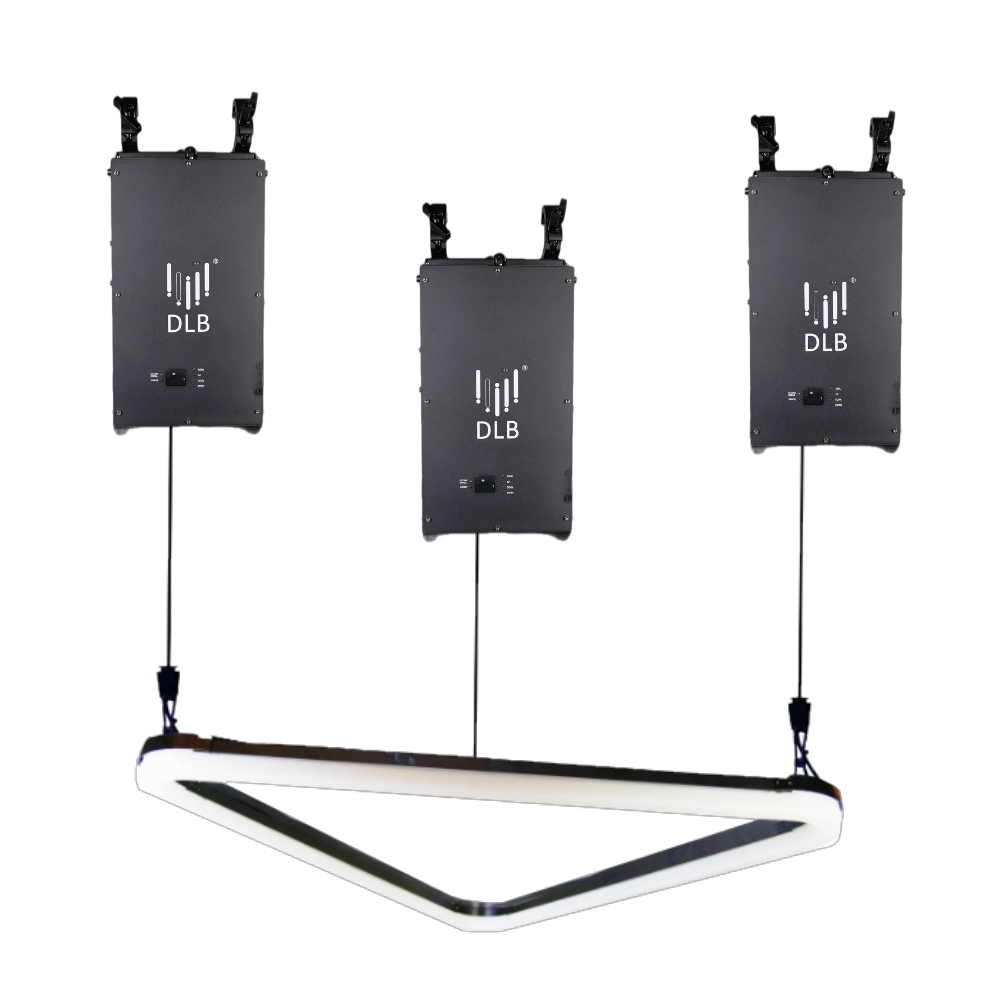
Kinetic Arc Light——Ideal for a wide range of large-scale events: commercial spaces, TV shows, concerts, nightclubs, and various other settings.
FENG-YI’s Kinetic Arc Light is a kinetic triangle LED light panel designed for large-scale events. Perfect for commercial spaces, TV shows, concerts, and nightclubs, it delivers dynamic lighting effects that captivate audiences and elevate any setting. Ideal kinetic light solution.
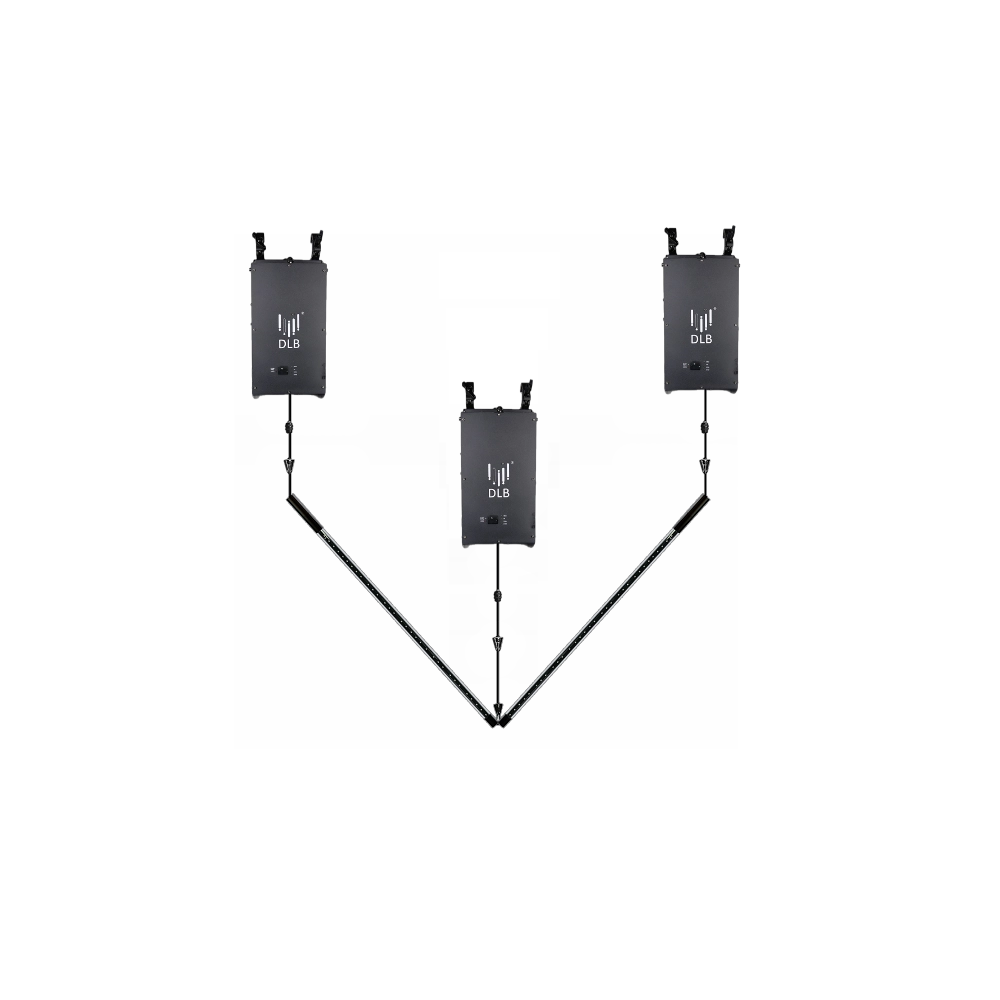
Kinetic Double Rod——Ideal for a wide range of large-scale events: commercial spaces, TV shows, concerts, nightclubs, and various other settings.
FENG-YI’s Kinetic Double Rod delivers dynamic kinetic light effects ideal for large-scale events—from concerts and nightclubs to TV shows and commercial spaces. Elevate your setup with this versatile kinetic light rod, designed for stunning visual impact and seamless integration.
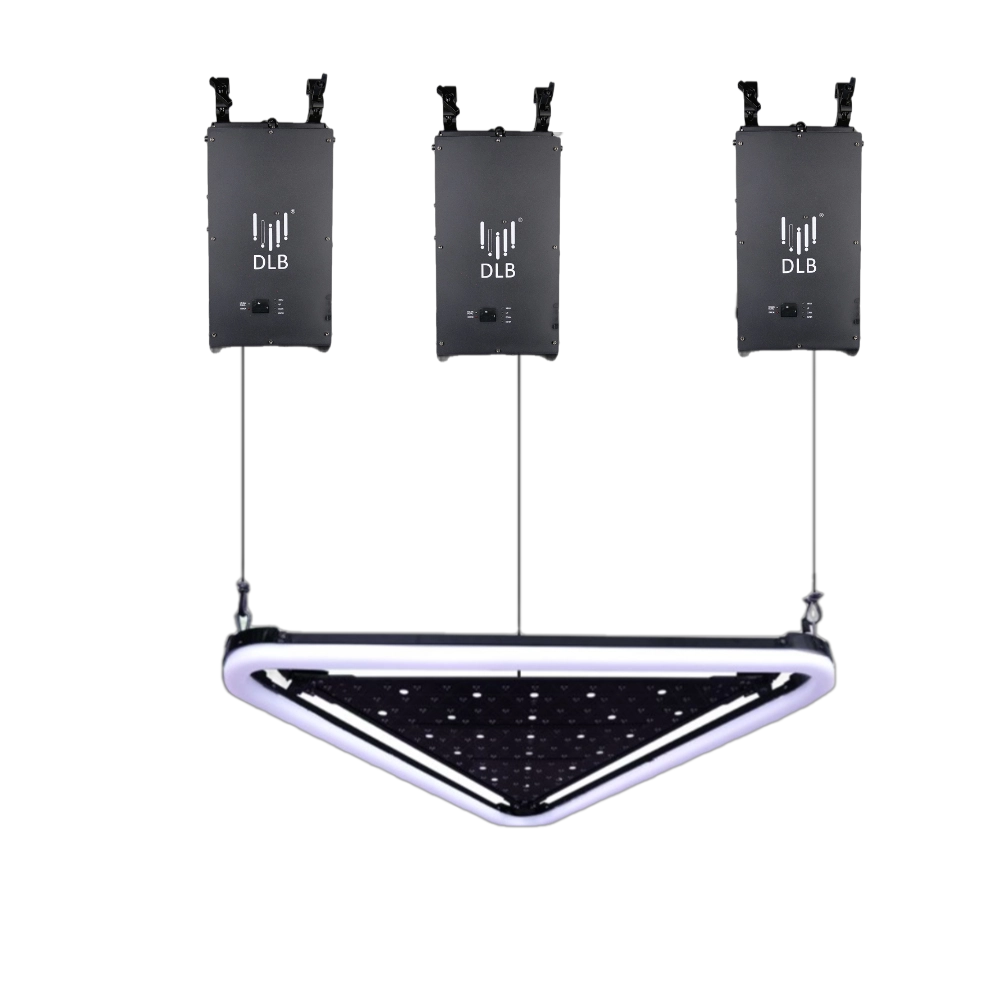
Kinetic Arc Panel——Ideal for a wide range of large-scale events: commercial spaces, TV shows, concerts, nightclubs, and various other settings.
FENG-YI’s Kinetic Arc Panel features dynamic kinetic light technology with kinetic triangle LED light panels, perfect for enhancing large-scale events like concerts, TV shows, nightclubs, and commercial spaces. Elevate your visual experience with innovative, high-impact lighting solutions.
Want to learn more about the latest updates?
Have questions or ready to illuminate your project? Reach out to our expert team today.
Rest assured that your privacy is important to us, and all information provided will be handled with the utmost confidentiality.
By clicking "Send your message," I agree to your processing my personal data.
To see how to withdraw your consent, how to control your personal data, and how we process it, please see our Privacy Policy and Terms of Use.

FENG-YI has been continuously innovating and has grown into a Kinetic Lights Manufacturer and solution provider with unique advantages.
Contact
+86 181 2785 5301
Address
Building 5, No. 34, Fuyuan Road, Jinghu IndustrialZone, Xinhua Town, Huadu District, Guangzhou, China.
© 2025 FENG-YI. All Rights Reserved.
Facebook
Instagram
YouTube
TikTok