










Kinetic Light Integration with AV and Smart Controls
This article explains how to design, specify, and implement Kinetic Light for Art Space integrated with AV and smart controls. It covers protocols (DMX, Art-Net, sACN, OSC), show control, networking, sensors, time sync, reliability, mechanical and electrical considerations, commissioning, and maintenance. The second half highlights FENG-YI’s capabilities and how their services support complex kinetic lighting projects. Practical best practices, comparison tables, and FAQs help architects, integrators, and curators plan successful installations.
- Enhancing Art Spaces with Responsive Kinetic Lighting
- Kinetic Light for Art Space — defining integration goals
- Control protocols and when to use them
- Network design and timing considerations for kinetic arrays
- Connecting kinetic rigs to AV and media servers
- Sensors, interactivity and smart building integration
- Mechanical, electrical and safety best practices
- Programming, commissioning and user interfaces
- Maintenance, lifecycle and remote support
- Protocol comparison summary (quick reference)
- Operational Case Study: Practical checklist for a 50-axis kinetic installation
- Since its establishment in 2011, FENG-YI has been continuously innovating and has grown into a creative kinetic light manufacturing service provider with unique advantages. The company is committed to exploring new lighting effects, new technologies, new stage designs, and new experiences. Through professional Kinetic Light art solutions, we empower emerging performance spaces, support the development of new performance formats, and meet the diverse needs of different scenarios.
- FENG-YI strengths, product focus and competitive differentiation
- Cost, procurement and risk management
- Implementation timeline (typical)
- Key performance metrics to specify
- Frequently Asked Questions (FAQ)
- 1. What network protocol should I use for a 100+ axis kinetic light installation?
- 2. Can kinetic lights be synchronized to video playback?
- 3. How do I ensure audience safety with overhead kinetic elements?
- 4. What are the maintenance requirements for kinetic modules?
- 5. Can kinetic light systems be integrated with building automation systems (BMS)?
- 6. What happens if the control network fails during a show?
- Contact & Product Inquiry
- References
Enhancing Art Spaces with Responsive Kinetic Lighting
Kinetic Light for Art Space is more than moving fixtures and color changes — it is a medium for storytelling, spatial dynamics, and interactive experiences. Successful integration with AV systems and smart building controls requires careful attention to signal protocols, timing, mechanical reliability, power distribution, user interfaces, and long-term serviceability. This article is a practical guide for designers, integrators, and venue managers who need dependable, flexible solutions that meet both artistic intent and operational constraints.
Kinetic Light for Art Space — defining integration goals
Before selecting hardware or control protocols, clarify the integration goals: Is the installation a scripted performance, an interactive exhibit, a broadcast set, or a hybrid? Goals determine requirements for latency, determinism, network topology, and safety. For scripted performances you’ll prioritize timeline-based cueing (tight frame sync, cue lists). For interactive exhibits you’ll prioritize sensor inputs, low-latency responsiveness, and graceful fallback behavior if a network or sensor fails.
Control protocols and when to use them
Choosing the right protocol affects reliability, channel counts, latency, and ease of integration with AV and building systems. The table below summarizes common protocols used with kinetic light systems.
| Protocol | Typical Use | Max Channels / Capacity | Latency / Determinism | Integration Notes |
|---|---|---|---|---|
| DMX512 | Direct fixture control, legacy lighting desks | 512 channels per universe | Deterministic; cable-length dependent | Simple wiring; useful for small clusters and local control. Often converted to network protocols for large arrays. |
| Art-Net | Networked lighting control over Ethernet | Many universes (practical limits depend on hardware) | Low latency on managed networks | Widely supported; easy to route and bridge to DMX. Requires network design to avoid broadcast storms. |
| sACN (ANSI E1.31) | Professional network lighting for large systems | Very high (universe-based) | Designed for low-latency, multicast-friendly | Preferred for large, distributed deployments; better suited to managed multicast environments. |
| OSC (Open Sound Control) | Creative control, interactive mappings, sensor data | Variable | Low when on LAN | Good for high-level cues, interactive inputs, audio-reactive systems and integration with software like Max/MSP, TouchDesigner. |
| MIDI / MIDI Show Control | Legacy show control, cue triggers | Limited | Deterministic for simple cues | Still used for simple, robust triggering—often bridged to modern network protocols. |
Sources: DMX512, Art-Net, sACN and OSC specifications are widely documented by industry standards bodies and manufacturer sites (see References).
Network design and timing considerations for kinetic arrays
Large kinetic light installations typically use Ethernet backbone with sACN or Art-Net to distribute control. Key network design elements include:
- Segmentation: Use VLANs or separate physical networks for show control vs. building IT to protect timing-sensitive traffic.
- Managed switches: Use switches that support IGMP snooping for multicast (important for sACN) and provide QoS to prioritize control packets.
- Time synchronization: Use NTP for general synchronization and PTP (Precision Time Protocol) where microsecond alignment matters for motion synchronization with audio/video.
- Redundancy: Implement link aggregation, redundant power supplies for controllers, and hot-standby show controllers for mission-critical venues.
Recommended latency budgets: keep frame-to-frame control latency below 50 ms for perceptible motion synchronization; for broadcast or tight AV sync, aim for < 10 ms and align show timelines with media servers via SMPTE timecode or PTP.
Connecting kinetic rigs to AV and media servers
Media servers (Resolume, Watchout, Disguise, etc.) and lighting processors (Madrix, grandMA) often need to share timeline and parameter data. Common integration methods:
- SMPTE timecode for deterministic timeline playback across devices (use LTC or MTC depending on hardware).
- OSC or TCP/UDP APIs for high-level parameter control from show control software.
- Embedding control channels in the media server timeline to trigger predefined motion cues in the kinetic controller.
For pixel-mapped kinetic arrays, use software that can address moving pixel positions dynamically (Madrix is an industry example for LED mapping). Many kinetic projects use a combination of media server visuals and lighting control cues to achieve synchronized motion and imagery.
Sensors, interactivity and smart building integration
Interactivity transforms an art space into a responsive environment. Sensors commonly used with kinetic light systems include:
- Motion and occupancy sensors (PIR, microwave)
- Proximity sensors and LIDAR for accurate position sensing
- Camera-based tracking (computer vision) for complex gestures
- Sound level and frequency analyzers for audio-reactive behavior
- Environmental sensors (light, temperature) for automatic adaptation
Integration with building management systems (BMS) or smart control platforms (Crestron, AMX, Q-SYS) enables energy-saving modes, scheduled shows, and emergency behaviors. Always design fail-safe behaviors: if sensor data becomes unreliable, the system should default to a benign, low-energy state and not continue complex, potentially hazardous motion.
Mechanical, electrical and safety best practices
Kinetic installations are electromechanical systems and must follow strict engineering controls:
- Structural analysis: Mounting points, dynamic loads, fatigue cycles, and attachment hardware must be certified by structural engineers. Include safety factors for moving masses.
- Power distribution: Separate lighting power from motor/control power where practical. Use UPS for critical controllers and emergency stop circuits with hardware-level interlocks.
- EMC and grounding: Motors and drivers generate noise; implement proper shielding, grounding, and surge protection to prevent control signal corruption.
- Ingress protection and IP ratings: Select IP-rated fixtures and enclosures for dusty or humid environments.
- Regulatory compliance: Follow local electrical codes, lift/motion standards, and fire safety regulations when installing moving systems over audiences.
Programming, commissioning and user interfaces
Programming complexity scales with the number of axes and the diversity of cues. Effective commissioning strategies include:
- Developing a device and channel map early (who controls what, how addresses are assigned).
- Creating a test harness with playback and safety interlocks to validate motion profiles without full show loads.
- Using timeline-based show control for repeatable sequences; use state machines for interactive behaviors.
- Designing operator UI for non-technical staff: predefined “show scenes”, manual overrides, status dashboards, and fault logs.
Key programming tip: limit maximum acceleration and jerk in motion profiles to avoid mechanical stress and to improve aesthetic motion. Use easing curves and realistic motion cues rather than abrupt starts/stops.
Maintenance, lifecycle and remote support
Planned maintenance is essential for high uptime. Consider:
- Accessibility for maintenance (service platforms, access points)
- Spare parts strategy for drives, motors, and controllers
- Remote monitoring: telemetry for temperature, current draw, motor cycles, and error rates allows predictive maintenance
- Software version control and rollback capability for controllers
Remote diagnostics and patching can dramatically reduce downtime for globally distributed projects.
Protocol comparison summary (quick reference)
When specifying a project, follow this rule-of-thumb:
- Small exhibit or simple cue sequences: DMX with local controllers.
- Large distributed installation: sACN on a managed multicast VLAN.
- Interactive, sensor-driven behavior: OSC for high-level control, plus OSC-to-lighting bridges.
- Broadcast or AV-tight sync: use SMPTE/PTP timecode and media server integration.
Operational Case Study: Practical checklist for a 50-axis kinetic installation
Project checklist for commissioning “Kinetic Light for Art Space” at a museum:
- Define show types (scheduled shows, interactive hours, broadcast events)
- Network design: dedicate VLAN for show control, deploy managed switches, enable IGMP snooping
- Control topology: master show controller (grandMA/Madrix), media server for visuals, sACN to motion controllers
- Time sync: PTP for sub-ms sync where required; NTP for general logging
- Power: separate star feeders for motors and LED loads; design for inrush currents
- Safety: emergency stop hardwired into motor drives, redundant brakes where equipment is overhead
- Maintenance: spare motor modules (10–15% of installed count), remote telemetry, preventive service schedule
Following this checklist helps align AV producers, architects, and facility managers before procurement.
Since its establishment in 2011, FENG-YI has been continuously innovating and has grown into a creative kinetic light manufacturing service provider with unique advantages. The company is committed to exploring new lighting effects, new technologies, new stage designs, and new experiences. Through professional Kinetic Light art solutions, we empower emerging performance spaces, support the development of new performance formats, and meet the diverse needs of different scenarios.
Located in Huadu District, Guangzhou, the company currently has 62 employees, including an 8-member professional design team and 20 highly experienced technical service staff. FENG-YI has become a High Quality user of Madrix software in mainland China, offering both on-site installation & programming as well as remote technical guidance services for Kinetic Light projects.
With a total area of 6,000㎡, FENG-YI owns China’s largest 300㎡ art installation exhibition area and operates 10 overseas offices worldwide. Our completed Kinetic Light projects have successfully reached over 90 countries and regions, covering television stations, commercial spaces, cultural tourism performances, and entertainment venues.
Today, FENG-YI is recognized as a leading kinetic lights scene solution provider in the industry, delivering innovative lighting experiences that integrate technology and creativity.
FENG-YI strengths, product focus and competitive differentiation
FENG-YI’s competitive advantages for projects involving Kinetic Light for Art Space include:
- End-to-end service: concept, mechanical design, lighting design, control programming, installation and remote maintenance.
- Strong design team and in-house exhibition area for rapid prototyping and client demonstrations.
- Experienced technical staff and Madrix expertise for complex LED pixel mapping and media-synchronized motion.
- Global presence with local support capabilities for international projects and broadcast requirements.
- Proven track record across multiple sectors: TV, cultural tourism, commercial spaces and live entertainment.
Product offerings typically include motorized kinetic modules, LED pixel modules compatible with sACN/Art-Net, control cabinets, and turnkey programming services tailored for artistic direction and venue operations. FENG-YI emphasizes reliability, serviceability, and creative control flexibility in their solutions.
Cost, procurement and risk management
Budgeting a kinetic light project should factor in mechanical infrastructure (rigging, motor drives), control systems (controllers, media servers), networking, installation labor, commissioning, and a 10–20% contingency for unforeseen structural or integration issues. Risk reduction strategies include staged rollouts, prototype testing in the manufacturer’s exhibition area, and rigorous FAT (Factory Acceptance Testing) before shipment.
Implementation timeline (typical)
Small exhibit: 8–12 weeks (design to commissioning). Mid-size museum installation: 4–6 months. Large theater or broadcast-grade rig: 6–12 months (includes structural approvals and extended FAT cycles).
Key performance metrics to specify
- Motion repeatability (e.g., ±2 mm or ±0.5°)
- Control latency (ms) from command to motion start
- Mean time between failures (MTBF) for motors and controllers
- Service-level agreement (SLA) for remote support and on-site response
Frequently Asked Questions (FAQ)
1. What network protocol should I use for a 100+ axis kinetic light installation?
For 100+ axes, use sACN on a managed multicast VLAN with IGMP snooping and QoS. sACN scales better for large universes and plays well with professional lighting consoles and media servers.
2. Can kinetic lights be synchronized to video playback?
Yes. Use SMPTE timecode or PTP time synchronization with media servers and show controllers. Ensure your media server supports external timecode and your motion controllers can accept timeline triggers or timecode inputs.
3. How do I ensure audience safety with overhead kinetic elements?
Follow structural engineering standards, use secondary safety attachments, redundant brakes, and hardware emergency-stop circuits. Conduct risk assessments and comply with local codes for overhead moving equipment.
4. What are the maintenance requirements for kinetic modules?
Typical maintenance includes motor/gearbox inspection, lubrication schedules, controller firmware updates, and verification of safety circuits. Implement remote telemetry for predictive maintenance to reduce downtime.
5. Can kinetic light systems be integrated with building automation systems (BMS)?
Yes. Integrate via standardized interfaces (BACnet, Modbus, or vendor APIs) or through a middleware layer that maps building events to show controller triggers. Always segregate networks and define clear handoff points to avoid interference.
6. What happens if the control network fails during a show?
Design a fail-safe: controllers with local stored scenes, hardware-level emergency stops, and redundant control paths (hot-standby controller or local control fallback). Implement monitoring that triggers safe default states if heartbeat messages are lost.
Contact & Product Inquiry
For consultation, system design, or to view FENG-YI’s kinetic light demos, contact our project team. We provide on-site installation & programming, remote technical guidance, and custom creative solutions for museums, broadcasters, commercial spaces and performance venues. Request a quote or schedule a demonstration through our website or reach out to our regional office for local support.
References
- DMX512 — Wikipedia. https://en.wikipedia.org/wiki/DMX512 (accessed 2025-12-27)
- Art-Net — Official Art-Net site. https://art-net.org.uk/ (accessed 2025-12-27)
- sACN (ANSI E1.31) — Wikipedia. https://en.wikipedia.org/wiki/ANSI_E1.31 (accessed 2025-12-27)
- Open Sound Control (OSC) — Wikipedia. https://en.wikipedia.org/wiki/Open_Sound_Control (accessed 2025-12-27)
- Madrix — Official website (pixel mapping & effects). https://www.madrix.com/ (accessed 2025-12-27)
- grandMA3 — MA Lighting official. https://www.malighting.com/en/products/grandMA3/ (accessed 2025-12-27)
- Crestron — Integration and control systems. https://www.crestron.com/ (accessed 2025-12-27)
- IEEE 1789-2015 — Recommended practices for LED modulation (flicker guidelines). https://standards.ieee.org/standard/1789-2015. (accessed 2025-12-27)
- Network Time Protocol (NTP) — ntp.org. https://www.ntp.org/ (accessed 2025-12-27)
For further project-specific advice or to discuss Kinetic Light for Art Space integration with AV and smart controls, contact us to arrange a technical consultation or demo.
Tags
kinetic light components and parts
kinetic light components and parts
Heavy machinery
Heavy machinery
Kinetic stage lights
Kinetic stage lights
The light of fireflies
The light of fireflies
outdoor kinetic light installation
outdoor kinetic light installation
kinetic LED light fixture
kinetic LED light fixture
Recommended for you
Kinetic Lights Energy Use: Efficiency and Costs
Kinetic lighting for stage, concerts, and events
Choosing motors and actuators for kinetic lighting
ROI of Kinetic Light Installations in Art Spaces
Prdoucts Categories
Question you may concern
Wedding & Parties Lighting Solutions
How is safety ensured?
Encoder closed-loop control, emergency stop circuits, software/hardware limit switches, load monitoring, and collision-avoidance zones. A comprehensive pre-performance checklist is provided.
What is the delivery timeline?
Standard configurations: approx. 4–8 weeks; custom projects depend on scale and logistics. Expedited options and rental alternatives available.
Products
The cutting blades do not move linearly. How to troubleshoot?
Fix with these steps:
1. Channel Check: Ensure the correct cutting channel (e.g., Cut 1: CH24) is selected on the controller; set the channel value to 100-255 (0=no movement).
2. Motor Calibration: Enter "Factory Settings → Motor Calibration → Cut 1" and adjust the offset (-128~+127) to compensate for mechanical errors.
3. Mechanical Blockage: Power off the fixture and check if debris (dust, wire) is blocking the blade’s travel path; clean the path with a soft brush and re-test.
Wholesale Cooperation
Are samples provided for wholesale cooperation? How is the sample fee settled?
1-2 standard samples are provided free of charge (the customer needs to bear the freight). For customized samples, a cost fee is charged (e.g., 200-500 RMB/unit for appearance-customized samples). If the customer places a subsequent bulk order (meeting the MOQ of the corresponding product), the sample fee can be fully deducted from the payment, and free samples do not need to be returned.
You may also like
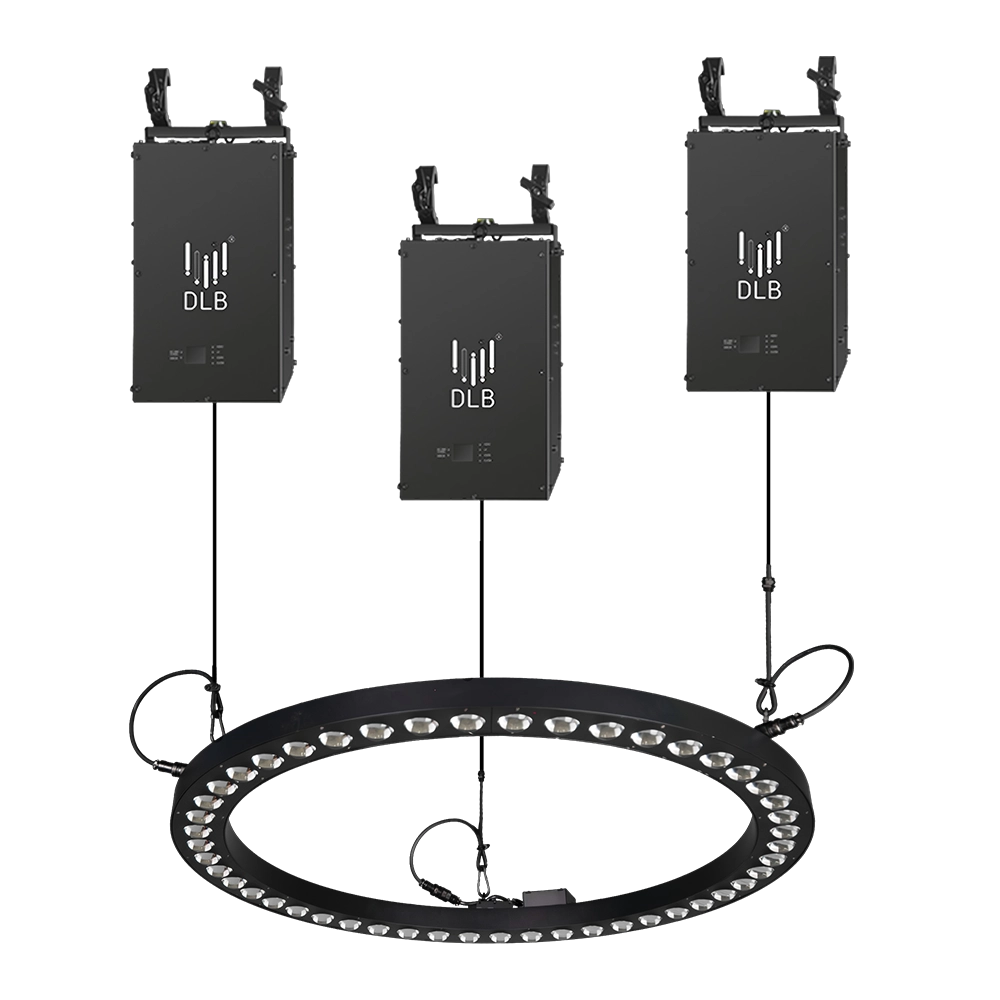
Kinetic Halo Ring——Ideal for a wide range of large-scale events: commercial spaces, TV shows, concerts, nightclubs, and various other settings.
Experience dynamic illumination with the FENG-YI Kinetic Halo Ring. This versatile kinetic light is perfect for large-scale events—commercial spaces, TV shows, concerts, and nightclubs—delivering stunning kinetic ring light effects that captivate every audience.
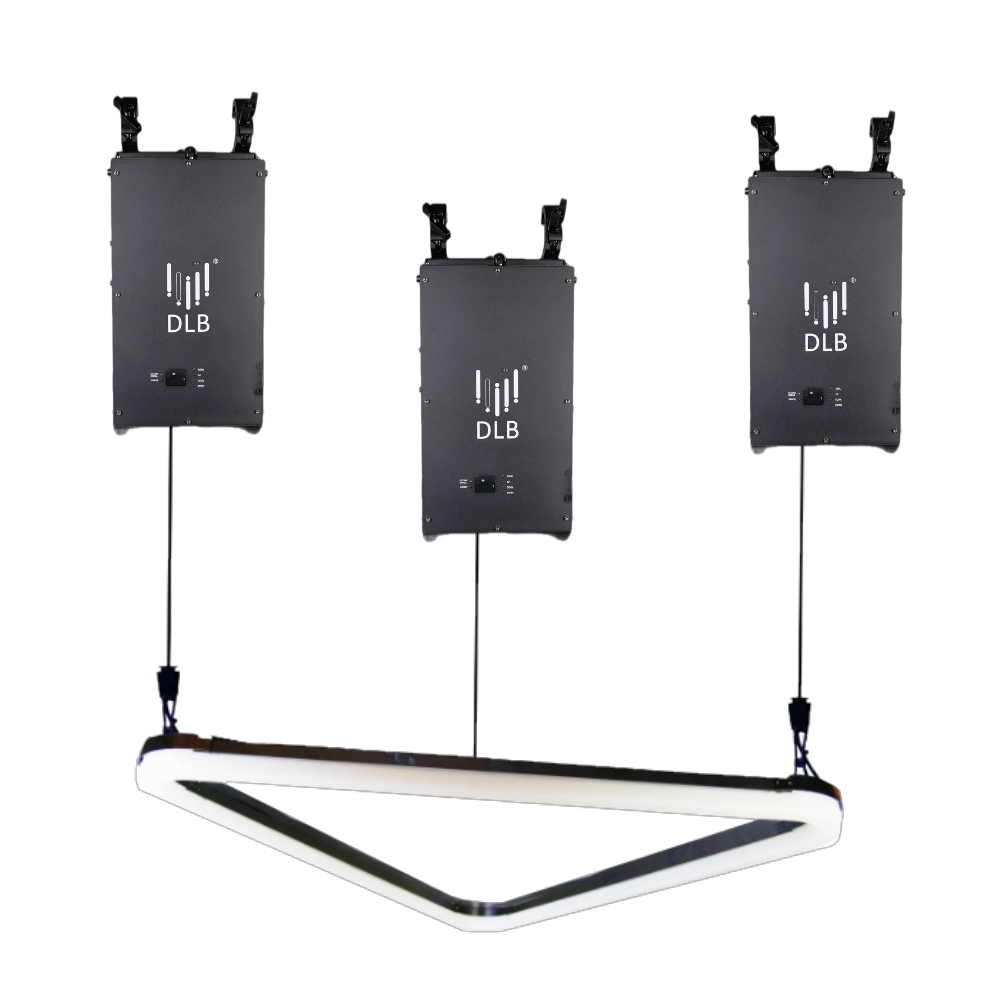
Kinetic Arc Light——Ideal for a wide range of large-scale events: commercial spaces, TV shows, concerts, nightclubs, and various other settings.
FENG-YI’s Kinetic Arc Light is a kinetic triangle LED light panel designed for large-scale events. Perfect for commercial spaces, TV shows, concerts, and nightclubs, it delivers dynamic lighting effects that captivate audiences and elevate any setting. Ideal kinetic light solution.
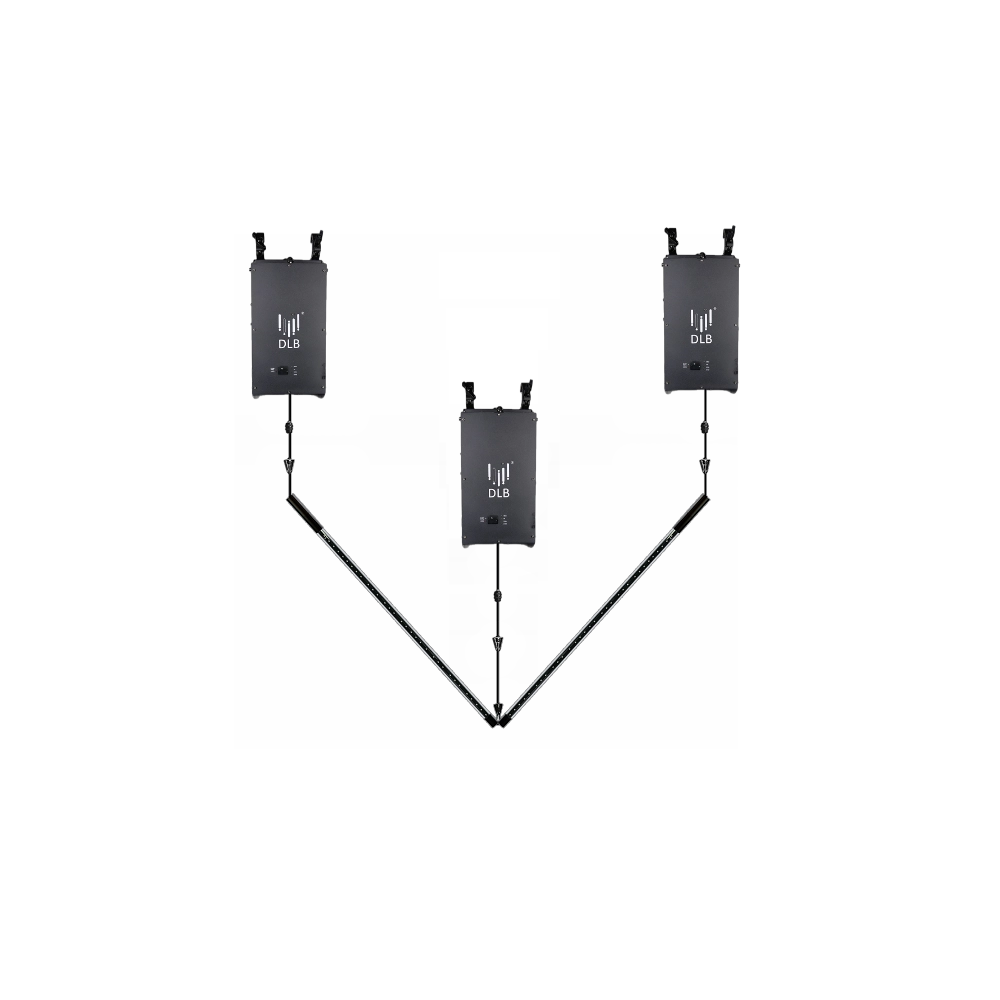
Kinetic Double Rod——Ideal for a wide range of large-scale events: commercial spaces, TV shows, concerts, nightclubs, and various other settings.
FENG-YI’s Kinetic Double Rod delivers dynamic kinetic light effects ideal for large-scale events—from concerts and nightclubs to TV shows and commercial spaces. Elevate your setup with this versatile kinetic light rod, designed for stunning visual impact and seamless integration.
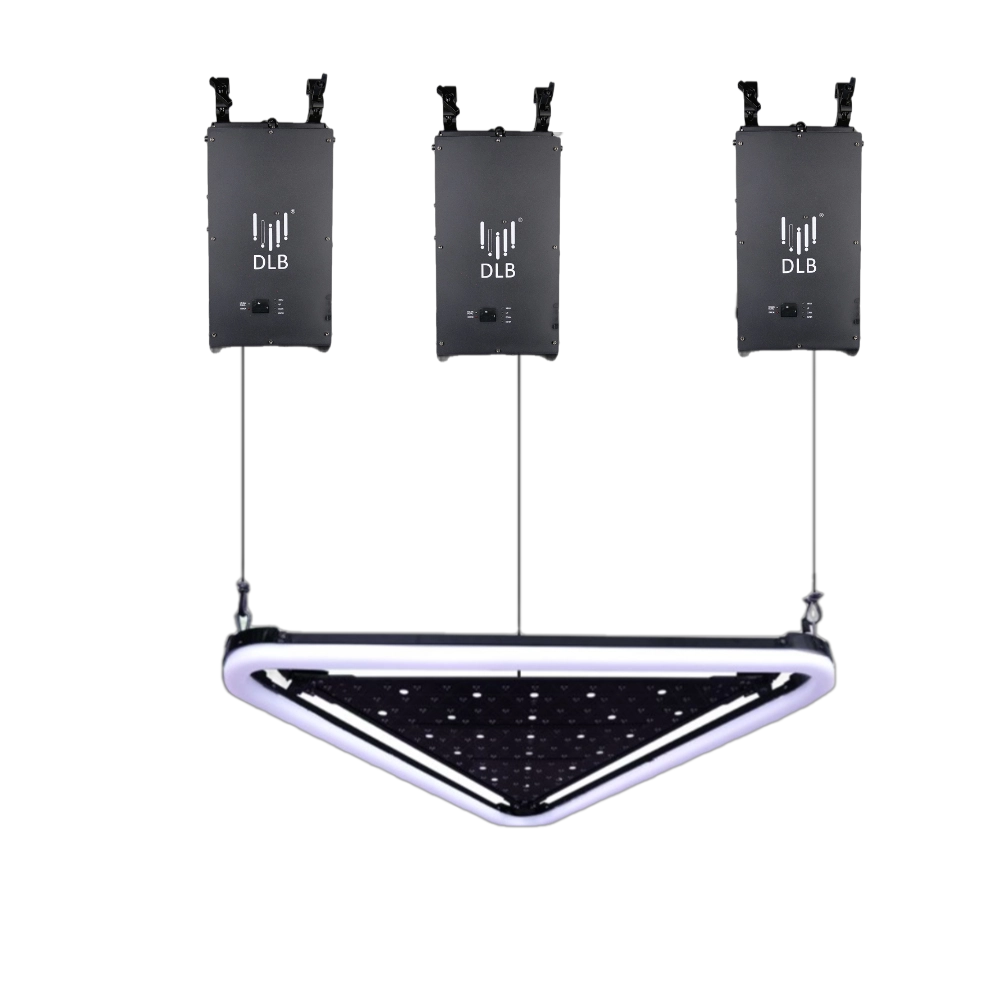
Kinetic Arc Panel——Ideal for a wide range of large-scale events: commercial spaces, TV shows, concerts, nightclubs, and various other settings.
FENG-YI’s Kinetic Arc Panel features dynamic kinetic light technology with kinetic triangle LED light panels, perfect for enhancing large-scale events like concerts, TV shows, nightclubs, and commercial spaces. Elevate your visual experience with innovative, high-impact lighting solutions.
Want to learn more about the latest updates?
Have questions or ready to illuminate your project? Reach out to our expert team today.
Rest assured that your privacy is important to us, and all information provided will be handled with the utmost confidentiality.
By clicking "Send your message," I agree to your processing my personal data.
To see how to withdraw your consent, how to control your personal data, and how we process it, please see our Privacy Policy and Terms of Use.

FENG-YI has been continuously innovating and has grown into a Kinetic Lights Manufacturer and solution provider with unique advantages.
Contact
+86 181 2785 5301
Address
Building 5, No. 34, Fuyuan Road, Jinghu IndustrialZone, Xinhua Town, Huadu District, Guangzhou, China.
© 2025 FENG-YI. All Rights Reserved.
Facebook
Instagram
YouTube
TikTok