










Smart kinetic lighting systems: integration guide
This comprehensive integration guide explains how to plan, specify, install, program, and maintain smart kinetic lighting systems. It covers key components, control protocols (DMX, Art‑Net, sACN), motor selection, safety and power considerations, commissioning workflows, troubleshooting and ROI factors. The guide also introduces FENG-YI's capabilities and how their kinetic lights solutions support performance spaces and commercial projects.
- Smart kinetic lighting systems: integration guide
- Why choose kinetic lights for modern spaces
- Core components of a smart kinetic lights system
- Control protocols: choosing the right protocol for kinetic lights
- Motion hardware selection: motors and mechanical systems for kinetic lights
- Power, safety and regulatory considerations for kinetic lights
- Integration workflow: from design concept to commissioning
- Synchronization strategies for kinetic lights and media
- Troubleshooting & maintenance best practices for kinetic lights
- Comparative table: control protocols and motor types for kinetic lights
- Budgeting and ROI considerations for kinetic lights
- FENG-YI: a practical partner for kinetic lights solutions
- How FENG-YI's capabilities help your kinetic lights project
- Implementation checklist for integrators deploying kinetic lights
- FAQ — Smart kinetic lighting systems and kinetic lights
- What are the typical control options for kinetic lights?
- How do you ensure safety in kinetic lights installations?
- Can I retrofit kinetic lights into an existing venue?
- How do I choose between stepper and servo motors?
- How much network bandwidth do kinetic lights require?
- How can FENG-YI help my project?
- Contact & see our products
- References
- Note on sources
Smart kinetic lighting systems: integration guide
Why choose kinetic lights for modern spaces
Kinetic lights are dynamic lighting systems where the luminaires or their mounting structures move as part of the design intent. For architects, creative directors, and AV systems integrators, kinetic lights deliver motion, depth and programmable behaviors that conventional static lighting cannot. When integrating kinetic lights into performance venues, retail environments, or broadcast studios, the system must meet creative goals while satisfying reliability, safety and control requirements. This guide focuses on practical integration steps and decisions you need to achieve repeatable, high-quality installations.
Core components of a smart kinetic lights system
Successful kinetic lighting projects are engineered systems combining lighting fixtures, motion hardware, control systems, power distribution and safety devices. The main components you will specify and integrate are:
- Lighting fixtures and pixel control (LED, RGBW, pixel-mappable modules)
- Motion hardware (motors, gearboxes, hoists, linear actuators or gimbals)
- Motion controllers and drives (motor controllers, motion CPUs, encoders)
- Lighting & motion control protocols (DMX, Art‑Net, sACN, OSC, MIDI, industry-specific APIs)
- Power distribution and cabling (mains, low-voltage power supplies, power-data hybrids)
- Safety systems (limit switches, slack-line sensors, load cells, emergency stops)
- Network infrastructure and supervisory control (Ethernet switches, VLANs, time synchronization)
Design decisions for each of these components are driven by project scale, movement complexity, environmental constraints and budget.
Control protocols: choosing the right protocol for kinetic lights
Control architecture impacts reliability and latency. Typical choices include:
- DMX512 - a time-tested serial protocol used for pixel and fixture control. Simple to implement for small numbers of fixtures but constrained by 512-channel universes.
- Art‑Net - a UDP/IP encapsulation of DMX over Ethernet. Scales to many universes and integrates with lighting consoles and pixel-mapping tools.
- sACN (E1.31) - an ANSI standard for streaming ACN over IP networks. Well-suited for robust multicast distribution and large installations.
- OSC / Proprietary APIs - used for high-level show control, interactive systems or when integrating motion engines and media servers.
Best practice: separate motion-control traffic from lighting pixel traffic using VLANs or physically separate networks. Leave timing-critical synchronization to hardware-based triggers or time protocols (PTP for media/video timing) when sub-10ms synchronization is required.
Motion hardware selection: motors and mechanical systems for kinetic lights
Motion selection is driven by required degrees of freedom, load, precision, speed and runtime. Common motor families used in kinetic lights projects include:
- Stepper motors — excellent for repeatable open-loop positioning, cost-effective for simple linear and rotary moves.
- Servo motors (closed-loop) — provide higher torque, acceleration and positional accuracy; preferred for dynamic moves with variable loads.
- Brushless DC (BLDC) motors — good for continuous rotation at higher speeds and smooth motion profiles; often used with encoders and dedicated motor drives.
When selecting motor and gearbox combinations, prioritize:
- Safety margins in torque and braking capacity
- Availability of encoders or absolute feedback for repeatability
- Integration support from motor controller vendors (protocols, SDKs)
Power, safety and regulatory considerations for kinetic lights
Power planning must cover peak startup currents, continuous loads and emergency scenarios. Kinetic systems combine mains power for motors and low-voltage power for LEDs — both require careful distribution and circuit protection. Include these safety elements:
- Independent emergency-stop circuits that remove power from motion drives while allowing safe lighting fallback modes
- Physical limit switches and redundant software limits
- Load monitoring (load cells, current sensors) to detect mechanical failures or unexpected loads
- Regular inspection routines and maintenance access in design documentation
Comply with local electrical and mechanical codes; when in doubt, consult a certified electrical or structural engineer early in design.
Integration workflow: from design concept to commissioning
Follow a phased workflow to reduce risks and keep deliverables trackable:
- Requirements & creative brief — define movement vocabulary, durations, speeds, light intensity and interaction models.
- Technical concept & risk assessment — identify load cases, failure modes, and interfaces with other building systems.
- Prototype & lab testing — build a scaled mock-up for motion, noise, heat and control validation.
- Detailed engineering — specify motors, controllers, cabling, power distribution, and safety devices.
- Installation & wiring — follow cable labeling, test plans, and factory acceptance tests (FAT).
- Programming & show creation — program motion and lighting scenes, then run integrated tests with timing checks and emergency procedures.
- Commissioning & handover — create operations documentation, maintenance schedules and staff training sessions.
Document each stage with versioned drawings, control mappings and test results. Clear deliverables reduce costly rework during the installation phase.
Synchronization strategies for kinetic lights and media
High-impact shows often synchronize movement with video and sound. Techniques to achieve reliable sync:
- Use a master clock (PTP or SMPTE LTC) distributed across devices to align timelines.
- Offload motion-critical timing to local motion controllers with preloaded cues and timestamps to avoid network jitter.
- Embed timecode triggers (SMPTE, MIDI Time Code) in the show timeline for deterministic cueing.
For pixel-perfect sync between LEDs and motion, test under production load and include latency budgets in your design documents.
Troubleshooting & maintenance best practices for kinetic lights
Operational reliability comes from planned maintenance and quick fault isolation. Recommended practices:
- Implement comprehensive monitoring (temperatures, currents, position feedback) with health dashboards.
- Create a spare-parts list and onsite toolkit including encoders, fuses, and emergency brakes.
- Schedule routine inspections for cables, mechanical wear, and lubrication in moving parts.
- Train venue staff on basic troubleshooting and emergency procedures; provide step-by-step fault trees for common issues.
Comparative table: control protocols and motor types for kinetic lights
The table below summarizes typical trade-offs when choosing protocols and motor families for kinetic lighting applications.
| Item | Strengths | Limitations | When to choose |
|---|---|---|---|
| DMX512 | Simple, widely supported by lighting fixtures and consoles | Limited to 512 channels per universe, point-to-point wiring can be cumbersome | Small installations and legacy fixtures |
| Art‑Net | Scales across Ethernet, supports many universes, broad tool support (e.g., Madrix) | Requires network design; multicast traffic can stress unmanaged networks | Medium to large pixel-mapped kinetic displays |
| sACN (E1.31) | ANSI standard, supports robust streaming and multicast; good for large deployments | Requires disciplined network configuration and IGMP snooping for efficiency | Large distributed lighting networks with many universes |
| Stepper motors | Cost-effective, good repeatability for open-loop applications | Can lose steps under overload without feedback; limited high-speed performance | Predictable short-travel movements and cost-sensitive projects |
| Servo motors | High torque, closed-loop feedback, precise dynamic control | Higher cost and complexity; requires tuned drives | High-performance motion with variable loads and fast acceleration |
| Brushless DC (BLDC) | Smooth operation, efficient at continuous rotation, suited to high-speed moves | Needs electronic commutation and controller support | Continuous or high-speed rotation with encoder feedback |
Sources: ANSI E1.11 (DMX512), Artistic Licence (Art‑Net documentation), ANSI E1.31 (sACN), industry motor references (see references).
Budgeting and ROI considerations for kinetic lights
Kinetic lights projects often have higher upfront costs than static lighting due to motors, control systems and safety features. To frame ROI, quantify these value drivers:
- Increased audience dwell time and revenue (retail/display environments)
- Improved broadcast production value or ticket sales for performances
- Flexibility: reprogrammable content reduces long-term refurbishment costs
Include lifecycle costs (maintenance, spare parts, software licenses) in your total cost of ownership calculations. For venues with changing programming, kinetic lights can pay back faster than static, costly set changes.
FENG-YI: a practical partner for kinetic lights solutions
Since its establishment in 2011, FENG-YI has been continuously innovating and has grown into a creative kinetic light manufacturing service provider with unique advantages. The company is committed to exploring new lighting effects, new technologies, new stage designs, and new experiences. Through professional Kinetic Light art solutions, we empower emerging performance spaces, support the development of new performance formats, and meet the diverse needs of different scenarios.
Located in Huadu District, Guangzhou, the company currently has 62 employees, including an 8-member professional design team and 20 highly experienced technical service staff. FENG-YI has become a High Quality user of Madrix software in mainland China, offering both on-site installation & programming as well as remote technical guidance services for Kinetic Light projects.
With a total area of 6,000㎡, FENG-YI owns China’s largest 300㎡ art installation exhibition area and operates 10 overseas offices worldwide. Our completed Kinetic Light projects have successfully reached over 90 countries and regions, covering television stations, commercial spaces, cultural tourism performances, and entertainment venues.
Today, FENG-YI is recognized as a leading kinetic lights scene solution provider in the industry, delivering innovative lighting experiences that integrate technology and creativity.
How FENG-YI's capabilities help your kinetic lights project
FENG-YI combines creative design, engineering and on-site service to reduce integration risk. Key advantages include:
- End-to-end service: concept design, prototyping, FAT, installation and programming
- Experienced technical team for onsite and remote guidance
- Large testing & exhibition area to validate shows before deployment
- Global footprint enabling local support for international projects
FENG-YI’s core products center on Kinetic Lighting modules and motion systems engineered for show reliability. Their competitive strengths are rapid prototyping, strong software capability (Madrix-based pixel mapping), and field-proven safety procedures—important differentiators for mission-critical venues.
Implementation checklist for integrators deploying kinetic lights
Use this checklist to validate readiness before installation:
- Creative brief and movement vocabulary signed off
- Structural & electrical engineering approvals obtained
- Network architecture and VLAN plan documented
- FAT plan including motion, lighting and emergency-stop tests
- Spare parts & maintenance schedule agreed with owner/operator
- Operator training and handover documentation delivered
FAQ — Smart kinetic lighting systems and kinetic lights
What are the typical control options for kinetic lights?
Typical control stacks use a lighting console or media server for pixel control (DMX/Art‑Net/sACN) and a motion controller or PLC for drive control. High-end setups use timecode or PTP to synchronize motion, video and audio.
How do you ensure safety in kinetic lights installations?
Implement redundant limit switches, emergency-stop circuits, load sensors, and structural load safety margins. Follow local electrical and mechanical codes and perform regular inspections and tests.
Can I retrofit kinetic lights into an existing venue?
Yes, but retrofits require careful structural assessment, routing for power and control cables, and a robust plan for access and maintenance. Prototyping a mock-up is highly recommended to validate sightlines and mechanical behavior.
How do I choose between stepper and servo motors?
Use stepper motors for predictable, low-cost, repeatable moves with light loads. Choose servo motors when you need high torque, fast acceleration or closed-loop positional accuracy under variable loads.
How much network bandwidth do kinetic lights require?
Bandwidth depends on pixel count and update rate. For pixel-mapped installations, plan network capacity by calculating pixel channels (RGBW per pixel) × refresh rate and choose Art‑Net or sACN for large multi‑universe deployments. Always segregate motion control traffic to avoid jitter.
How can FENG-YI help my project?
FENG-YI offers design, testing, on-site installation, programming and remote technical support. Their Madrix expertise and large test facility enable verify-before-deploy workflows, reducing onsite risk and accelerating commissioning.
Contact & see our products
If you are planning a kinetic lights project and need technical support, system design or a FAT, contact FENG-YI to discuss your requirements or schedule a demo at our 300㎡ exhibition area. Our engineers provide on-site installation & programming as well as remote technical guidance to ensure your kinetic lighting system meets creative and operational goals.
References
- ANSI E1.11 - DMX512-A standard (Entertainment Services and Technology Association)
- Art-Net specification (Artistic Licence Ltd.)
- ANSI E1.31 - sACN (Streaming ACN) standard documentation (PLASA/ESTA)
- Madrix software product information (Madrix GmbH)
- Stepper motor — technical overview (industry motor references / manufacturer datasheets)
- Servo motor and BLDC motor technology summaries (industry references / manufacturer guides)
Note on sources
The references above indicate standards and vendor documentation commonly used for kinetic lights projects. Consult the specific standard documents and manufacturer datasheets during detailed engineering to ensure compliance and correct component selection.
Tags
Kinetic Glowing ball
Kinetic Glowing ball
Full color.
Full color.
Kinetic LED lights
Kinetic LED lights
kinetic ring light
kinetic ring light
kinetic light fixtures
kinetic light fixtures
Kinetic Glass Raindrop
Kinetic Glass Raindrop
Recommended for you
What are kinetic lights and how do they work?
Top Waterproof Profile Light Types Compared
Kinetic lighting in hospitality: hotels and restaurants
Safety standards and regulations for kinetic lighting
Prdoucts Categories
Question you may concern
Wholesale Cooperation
Are samples provided for wholesale cooperation? How is the sample fee settled?
1-2 standard samples are provided free of charge (the customer needs to bear the freight). For customized samples, a cost fee is charged (e.g., 200-500 RMB/unit for appearance-customized samples). If the customer places a subsequent bulk order (meeting the MOQ of the corresponding product), the sample fee can be fully deducted from the payment, and free samples do not need to be returned.
Products
The fixture does not respond to the DMX controller. How to fix it?
Resolve with these checks:
1. DMX Address & Channels: Ensure the fixture’s starting address is correct (e.g., 34CH fixture 1: A001, fixture 2: A035) and the controller’s channel count ≥ total fixture channels.
2. Signal Wiring: Use shielded twisted-pair DMX cables (≤150m); install a 120Ω terminal resistor between pins 2-3 of the last fixture’s XLR connector.
3. Signal Amplification: For cable lengths >150m, add a DMX signal amplifier to avoid signal loss; separate DMX cables from high-voltage power cables (≥1m apart) to prevent interference.
Wedding & Parties Lighting Solutions
How is safety ensured?
Encoder closed-loop control, emergency stop circuits, software/hardware limit switches, load monitoring, and collision-avoidance zones. A comprehensive pre-performance checklist is provided.
Nightclub Lighting
Can your company provide design solutions?
Of course. We can provide a lighting design based on your budget and desired effect. Once the design is finalized, we can provide a 3D simulation video to give you a clear understanding of the overall design.
You may also like
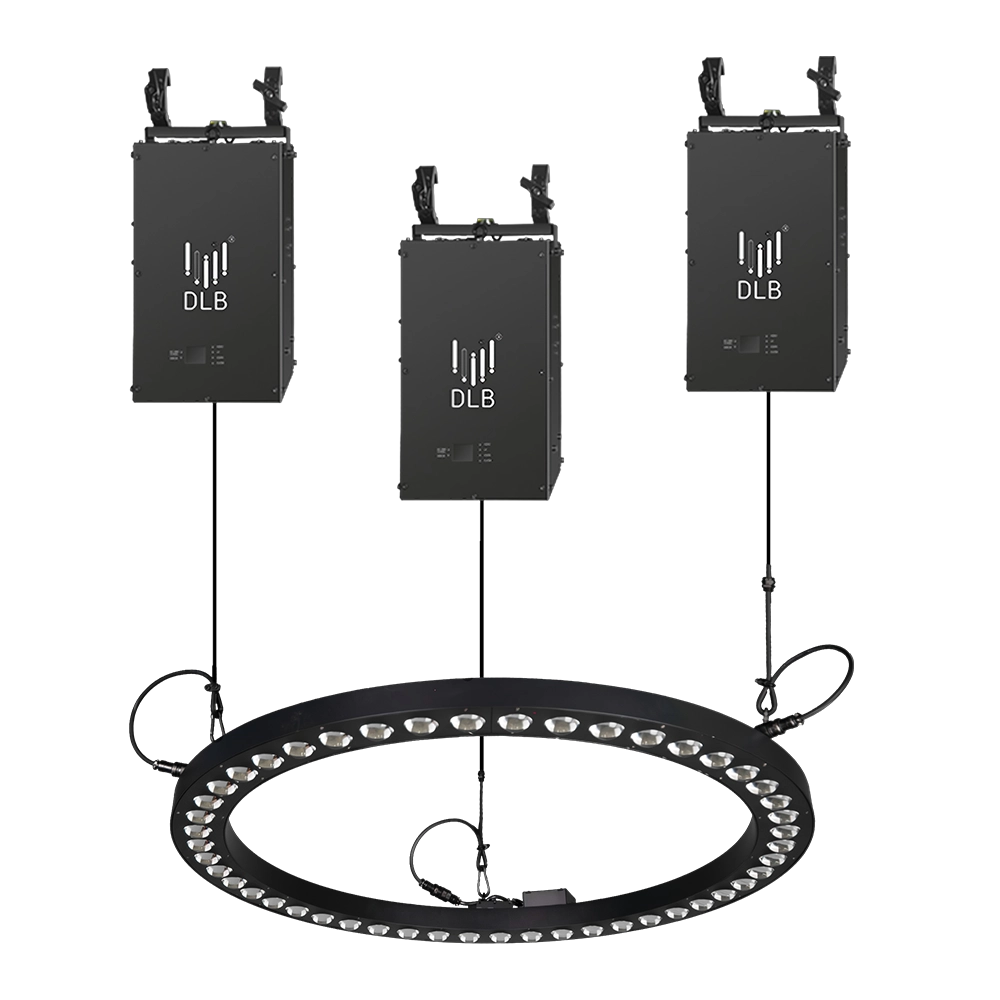
Kinetic Halo Ring——Ideal for a wide range of large-scale events: commercial spaces, TV shows, concerts, nightclubs, and various other settings.
Experience dynamic illumination with the FENG-YI Kinetic Halo Ring. This versatile kinetic light is perfect for large-scale events—commercial spaces, TV shows, concerts, and nightclubs—delivering stunning kinetic ring light effects that captivate every audience.
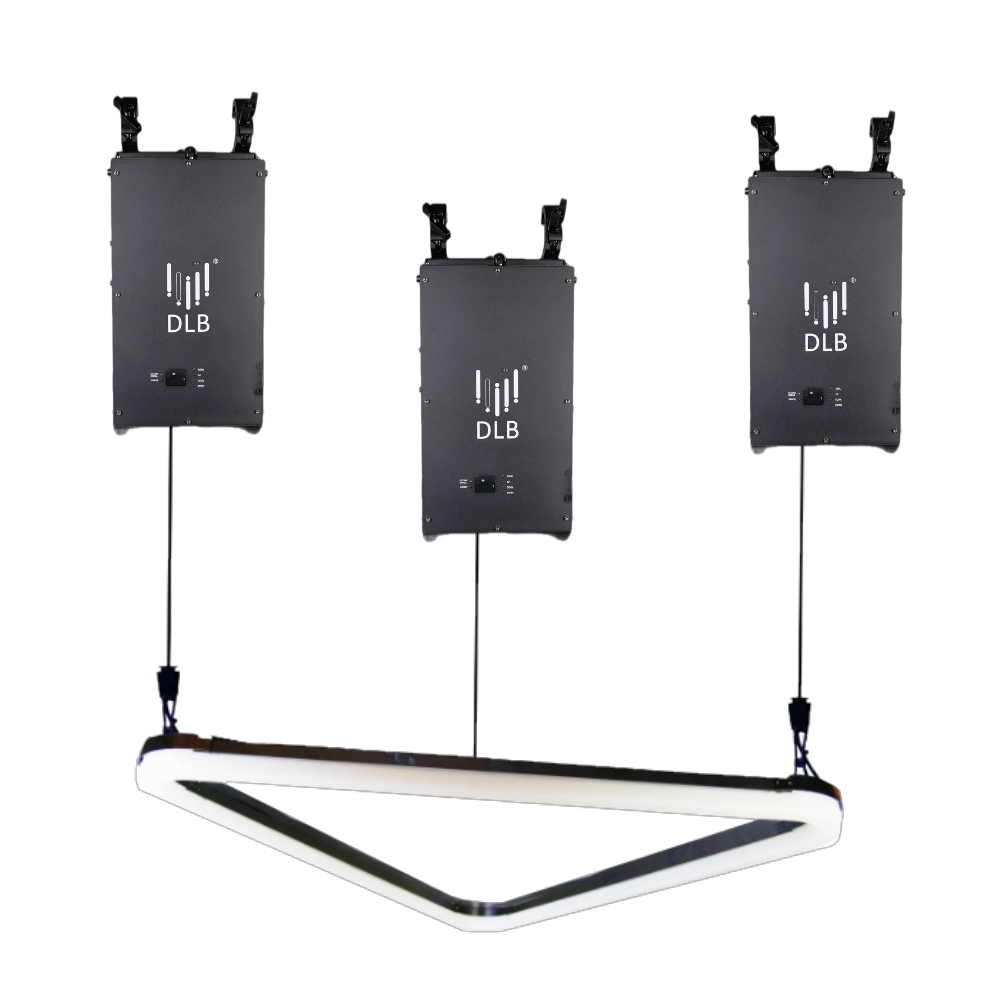
Kinetic Arc Light——Ideal for a wide range of large-scale events: commercial spaces, TV shows, concerts, nightclubs, and various other settings.
FENG-YI’s Kinetic Arc Light is a kinetic triangle LED light panel designed for large-scale events. Perfect for commercial spaces, TV shows, concerts, and nightclubs, it delivers dynamic lighting effects that captivate audiences and elevate any setting. Ideal kinetic light solution.
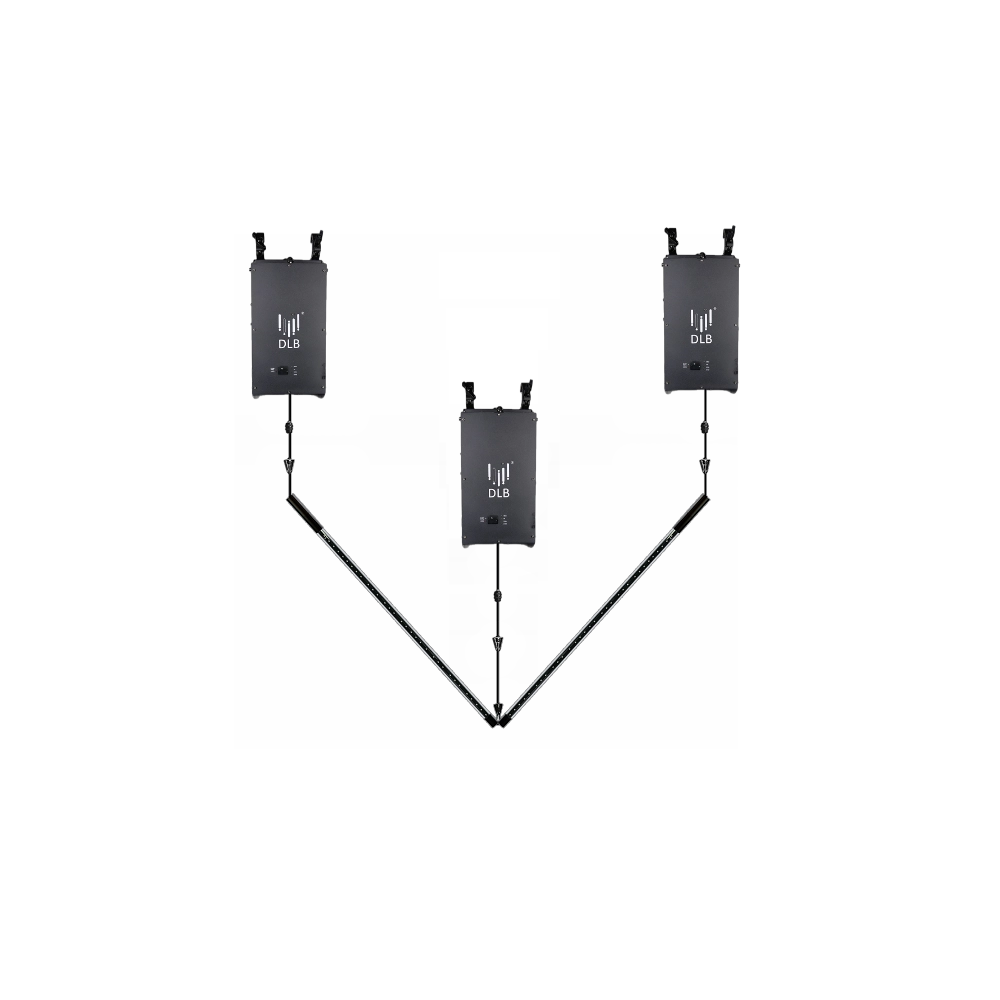
Kinetic Double Rod——Ideal for a wide range of large-scale events: commercial spaces, TV shows, concerts, nightclubs, and various other settings.
FENG-YI’s Kinetic Double Rod delivers dynamic kinetic light effects ideal for large-scale events—from concerts and nightclubs to TV shows and commercial spaces. Elevate your setup with this versatile kinetic light rod, designed for stunning visual impact and seamless integration.
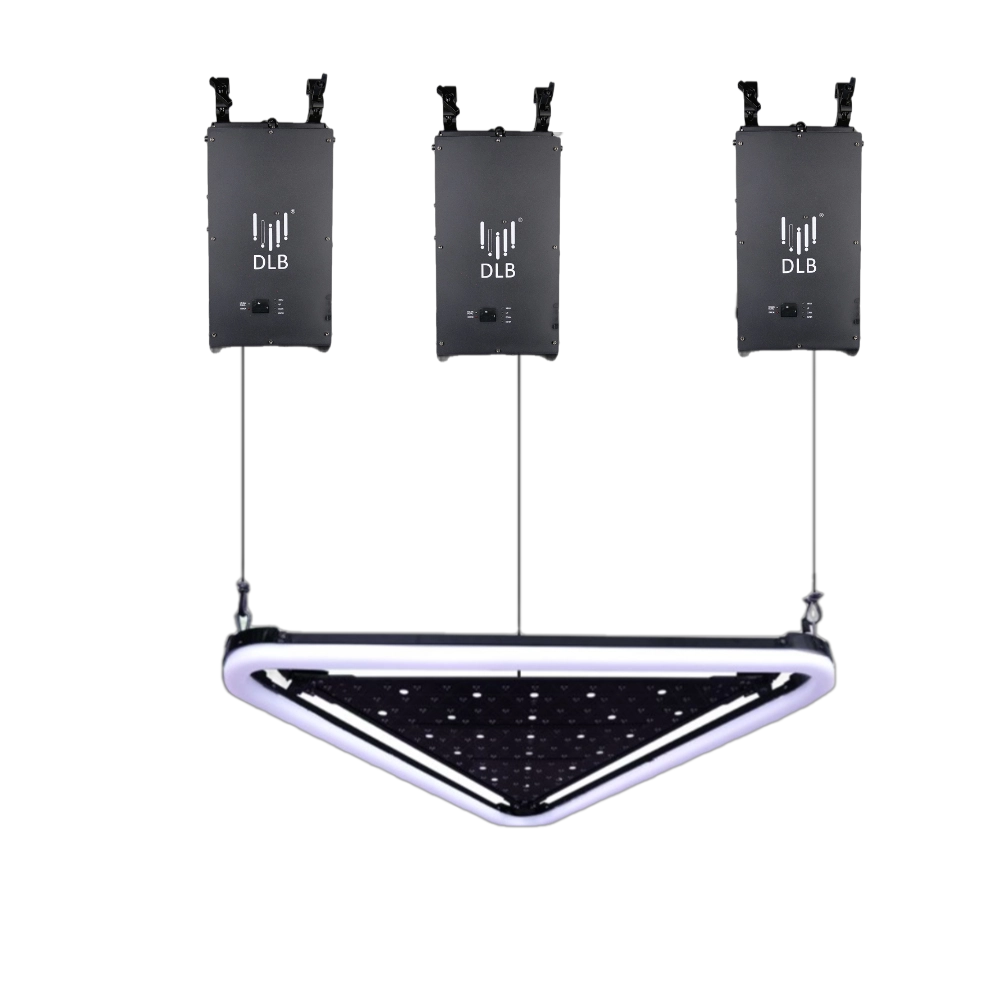
Kinetic Arc Panel——Ideal for a wide range of large-scale events: commercial spaces, TV shows, concerts, nightclubs, and various other settings.
FENG-YI’s Kinetic Arc Panel features dynamic kinetic light technology with kinetic triangle LED light panels, perfect for enhancing large-scale events like concerts, TV shows, nightclubs, and commercial spaces. Elevate your visual experience with innovative, high-impact lighting solutions.
Want to learn more about the latest updates?
Have questions or ready to illuminate your project? Reach out to our expert team today.
Rest assured that your privacy is important to us, and all information provided will be handled with the utmost confidentiality.
By clicking "Send your message," I agree to your processing my personal data.
To see how to withdraw your consent, how to control your personal data, and how we process it, please see our Privacy Policy and Terms of Use.

FENG-YI has been continuously innovating and has grown into a Kinetic Lights Manufacturer and solution provider with unique advantages.
Contact
+86 181 2785 5301
Address
Building 5, No. 34, Fuyuan Road, Jinghu IndustrialZone, Xinhua Town, Huadu District, Guangzhou, China.
© 2025 FENG-YI. All Rights Reserved.
Facebook
Instagram
YouTube
TikTok