










Kinetic lighting installation and wiring guide
A practical, step-by-step installation and wiring guide for kinetic lighting systems. Covers site assessment, power and control wiring, protocol selection, safety, commissioning, troubleshooting, and maintenance. Includes a comparison table of control protocols and FENG-YI's capabilities in delivering turnkey kinetic light solutions.
- Kinetic lighting installation and wiring guide
- Why a careful approach to kinetic lighting matters
- 1. Pre-installation planning and site survey — ensure feasibility for kinetic lighting
- 2. Load calculations and power distribution — sizing for safety and performance
- 3. Choosing cables and connectors — durable cabling for motion and data
- 4. Control protocol selection — pick the right protocol for synchronization
- 5. Network design and best practices — reliable control for complex motion
- 6. Grounding, bonding and surge protection — protect equipment and people
- 7. Motor and mechanical driver wiring — reduce EMI and ensure longevity
- 8. Addressing and channel mapping — maintainable addressing for kinetic lighting
- 9. Commissioning and programming — test in layers
- 10. Safety systems and emergency stops — protect performers and audiences
- 11. Maintenance and lifecycle considerations — plan for long-term reliability
- 12. Troubleshooting common wiring and control issues
- FENG-YI: Experience and capability in Kinetic Light solutions
- FENG-YI products and competitive strengths
- Comparison: wiring considerations summary (quick reference)
- FAQ — Frequently Asked Questions about kinetic lighting
- Q: What is the difference between kinetic lighting and standard stage lighting?
- Q: Can I use standard DMX wiring for large kinetic pixel arrays?
- Q: How often should I perform maintenance on a kinetic lighting rig?
- Q: What safety features are mandatory for kinetic installations?
- Q: Do FENG-YI systems support remote troubleshooting and programming?
- Contact and next steps — get support or view products
- Related resources and sources
Kinetic lighting installation and wiring guide
Why a careful approach to kinetic lighting matters
Kinetic lighting combines moving fixtures, synchronized control, and luminous elements to create dynamic, three-dimensional visual experiences. Because these systems mix mechanical movement, data control, and significant power distribution, a careful installation and wiring approach is essential for safety, reliability, and artistic fidelity. This guide walks you through planning, power and control wiring, commissioning, and maintenance of kinetic lighting rigs, with practical, industry-standard recommendations suitable for venues, commercial spaces, and touring applications.
1. Pre-installation planning and site survey — ensure feasibility for kinetic lighting
Good installations start with a comprehensive site survey. Evaluate structural supports (rigging points, trusses), ceiling heights, access for maintenance, HVAC interactions, and audience sightlines. Collect electrical infrastructure details: panel capacity, available phases, distance from distribution to fixture locations, and existing grounding systems. Confirm local electrical codes (for example, NFPA 70 / NEC in the USA) and venue-specific regulations early in the design process.
2. Load calculations and power distribution — sizing for safety and performance
Calculate total power draw of motors/drivers, LEDs, control electronics, and ancillary devices (sensors, DMX nodes, network switches). Include inrush current for motor drivers and LED power supplies (PSUs). Use a 20–25% safety margin above calculated steady-state power and ensure distribution panels and breakers are sized accordingly. For large kinetic installations, distribute power across multiple breakers and phases to avoid single-circuit overloads and to reduce voltage drop over long runs.
3. Choosing cables and connectors — durable cabling for motion and data
Kinetic lighting systems require cables that tolerate movement, flexing, and repeated cycles. For power runs use flexible stranded conductors rated for the expected current and environmental conditions (e.g., PVC or TPE insulation for indoor use, XLPE for higher thermal tolerance). For control data consider the following:
- DMX512: use shielded twisted pair (STP) Ethernet-style cable (e.g., Belden 9841) with 120-ohm characteristic impedance for long DMX runs when using EIA-485-compatible devices.
- Art-Net/sACN/Arbitrary network: use CAT6 or CAT6A for Gigabit network segments, with proper strain relief and grommets where cables pass through moving parts.
- Motor control cables: follow motor-driver manufacturer guidance—often multi-core control cable with separate power and control conductors is recommended.
Always use locking connectors (Neutrik powerCON, etherCON, XLR-locked, or TRS with latches) in moving applications to prevent accidental disconnections. Plan mechanical cable paths and use cable management (cable chains, drag-chains, or spiral wraps) to protect wiring from abrasion and fatigue.
4. Control protocol selection — pick the right protocol for synchronization
Choosing the right control protocol affects latency, scalability, and ease of programming. Below is a concise comparison of common lighting control protocols used in kinetic installations.
| Protocol | Best for | Max universes | Cabling | Latency / Notes |
|---|---|---|---|---|
| DMX512 (E1.11) | Simple point-to-point control, legacy fixtures | 1 per line (512 channels) | 2-pair STP (120Ω) or DMX-specific cable | Deterministic, limited bandwidth; good for small rigs |
| Art-Net | Large arrays, pixel-mapped effects over IP | Theoretical thousands (over IP) | CAT5e/CAT6 Ethernet | Scalable; relies on network design to control latency |
| sACN (E1.31) | High-universe systems requiring UDP multicast | Large, practically many universes | CAT5e/CAT6 Ethernet | Designed for entertainment networks; good multicast support |
Sources for protocol standards and characteristics are listed at the end of the article.
5. Network design and best practices — reliable control for complex motion
If your kinetic system uses Ethernet-based protocols (Art-Net, sACN), design the network as a dedicated lighting control VLAN or physically separate network to prevent interference from house networks. Use managed switches with IGMP snooping to handle multicast traffic efficiently, and enable QoS if audio/video streams share the same infrastructure. Avoid long daisy-chained switches for mission-critical segments—use star topologies where possible. Always maintain good documentation of IP addressing, universe mappings, and node locations.
6. Grounding, bonding and surge protection — protect equipment and people
Grounding and bonding are critical for safety and signal integrity. Connect all metallic moving parts, trusses, and equipment racks to a common equipment grounding conductor to reduce touch potentials and electromagnetic interference. Install surge protection devices on incoming power feeds and consider implementing isolation transformers or line conditioners for sensitive electronics. Ensure compliance with local electrical codes (e.g., NEC) for grounding and overcurrent protection.
7. Motor and mechanical driver wiring — reduce EMI and ensure longevity
Motors and their drivers generate electrical noise that can affect data and LED electronics. Keep motor power cables separate from control/data cables and route them physically apart. Shield motor control wires and ground shields at one end to avoid ground loops. Use ferrite cores on motor leads and data lines where EMI is suspected. For stepper and servo systems, follow manufacturers’ wiring diagrams precisely for encoder feedback and brake relays. Include thermal protection and cable flex-rating considerations in moving sections.
8. Addressing and channel mapping — maintainable addressing for kinetic lighting
Plan addressing early. Create a channel map document mapping physical devices, motors, and LED channels to DMX/Art-Net/sACN addresses and software channels. Use consistent naming conventions and include physical location, device type, fixture ID, and universe/address. For pixel-mapped kinetic elements, store mapping files and backup copies of all programming. This makes troubleshooting and future changes far easier.
9. Commissioning and programming — test in layers
Commissioning is best done in progressive layers: power integrity, basic fixture connectivity, motor homing and travel limits, data channel validation, and full cue playback. Key steps:
- Verify power at each distribution point under load and confirm breakers and fuses are rated correctly.
- Test motor homing and limit switches without lights connected to reduce variables.
- Confirm DMX/universe mapping with a protocol monitor and verify that pixel addressing matches software mapping.
- Run full show playback at reduced speed to validate synchronization between motion and lighting timelines.
Record test procedures and expected results for facility handover.
10. Safety systems and emergency stops — protect performers and audiences
Install emergency stop circuits for all kinetic motion. These stops should be hardwired to cut motor power via safety-rated contactors or relays, not only through software commands. Emergency stops must be accessible from stage, wings, and control position. Integrate limit switches, slack-line detectors, and overload protection into the motion control system. Conduct regular safety drills and include safety checklists in standard operating procedures.
11. Maintenance and lifecycle considerations — plan for long-term reliability
Establish scheduled maintenance: cable inspections for wear, lubrication or replacement intervals for mechanical parts, firmware updates for controllers, and periodic electrical testing. Keep spare parts (motors, drivers, PSUs, connectors) on hand to minimize downtime. Document all firmware versions and software backups. For touring rigs, use reinforced connectors and strain-relief designs appropriate for road use.
12. Troubleshooting common wiring and control issues
Common issues and quick checks:
- Noisy LED behavior: check grounding, separate motor and data cables, and add ferrites.
- Data dropouts: verify cable lengths, use proper cable types, and check termination and signal levels for DMX/RS485.
- Motors drift or fail to home: inspect limit switches, encoder feedback wiring, and power supply stability.
- Latency or jitter: assess network congestion, switch configuration (IGMP, QoS), and switch CPU load.
Use systematic isolation: test power-only, then power + motion, then data + lights, then full show. Log each change during troubleshooting to avoid reverting incorrectly.
FENG-YI: Experience and capability in Kinetic Light solutions
Since its establishment in 2011, FENG-YI has been continuously innovating and has grown into a creative kinetic light manufacturing service provider with unique advantages. The company is committed to exploring new lighting effects, new technologies, new stage designs, and new experiences. Through professional Kinetic Light art solutions, we empower emerging performance spaces, support the development of new performance formats, and meet the diverse needs of different scenarios.
Located in Huadu District, Guangzhou, the company currently has 62 employees, including an 8-member professional design team and 20 highly experienced technical service staff. FENG-YI has become a High Quality user of Madrix software in mainland China, offering both on-site installation & programming as well as remote technical guidance services for Kinetic Light projects.
With a total area of 6,000㎡, FENG-YI owns China’s largest 300㎡ art installation exhibition area and operates 10 overseas offices worldwide. Our completed Kinetic Light projects have successfully reached over 90 countries and regions, covering television stations, commercial spaces, cultural tourism performances, and entertainment venues.
Today, FENG-YI is recognized as a leading kinetic lights scene solution provider in the industry, delivering innovative lighting experiences that integrate technology and creativity.
FENG-YI products and competitive strengths
FENG-YI’s core products include modular motorized rigs, LED pixel strips and modules tailored for moving installations, motors and drive packages, and integrated control nodes optimized for low-latency operation with Madrix and standard lighting protocols. The company's advantages are:
- Integrated design and manufacturing capability—rapid prototyping to production under one roof.
- Local expertise combined with global reach—on-site and remote technical services with international deployments.
- Proven software competency—Madrix-certified programming expertise for pixel mapping and effects.
- Large testing and exhibition area enabling full-scale validation prior to shipping.
Comparison: wiring considerations summary (quick reference)
| Aspect | Recommended Practice | Reason |
|---|---|---|
| Power cabling | Use flexible stranded conductors, sized with 25% margin, distribute across phases | Reduce voltage drop and prevent overloads |
| Control cabling | Use shielded pairs for DMX; CAT6 for Ethernet-based control; segregate from motor cabling | Maintain signal integrity and reduce EMI |
| Connectors | Use locking or latching connectors and strain relief | Prevent accidental disconnects during motion |
| Safety | Hardwired E-stop circuits, bonded chassis grounding | Protect humans and equipment |
Table sources: NEC (NFPA 70) guidance for power distribution; ESTA/ANSI standards for DMX and network protocols; manufacturer recommendations for cable flex life.
FAQ — Frequently Asked Questions about kinetic lighting
Q: What is the difference between kinetic lighting and standard stage lighting?
A: Kinetic lighting includes mechanical motion as an intrinsic element—lighting fixtures, pixels or assemblies move in three-dimensional space under synchronized control. Standard stage lighting is typically static or only includes pan/tilt movements without large-scale moving arrays.
Q: Can I use standard DMX wiring for large kinetic pixel arrays?
A: For small, localized systems DMX512 can be sufficient. For large pixel arrays spanning many universes, Ethernet-based protocols (Art-Net, sACN) over CAT6 are recommended for scalability, multicast efficiency, and simpler cable management.
Q: How often should I perform maintenance on a kinetic lighting rig?
A: Create a site-specific schedule, but a common cadence is a basic inspection before each performance, monthly mechanical and cable checks, and comprehensive annual electrical and mechanical servicing.
Q: What safety features are mandatory for kinetic installations?
A: At minimum, hardwired emergency stops, properly rated safety limit switches, redundant rigging points per code, and proper grounding and bonding. Follow local safety regulations and industry best practices for installations involving performers and audiences.
Q: Do FENG-YI systems support remote troubleshooting and programming?
A: Yes. FENG-YI offers both on-site installation & programming and remote technical guidance services. The company's staff includes experienced technicians skilled in Madrix and common control environments.
Contact and next steps — get support or view products
If you are planning a kinetic lighting project and need expert help with design, installation, or programming, contact FENG-YI’s technical team via our website contact form or request a project consultation. For product inquiries, view our kinetic lighting product catalog or request a quotation. Our team can provide site surveys, installation plans, and on-site commissioning services.
Related resources and sources
- National Fire Protection Association (NFPA) – NFPA 70, National Electrical Code (NEC): guidance for electrical installations.
- Entertainment Services and Technology Association (ESTA) – DMX512 (E1.11) and related ANSI/ESTA standards for control protocols.
- ArKaos / Madrix product documentation — for pixel mapping and software-based control workflows (Madrix noted as a key tool for FENG-YI).
- Manufacturer datasheets for motors, motor drivers, and LED power supplies used in your installation.
For any project, always consult local electrical codes and certified electricians or rigging professionals. With correct planning, wiring, and commissioning, kinetic lighting can deliver reliable, awe-inspiring experiences while maintaining safety and longevity.
Sources:
- NFPA 70: National Electrical Code (NEC), National Fire Protection Association.
- ESTA / ANSI E1.11: DMX512-A standard and related control protocol documents from Entertainment Services and Technology Association.
- Madrix product documentation and best-practice guides.
- Manufacturer installation guides and datasheets for motors, drivers, and LED power supplies.
Tags
Kinetic Opal Raindrop Light
Kinetic Opal Raindrop Light
DIY kinetic light kit
DIY kinetic light kit
programmable kinetic lighting system
programmable kinetic lighting system
kinetic triangle led wall panels for stage
kinetic triangle led wall panels for stage
kinetic light exhibit for events
kinetic light exhibit for events
kinetic light components and parts
kinetic light components and parts
Recommended for you
Dimmable Waterproof Profile Lights: How to Choose
Safety standards and regulations for kinetic lighting
Collaborating with artists and engineers on kinetic lights
Kinetic lighting for stage, concerts, and events
Prdoucts Categories
Question you may concern
Nightclub Lighting
Do you offer pre-programmed services?
Yes, we can pre-set multiple "lighting scenes" (e.g., welcome mode, performance mode, climax mode, and clearing mode) for you. You can switch between them at will, allowing you to see how the lighting changes dynamically with the music and business hours, creating a truly immersive experience.
Logistics Services
Can urgent orders (e.g., customers need the lights the next day) be arranged for expedited shipment?
Expedited shipment is supported for urgent orders: For standard models (e.g., conventional PAR lights, 7-lamp 60W wash lights), if stock is sufficient, SF Express/JD Air Freight can be arranged on the same day (freight is borne by the customer; e.g., the air freight for 10 conventional lights is approximately 200-300 RMB), with next-day delivery. For standard models out of stock, expedited production can be arranged (shipment within 3 days), and an expedited fee (10%-15% of the order amount) will be charged. Specific details to be confirmed with the account manager.
Wedding & Parties Lighting Solutions
Is the control system compatible with existing consoles?
Supports DMX / Art-Net / sACN for seamless integration with mainstream consoles; also enables Timecode-driven operation and multimedia synchronized control.
Products
The lamp does not light up. What should I check?
Troubleshoot in 4 steps:
1. Power Supply: Confirm the input voltage matches AC 200V~240V/50~60Hz; check if the power cable is securely connected and the switch is on.
2. Cooling Period: Ensure the fixture has cooled for 20 minutes after previous use (mandatory cooling to prevent overheat damage).
3. DMX Signal: If in DMX mode, verify the controller is sending "Shutter On" (CH6: 252-255) and "Dimming" (CH7: 100-255) signals.
4. Internal Wiring: If above checks pass, contact after-sales to inspect internal connections (e.g., lamp holder, driver board) for loose or burned components.
You may also like
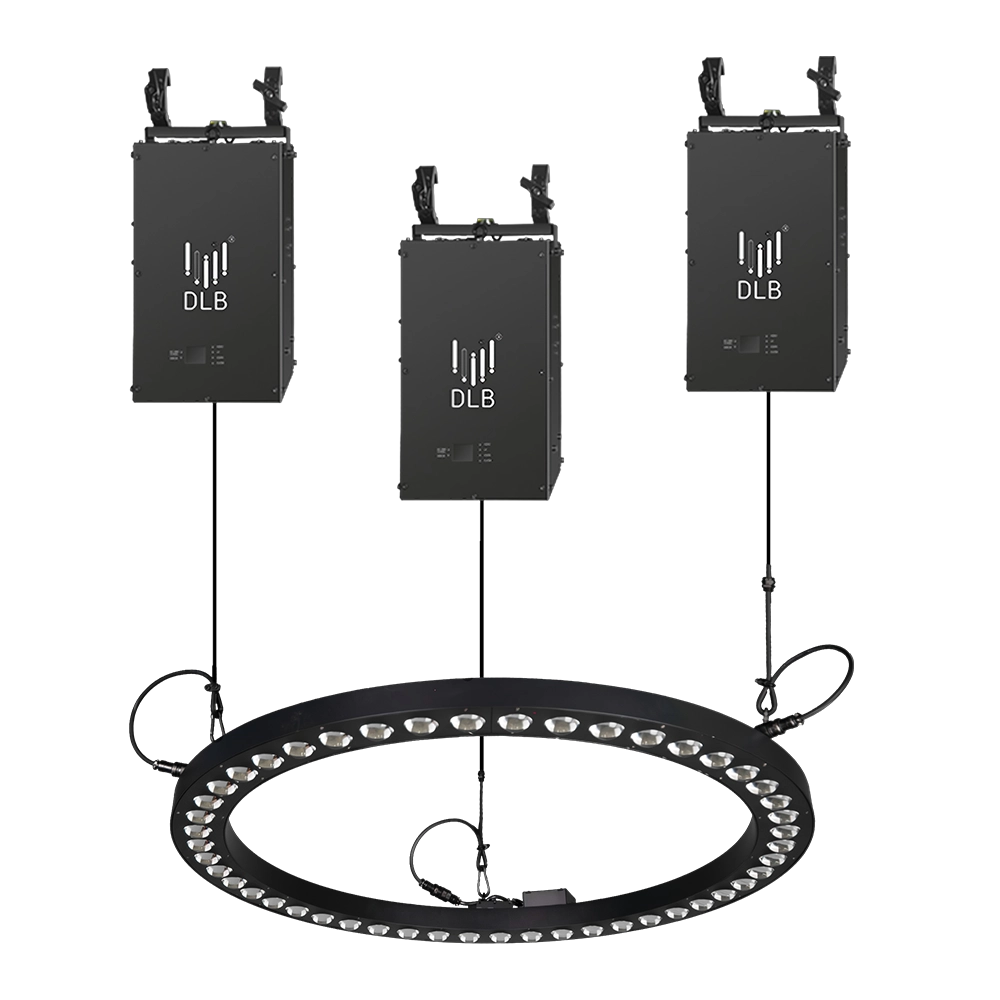
Kinetic Halo Ring——Ideal for a wide range of large-scale events: commercial spaces, TV shows, concerts, nightclubs, and various other settings.
Experience dynamic illumination with the FENG-YI Kinetic Halo Ring. This versatile kinetic light is perfect for large-scale events—commercial spaces, TV shows, concerts, and nightclubs—delivering stunning kinetic ring light effects that captivate every audience.
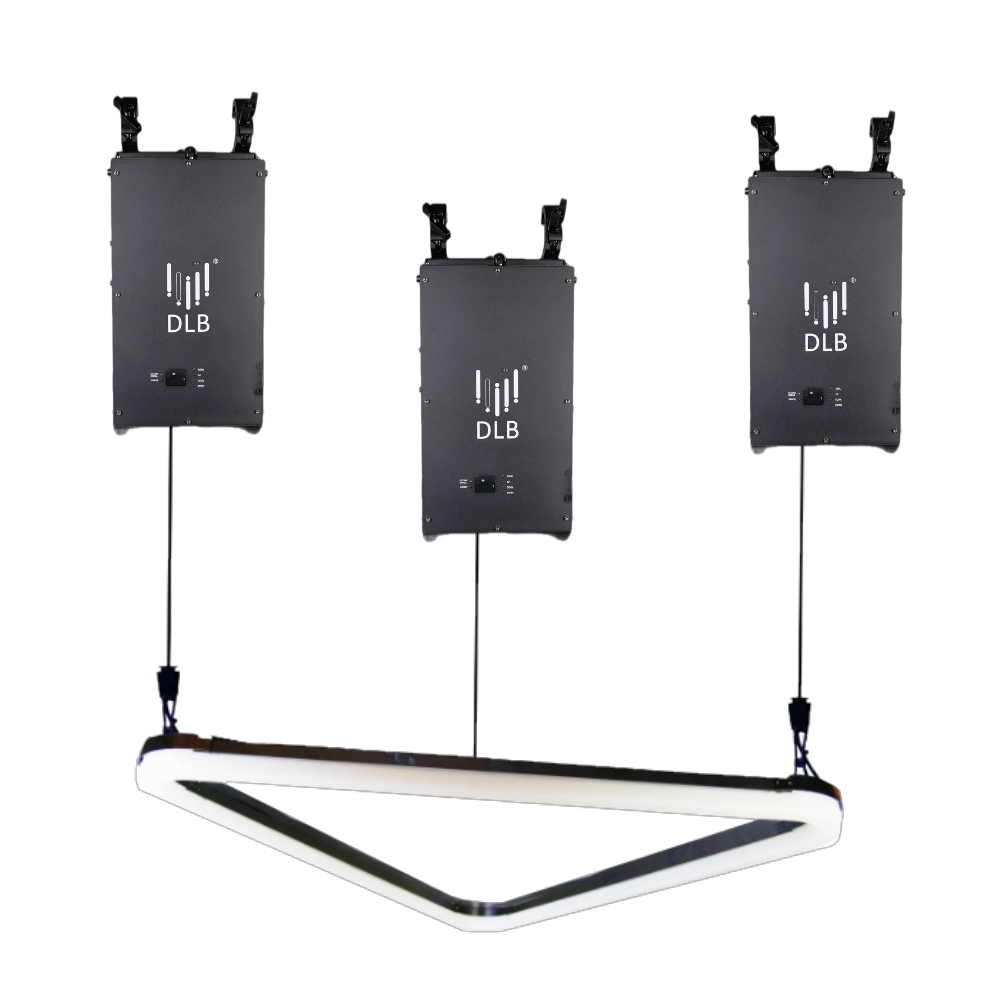
Kinetic Arc Light——Ideal for a wide range of large-scale events: commercial spaces, TV shows, concerts, nightclubs, and various other settings.
FENG-YI’s Kinetic Arc Light is a kinetic triangle LED light panel designed for large-scale events. Perfect for commercial spaces, TV shows, concerts, and nightclubs, it delivers dynamic lighting effects that captivate audiences and elevate any setting. Ideal kinetic light solution.
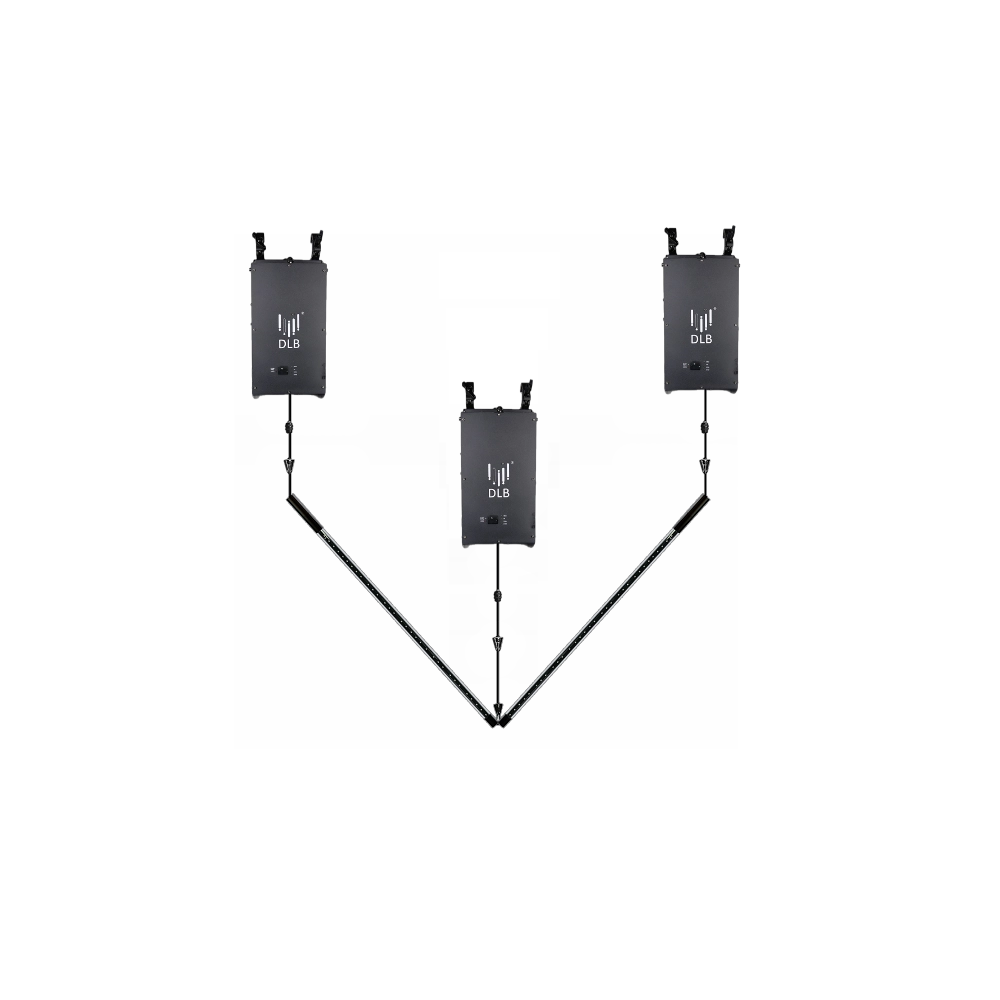
Kinetic Double Rod——Ideal for a wide range of large-scale events: commercial spaces, TV shows, concerts, nightclubs, and various other settings.
FENG-YI’s Kinetic Double Rod delivers dynamic kinetic light effects ideal for large-scale events—from concerts and nightclubs to TV shows and commercial spaces. Elevate your setup with this versatile kinetic light rod, designed for stunning visual impact and seamless integration.
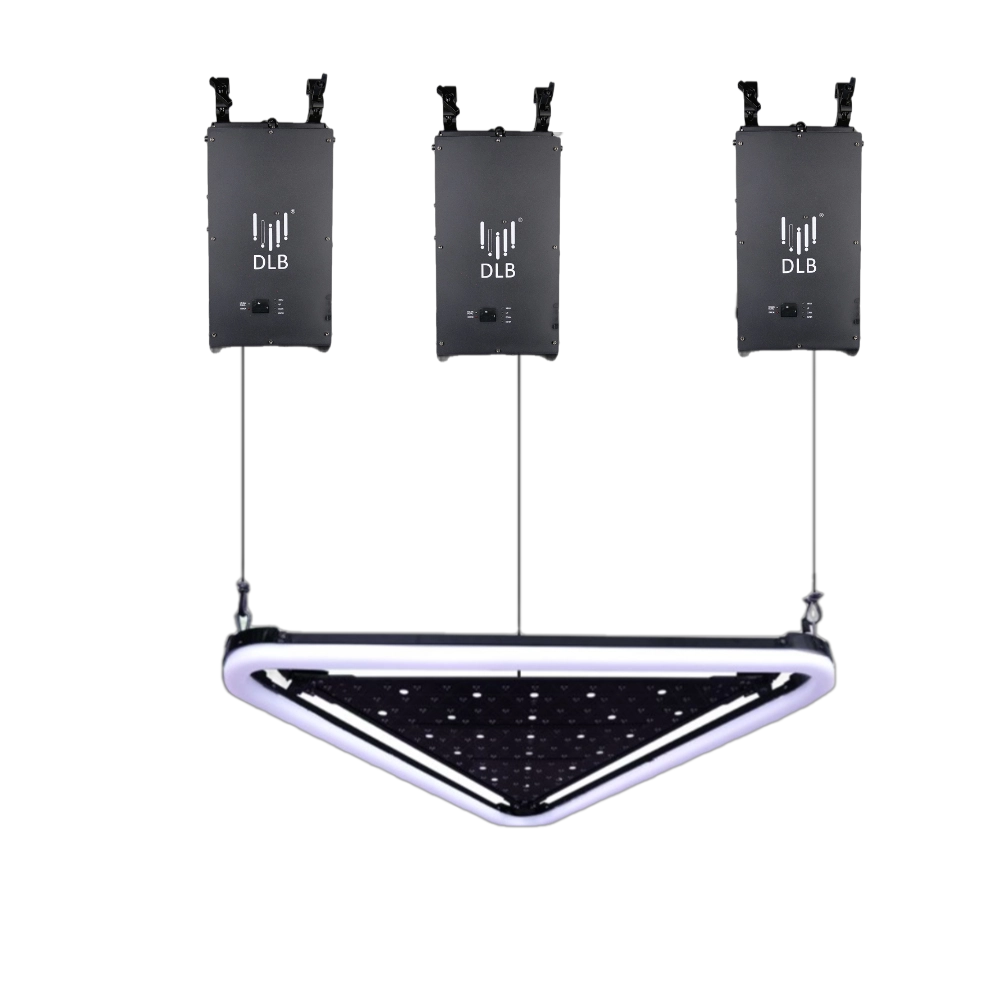
Kinetic Arc Panel——Ideal for a wide range of large-scale events: commercial spaces, TV shows, concerts, nightclubs, and various other settings.
FENG-YI’s Kinetic Arc Panel features dynamic kinetic light technology with kinetic triangle LED light panels, perfect for enhancing large-scale events like concerts, TV shows, nightclubs, and commercial spaces. Elevate your visual experience with innovative, high-impact lighting solutions.
Want to learn more about the latest updates?
Have questions or ready to illuminate your project? Reach out to our expert team today.
Rest assured that your privacy is important to us, and all information provided will be handled with the utmost confidentiality.
By clicking "Send your message," I agree to your processing my personal data.
To see how to withdraw your consent, how to control your personal data, and how we process it, please see our Privacy Policy and Terms of Use.

FENG-YI has been continuously innovating and has grown into a Kinetic Lights Manufacturer and solution provider with unique advantages.
Contact
+86 181 2785 5301
Address
Building 5, No. 34, Fuyuan Road, Jinghu IndustrialZone, Xinhua Town, Huadu District, Guangzhou, China.
© 2025 FENG-YI. All Rights Reserved.
Facebook
Instagram
YouTube
TikTok