










Specifying Kinetic Light for Museum Exhibitions
This practical guide explains how to specify Kinetic Light for Art Space installations in museums: from design objectives and technical components to integration with conservation requirements, control systems, maintenance and procurement. It includes comparative guidance, real-world considerations, case-driven recommendations and FAQs to help museum curators, lighting designers and technical managers make evidence-based decisions.
- Designing Immersive Light Experiences
- Understanding Kinetic Light for Art Space: purpose and visitor intent
- Aligning exhibit goals with conservation and accessibility
- Key system components and specification checklist
- Specifying motion: what to require from actuators and rigging
- Lighting performance metrics to document
- Integration strategy: controls, content and operations
- Data and network considerations
- Prototyping, testing and commissioning
- Acceptance tests (factory and on-site)
- Maintenance, lifecycle and total cost of ownership
- Comparative lifecycle overview
- Procurement tips and contract language to protect museums
- Service-level agreements and training
- When to choose off-the-shelf vs bespoke kinetic solutions
- How FENG-YI supports museum and art space projects
- FENG-YI advantages and core products for museums
- Real-world constraints and risk mitigation
- Case checklist for small galleries vs large institutions
- FAQs — Specifying Kinetic Light for Museum Exhibitions
- 1. What is the typical lead time for a kinetic light installation?
- 2. Will kinetic lighting damage sensitive artworks?
- 3. How much maintenance should be budgeted?
- 4. Are there standards for safety and accessibility for moving lights?
- 5. How should intellectual property (IP) for choreography be handled?
- 6. Can kinetic lighting be retrofitted into existing galleries?
- Contact and next steps
- References and further reading
Designing Immersive Light Experiences
Understanding Kinetic Light for Art Space: purpose and visitor intent
Kinetic Light for Art Space refers to dynamic lighting systems in which luminaires, light sources, or light-bearing elements move under controlled choreography to create evolving compositions in a gallery, atrium or performance area. Museums are increasingly adopting kinetic lighting to create immersive storytelling, emphasize temporality of exhibits, and increase dwell time. Before specifying a system, clarify the visitor-centered goals: what behavioral response do you expect (attention, reflection, interactivity), what works must be protected, and how will the lighting narrative change over time or with programming?
Aligning exhibit goals with conservation and accessibility
Museums must balance spectacle with object safety and accessibility. Kinetic lighting introduces dynamic irradiance and potential microclimates that can affect sensitive materials. Consult conservation guidelines on light exposure (e.g., Canadian Conservation Institute) and set maximum lux levels and spectral considerations for each object class. Meanwhile, specify audio-visual cues and control strategies so motion does not disorient visitors or trigger accessibility issues for people with sensory sensitivities.
Key system components and specification checklist
Specifying Kinetic Light for Art Space requires coordinated selection across mechanical, electrical, control and content layers. Use this checklist during procurement and early design phases:
- Design objectives: narrative, timing, interaction, program schedule
- Light sources: LED spectral power distribution (SPD), CRI/TLCI, flicker metrics
- Motion infrastructure: actuators, winches, linear rails, gimbals — specify speed, repeatability, payload, duty cycle
- Control architecture: DMX/Art-Net/sACN, timecode (SMPTE), show control integration (OSC, MIDI), local vs cloud management
- Safety and redundancy: limit switches, emergency stop, load monitoring
- Conservation constraints: max lux, UV filtering, exposure schedules
- Maintenance access and service intervals
- Cybersecurity for networked control systems
Specifying motion: what to require from actuators and rigging
Movement quality—smoothness, repeatability and noise—often defines perceived craftsmanship. Specify position resolution (e.g., <1 mm linear, <0.1° rotary where required), repeatability, maximum acceleration, rated duty cycle (continuous vs intermittent), and mean time between failures (MTBF) or expected service life. Require encoders or absolute position feedback for repeatability, and include mechanical braking or load-holding devices for safety during power loss.
Lighting performance metrics to document
Ask vendors to supply photometric files (IES/LM-63, Eulumdat) and spectral data (SPD) for each fixture, plus flicker index and stroboscopic visibility data when motion is present. Document expected lux at object surface under each scene and the cumulative daily exposure for light-sensitive materials. Define acceptable color stability (e.g., < MacAdam 3-step ellipse for color consistency) if color accuracy is critical for artworks.
Integration strategy: controls, content and operations
Control systems are the nervous system of a kinetic light installation. Decide whether choreography will be authored on-site, scheduled, or triggered by sensors (people counters, RFID, touch). For museums, common strategies include:
- Scheduled sequences synced to opening hours and exhibit programs
- Reactive modes triggered by visitor proximity or program cues
- Manual override and safe-mode operation for cleaning, events or conservation needs
Require a user interface tailored to operations staff, with role-based access, scene libraries, and logging of events. For larger projects, include remote diagnostics and secure OTA (over-the-air) update capabilities.
Data and network considerations
Networked lighting requires robust IT coordination. Specify VLAN separation for show-control traffic, minimum network redundancies, and cybersecurity provisions (secure boot, auth, encrypted protocols). Ensure the installation uses deterministic protocols for motion-critical commands (e.g., sACN/Art-Net with priority routing, or dedicated show-control hardware).
Prototyping, testing and commissioning
A prototype rig or mock-up is essential to validate spatial effects, glare, sound, and conservation compliance. Commissioning should include:
- Full scene playback tests with representative loads and sensor conditions
- Photometric verification at object plane and visitor circulation paths
- Environmental monitoring (temperature, relative humidity) when fixtures or motors are enclosed near objects
- Operational handover: staff training, maintenance manuals, spare parts list
Acceptance tests (factory and on-site)
Define acceptance criteria in the contract: positional tolerance, repeatability, luminous flux, color metrics, acoustic noise (dBA at 1 m), and MTTR (mean time to repair). Include staged acceptance: FAT (Factory Acceptance Test) and SAT (Site Acceptance Test) with documented test reports.
Maintenance, lifecycle and total cost of ownership
Kinetic systems combine mechanical and electronic maintenance demands. Specify expected maintenance intervals for moving parts, recommended lubricants, and a spare parts kit. Also include access and fall-protection provisions for routine service.
Comparative lifecycle overview
The table below compares fixed lighting and kinetic lighting across common procurement concerns.
| Feature | Fixed Lighting | Kinetic Lighting |
|---|---|---|
| Initial Cost | Lower | Higher (motors, rigging, controls) |
| Flexibility | Limited | High (programmable scenes) |
| Maintenance | Routine (lamps, drivers) | Mechanical + electronic (actuators, sensors) |
| Visitor Impact | Static emphasis | Dynamic engagement, longer dwell times |
| Conservation Risk | Lower operational variability | Requires stricter exposure management |
Sources for comparative guidance: conservation best practice (Canadian Conservation Institute) and industry experience with kinetic installations (Madrix software documentation).
Procurement tips and contract language to protect museums
When tendering, include: detailed technical specifications, FAT/SAT requirements, warranties that separately cover mechanical systems, software licensing terms, IP for choreographies, and an agreed spare parts inventory with price guarantees for a defined period. Define acceptance tests with pass/fail metrics and require a minimum warranty of 24 months on mechanical motion components and 36 months for lighting drivers where feasible.
Service-level agreements and training
Negotiate SLAs covering response time for critical failures (e.g., emergency stop, uncontrolled movement), mean time to repair, and remote diagnostics. Insist on hands-on staff training and a digital operations manual with step-by-step emergency procedures.
When to choose off-the-shelf vs bespoke kinetic solutions
Off-the-shelf modular systems are faster and cost-effective for smaller galleries or touring exhibits. Bespoke systems are justified for signature installations where unique geometry or choreography is integral to the curatorial concept. Consider phasing: prototype with modular components and scale to bespoke rigging if concept demands it.
How FENG-YI supports museum and art space projects
Since its establishment in 2011, FENG-YI has been continuously innovating and has grown into a creative kinetic light manufacturing service provider with unique advantages. The company is committed to exploring new lighting effects, new technologies, new stage designs, and new experiences. Through professional Kinetic Light art solutions, we empower emerging performance spaces, support the development of new performance formats, and meet the diverse needs of different scenarios.
Located in Huadu District, Guangzhou, the company currently has 62 employees, including an 8-member professional design team and 20 highly experienced technical service staff. FENG-YI has become a High Quality user of Madrix software in mainland China, offering both on-site installation & programming as well as remote technical guidance services for Kinetic Light projects.
With a total area of 6,000㎡, FENG-YI owns China’s largest 300㎡ art installation exhibition area and operates 10 overseas offices worldwide. Our completed Kinetic Light projects have successfully reached over 90 countries and regions, covering television stations, commercial spaces, cultural tourism performances, and entertainment venues.
Today, FENG-YI is recognized as a leading kinetic lights scene solution provider in the industry, delivering innovative lighting experiences that integrate technology and creativity.
FENG-YI advantages and core products for museums
FENG-YI combines design, manufacturing and programming expertise to provide turn-key kinetic lighting systems specifically suitable for museums and cultural venues. Key competitive differentiators include:
- Integrated design + engineering team for single-source responsibility
- Experience with Madrix software for advanced pixel and motion choreography
- Large test and exhibition area enabling full-scale mock-ups before installation
- Global delivery capability and on-site commissioning support
Core product families: motorized light pendants, linear kinetic arrays, programmable LED modules with DMX/Art-Net, and control servers with scene libraries tailored for conservation-compliant museum use.
Real-world constraints and risk mitigation
Common issues encountered in kinetic light museum projects include mechanical wear, unexpected acoustic noise, electromagnetic interference with existing AV systems, and visitor safety around moving elements. Mitigation strategies: over-specify safety margins, use isolated control networks, conduct acoustic testing in situ, and design passive protective measures (guards, cable management) to prevent accidental interaction.
Case checklist for small galleries vs large institutions
Tailor scope to institutional capability:
- Small galleries: prefer modular units, remote-managed cloud scenes, and simplified maintenance contracts
- Large institutions: invest in bespoke rigging, redundant safety systems, on-site spares and longer-term maintenance contracts
FAQs — Specifying Kinetic Light for Museum Exhibitions
1. What is the typical lead time for a kinetic light installation?
Lead time varies. For modular systems: 8–12 weeks for equipment plus 1–2 weeks for on-site commissioning. Bespoke systems: 4–6 months (design, prototyping, fabrication, installation). Include additional time for FAT/SAT and conservation sign-off.
2. Will kinetic lighting damage sensitive artworks?
Not if specified correctly. Control light exposure by limiting lux, integrating UV filters, and scheduling motion sequences to reduce cumulative exposure. Work closely with conservators and monitor environmental conditions throughout operation.
3. How much maintenance should be budgeted?
Expect higher maintenance than fixed lighting: annual mechanical checks, actuator service or replacement every 3–7 years depending on duty cycles, and routine firmware updates. Budget maintenance as a percentage of capital cost (commonly 5–10% annually for complex systems) and require spare parts in procurement.
4. Are there standards for safety and accessibility for moving lights?
Yes. Follow local building and electrical codes, machine safety standards (e.g., EN ISO 13849 for control systems), and museum accessibility guidelines. Include emergency stop systems, guarded moving parts, and program safe-mode scenes for cleaning/evacuation.
5. How should intellectual property (IP) for choreography be handled?
Define IP ownership in contracts. Museums may commission bespoke choreography and require perpetual exhibition rights. Alternatively, vendors can retain choreography IP and grant museums perpetual or time-limited licenses. Clarify licensing, source files, and editable formats during procurement.
6. Can kinetic lighting be retrofitted into existing galleries?
Often yes, but structural and spatial surveys are required. Retrofit complexity depends on available ceiling loads, access for rigging, and existing power/IT infrastructure. A structural engineer and rigging specialist should assess feasibility early.
Contact and next steps
If you are specifying Kinetic Light for Art Space and need technical consultation, prototyping, or a site assessment, contact FENG-YI for a detailed proposal and on-site demonstration. FENG-YI provides end-to-end services from concept design to installation and aftercare for kinetic light projects in museums and cultural venues.
References and further reading
- Canadian Conservation Institute — Agents of deterioration: Light, ultraviolet and infrared. Government of Canada. https://www.canada.ca/en/conservation-institute/services/agents-of-deterioration/light. (accessed 2025-12-22).
- Wikipedia — Kinetic art. https://en.wikipedia.org/wiki/Kinetic_art (accessed 2025-12-22).
- Madrix — Official product and documentation pages for pixel mapping and show control. https://www.madrix.com/ (accessed 2025-12-22).
- ICOM (International Council of Museums) — resources on museums and digital engagement. https://icom.museum/en/ (accessed 2025-12-22).
- MuseumNext — How technology is changing museum experiences. https://www.museumnext.com/article/how-technology-is-changing-museum-experiences/ (accessed 2025-12-22).
- Illuminating Engineering Society (IES) — resources and guidance on lighting practice. https://www.ies.org/ (accessed 2025-12-22).
For direct consultation, prototyping or a project quote, reach out to FENG-YI to explore tailored Kinetic Light for Art Space solutions and book a demonstration in their 300㎡ exhibition area.
Tags
kinetic balls lighting
kinetic balls lighting
bee eye led moving head light
bee eye led moving head light
kinetic triangle led light panel installation guide
kinetic triangle led light panel installation guide
Kinetic Glass Raindrop
Kinetic Glass Raindrop
kinetic light components and parts
kinetic light components and parts
led kinetic triangle tube light
led kinetic triangle tube light
Recommended for you
Kinetic LED vs traditional kinetic lighting: pros and cons
Kinetic lighting for retail displays and visual merchandising
Waterproof Profile Light LED Strip Compatibility Guide
Energy efficiency in kinetic lighting systems
Prdoucts Categories
Question you may concern
Products
The fixture overheats and shuts down. What should I do?
Resolve overheating issues:
1. Environment Check: Ensure the operating temperature ≤60℃; move the fixture away from heat sources (e.g., stage heaters) and ensure 50cm clearance around the fan grille.
2. Fan Maintenance: Clean the fan and fan grille with compressed air (remove dust buildup); check if the fan runs when the fixture is powered on (replace fan if silent).
3. Protection Threshold: Enter "Settings → Temperature Protection" to adjust the threshold (default 60℃, max 80℃) if the environment requires higher operating temperatures.
Customization/OEM Services
Do customized products enjoy the same warranty service as standard products?
Yes, customized products have the same warranty policy as standard products (under non-human damage, the whole machine is warranted for 1 year, and LED lamp beads are warranted for 2 years). For faults caused by customized functions (e.g., adaptation issues of the special light control protocol specified by the customer), the after-sales team will give priority to targeted troubleshooting to ensure no impact on use.
After-Sales Support
Can accessories (e.g., power cords, DMX signal cables, lamp beads) be purchased separately after the lights have been used for many years?
Separate purchase of accessories is supported. Common accessories (power cords, signal cables, standard lamp beads) are in stock and will be shipped within 1-3 days after ordering. Special accessories (e.g., hydraulic pumps for elevating lights, XY-axis motors for moving head lights) need to be reserved 3-5 days in advance. The after-sales team can provide accessory installation guidance (e.g., sending installation videos).
Wholesale Cooperation
Are samples provided for wholesale cooperation? How is the sample fee settled?
1-2 standard samples are provided free of charge (the customer needs to bear the freight). For customized samples, a cost fee is charged (e.g., 200-500 RMB/unit for appearance-customized samples). If the customer places a subsequent bulk order (meeting the MOQ of the corresponding product), the sample fee can be fully deducted from the payment, and free samples do not need to be returned.
You may also like
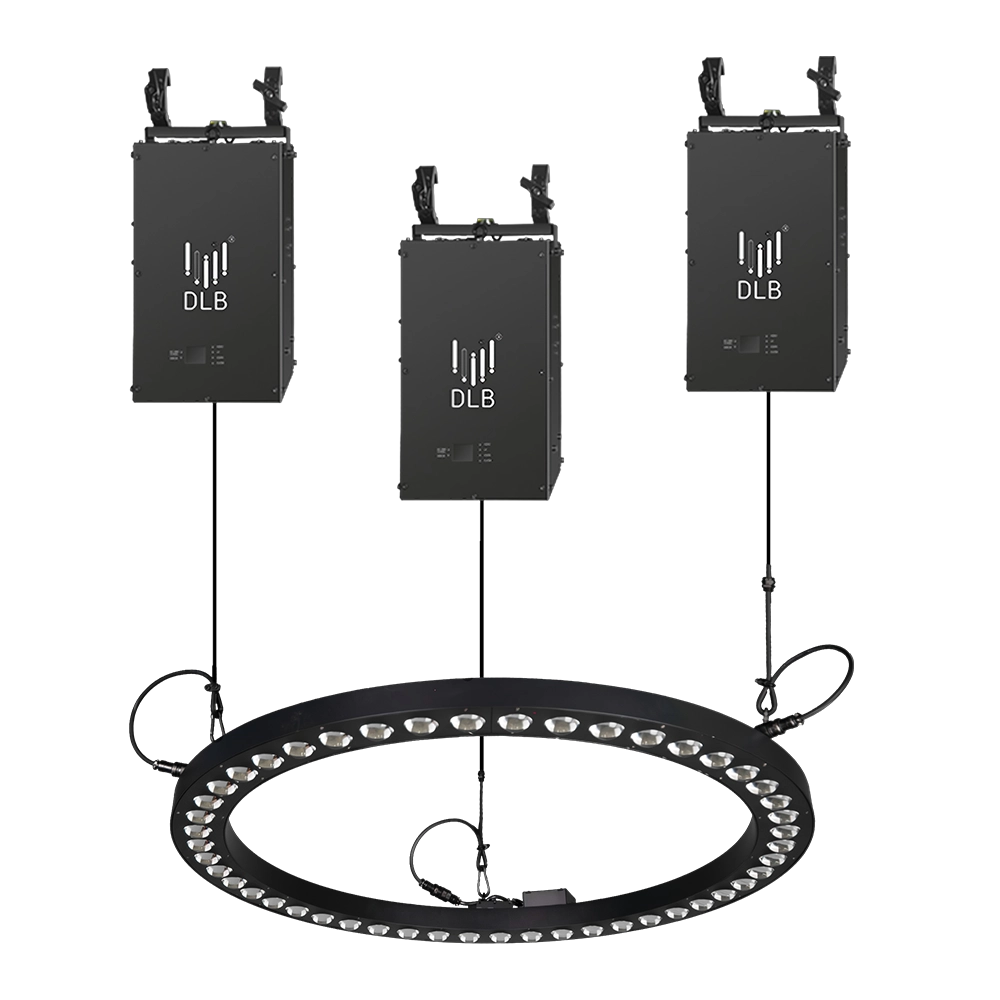
Kinetic Halo Ring——Ideal for a wide range of large-scale events: commercial spaces, TV shows, concerts, nightclubs, and various other settings.
Experience dynamic illumination with the FENG-YI Kinetic Halo Ring. This versatile kinetic light is perfect for large-scale events—commercial spaces, TV shows, concerts, and nightclubs—delivering stunning kinetic ring light effects that captivate every audience.
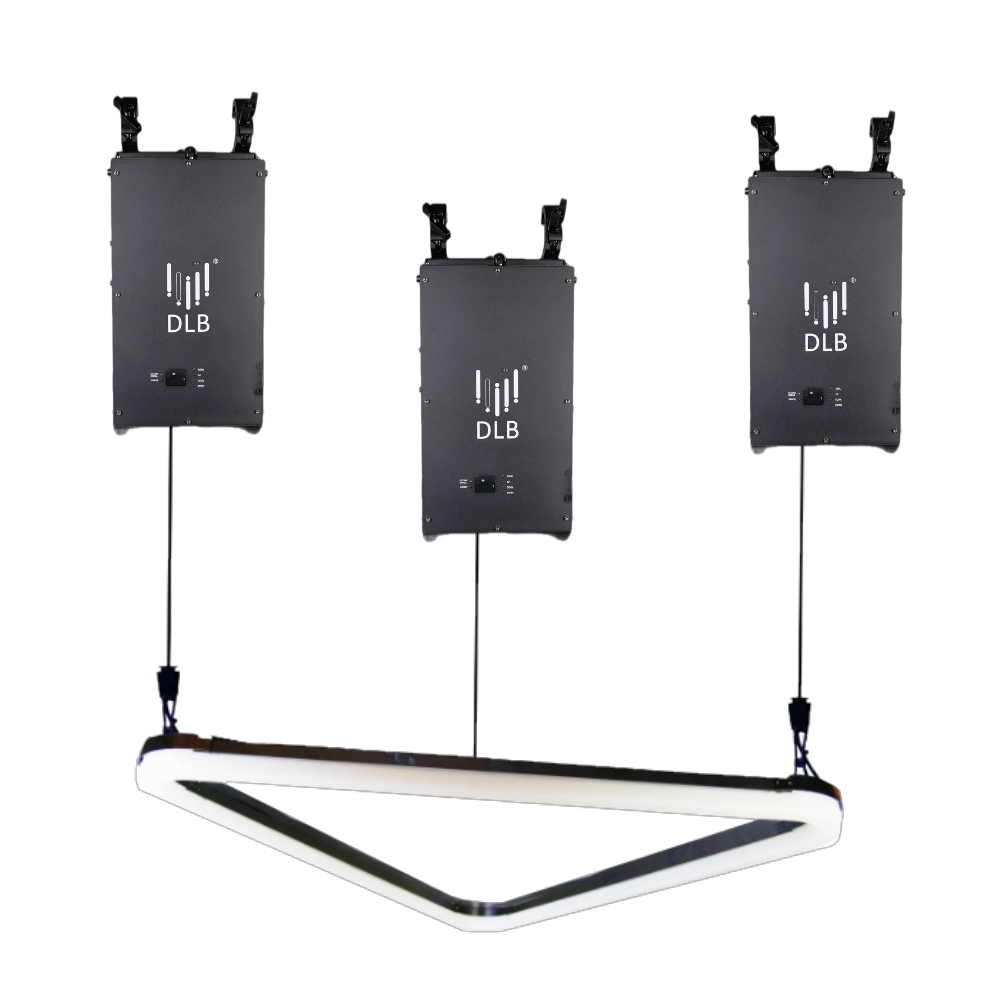
Kinetic Arc Light——Ideal for a wide range of large-scale events: commercial spaces, TV shows, concerts, nightclubs, and various other settings.
FENG-YI’s Kinetic Arc Light is a kinetic triangle LED light panel designed for large-scale events. Perfect for commercial spaces, TV shows, concerts, and nightclubs, it delivers dynamic lighting effects that captivate audiences and elevate any setting. Ideal kinetic light solution.
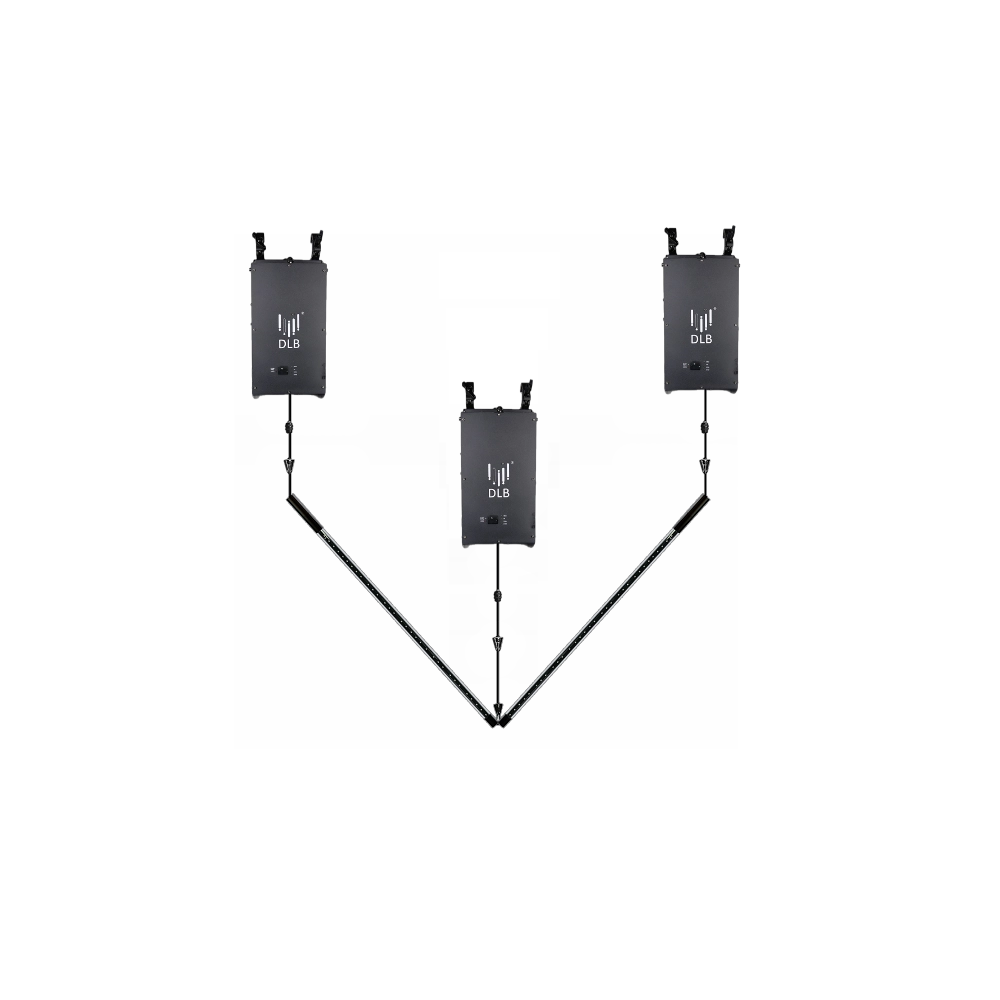
Kinetic Double Rod——Ideal for a wide range of large-scale events: commercial spaces, TV shows, concerts, nightclubs, and various other settings.
FENG-YI’s Kinetic Double Rod delivers dynamic kinetic light effects ideal for large-scale events—from concerts and nightclubs to TV shows and commercial spaces. Elevate your setup with this versatile kinetic light rod, designed for stunning visual impact and seamless integration.
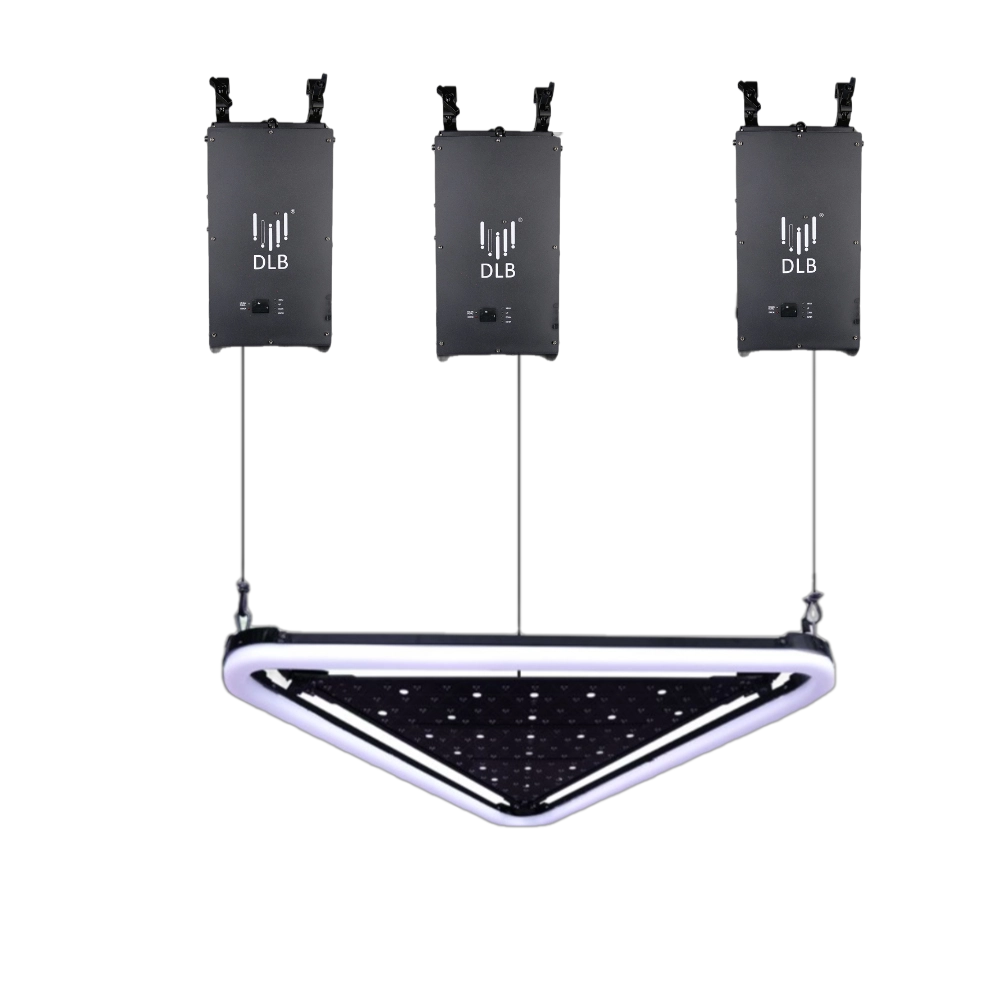
Kinetic Arc Panel——Ideal for a wide range of large-scale events: commercial spaces, TV shows, concerts, nightclubs, and various other settings.
FENG-YI’s Kinetic Arc Panel features dynamic kinetic light technology with kinetic triangle LED light panels, perfect for enhancing large-scale events like concerts, TV shows, nightclubs, and commercial spaces. Elevate your visual experience with innovative, high-impact lighting solutions.
Want to learn more about the latest updates?
Have questions or ready to illuminate your project? Reach out to our expert team today.
Rest assured that your privacy is important to us, and all information provided will be handled with the utmost confidentiality.
By clicking "Send your message," I agree to your processing my personal data.
To see how to withdraw your consent, how to control your personal data, and how we process it, please see our Privacy Policy and Terms of Use.

FENG-YI has been continuously innovating and has grown into a Kinetic Lights Manufacturer and solution provider with unique advantages.
Contact
+86 181 2785 5301
Address
Building 5, No. 34, Fuyuan Road, Jinghu IndustrialZone, Xinhua Town, Huadu District, Guangzhou, China.
© 2025 FENG-YI. All Rights Reserved.
Facebook
Instagram
YouTube
TikTok