








Choosing LEDs and Drivers for Waterproof Profile Lights
This in-depth guide explains how to choose LEDs and drivers for waterproof profile lights. It covers IP ratings, LED chip selection, driver types and dimming, thermal management for sealed fixtures, optical choices, installation best practices, testing and certifications, procurement checklists, and practical product comparisons to help designers, specifiers, and buyers make reliable decisions.
- Practical Guide to LEDs and Drivers for Moisture-Proof Profiles
- Understanding IP Ratings and Environmental Requirements for Waterproof Profile Light
- Choosing LED Chips: Color, Efficiency, and Longevity for Waterproof Profile Light
- Drivers for Waterproof Profile Lights: Types, Dimming, and Protection
- Thermal Management and Mechanical Design for Sealed Profile Fixtures
- Optical Design and Diffusers for Uniform Waterproof Profile Light
- Installation, Sealing, and Connectors for Field Reliability
- Recommended LED + Driver Combinations for Common Waterproof Profile Light Applications
- Testing, Certifications, and Quality Validation
- Since its establishment in 2011, FENG-YI has been continuously innovating and has grown into a creative kinetic light manufacturing service provider with unique advantages. The company is committed to exploring new lighting effects, new technologies, new stage designs, and new experiences. Through professional Kinetic Light art solutions, we empower emerging performance spaces, support the development of new performance formats, and meet the diverse needs of different scenarios.
- FENG-YI's Competitive Advantages and Kinetic Lighting Product Summary for Waterproof Profile Light Projects
- Procurement Checklist: What to Ask Before You Buy a Waterproof Profile Light
- Conclusion and Next Steps
- Frequently Asked Questions (FAQ)
- 1. What IP rating do I need for an outdoor waterproof profile light?
- 2. Can I place the LED driver inside a sealed waterproof profile light?
- 3. How important is LM-80 testing for LEDs used in waterproof fixtures?
- 4. Which dimming protocol should I use for kinetic waterproof profile lights?
- 5. How do I ensure color consistency along a continuous waterproof profile light?
- 6. What routine maintenance is required for waterproof linear fixtures?
- Contact & Product Inquiry
- References
Practical Guide to LEDs and Drivers for Moisture-Proof Profiles
Waterproof profile light is a common search for designers and procurement teams specifying linear lighting for wet, outdoor, or high-humidity environments. Selecting the correct LED chips and drivers is critical to ensure longevity, consistent color, safe operation, and compliance. This guide explains the key technical considerations — IP ratings, LED performance metrics (LM-80/TM-21), driver topology, dimming protocols, thermal and mechanical design for sealed fixtures, and procurement checks you should require when you buy waterproof profile lights.
Understanding IP Ratings and Environmental Requirements for Waterproof Profile Light
IP (Ingress Protection) ratings define how well an enclosure resists solids and liquids. For waterproof profile lights you will most often see IP65, IP66, IP67, and IP68. Choose the rating based on actual exposure: occasional splashes, rain and wind-driven water, temporary immersion, or continuous immersion.
| IP Code | Typical Meaning | Common Application for Profile Lights |
|---|---|---|
| IP65 | Dust tight and protected against water jets | Outdoor facades under eaves, sheltered canopies |
| IP66 | Dust tight and protected against powerful water jets | Exposed facades, marine-facing exteriors |
| IP67 | Protected against temporary immersion (up to 1 m) | Ground-level uplights, short-term immersion risks |
| IP68 | Protected against prolonged immersion under conditions specified by manufacturer | Submersible or continuous immersion fixtures (e.g., pools, fountains) |
Source standards for IP: IEC/ISO 60529. Consider also IK impact rating for vandal-prone locations and salt-spray resistance for marine environments.
Choosing LED Chips: Color, Efficiency, and Longevity for Waterproof Profile Light
LED chip selection determines initial output, efficacy (lm/W), color quality (CRI, CCT), and lumen maintenance. For sealed profile lights, prefer LED modules with documented LM-80 test data and TM-21 life projections; these allow realistic L70/L80 lifetime estimates. Key specifications to request from manufacturers or suppliers:
- LM-80 test report and TM-21 projection method used
- Correlated Color Temperature (CCT) options and 3-step MacAdam or tighter binning
- Color Rendering Index (CRI) or TM-30 if available — CRI ≥ 90 for retail/art lighting
- Rated luminous flux and luminous efficacy (lm/W) at specified drive current and temperature
- Maximum junction temperature (Tj) and recommended PCB thermal path
Because sealed fixtures limit convection, choose LEDs rated for higher junction temps and prioritize thermal conduction paths (see thermal management section). When uniform white lines are critical, select well-binned LEDs or integrated LED strips designed for homogeneous illumination.
Drivers for Waterproof Profile Lights: Types, Dimming, and Protection
Driver selection influences safety, dimming compatibility, reliability, and total system efficiency. For waterproof profile lights you’ll typically choose between constant-current (CC) and constant-voltage (CV) drivers. Most linear LED arrays use constant-current drivers feeding LED modules; some pre-assembled strips use constant-voltage drivers (e.g., 24V) with onboard current regulation.
- Driver topology: CC vs CV — match to the fixture’s LED arrangement and manufacturer recommendation.
- Dimming interfaces: 0–10V, DALI, DMX/RDM, PWM, or phase-cut. Choose driver protocols aligned with control system and scene needs (e.g., DMX for stage/kinetic lighting).
- Waterproofing: Use drivers rated for the installation environment or install drivers in a dry, accessible enclosure. Outdoor drivers should have an IP65+ enclosure or be remote-mounted indoors.
- Protections: Over-voltage, over-current, short-circuit, and surge protection (varistor/surge protector). For exterior installations, include surge protection to guard against lightning-induced transients.
- Efficiency and thermal derating: Look for drivers with ≥88–92% efficiency and specify ambient temperature derating curves.
Safety and compliance: request driver certifications (UL 8750, EN/IEC 61347-2-13, CE) and verify insulation and grounding provisions. For stage/kinetic projects, drivers with DMX or Art-Net compatibility and professional control features (RDM, multiple channels) are often required.
Thermal Management and Mechanical Design for Sealed Profile Fixtures
Heat is the primary enemy of lifespan in sealed LED fixtures. A waterproof profile light cannot rely on airflow for cooling—design must move heat through conduction to the fixture body and then to ambient by radiation and conduction. Important design points:
- Aluminum profiles as heat sinks: maximize contact area between LED PCB and aluminum extrusions; use thermally conductive adhesives or pads.
- LED drive current: running LEDs at lower drive current increases lifetime; consider higher-efficiency chips at lower mA to reduce thermal load.
- Potting compounds vs silicone sealants: potting improves waterproofing but reduces heat dissipation; choose thermally conductive potting for submerged or high-humidity fixtures.
- Driver placement: remote-mount drivers away from sealed module when possible; if driver is inside, ensure driver is qualified for high ambient temperatures and conforms to IP rating.
Measurement: require supplier thermal maps (Tc point, Tj estimates) and measured lumen output at expected ambient temperature to validate performance.
Optical Design and Diffusers for Uniform Waterproof Profile Light
Optical treatment determines visual uniformity and glare. For sealed linear fixtures you can choose between micro-prismatic diffusers, opal diffusers, or integrated lenses. Consider:
- Beam shaping: narrow lenses for accent, wide opal diffusers for continuous wash
- Visual seam control: LED pitch and diffuser thickness determine pixilation; increase LED density or use light-guide designs for fully homogeneous lines
- Material selection: UV-stable polycarbonate or PMMA for long-term outdoor use; for underwater use, materials must be certified for prolonged immersion
Spec out target lux or lumens per meter and require photometric files (IES/LM-63) from the manufacturer for real-world validation.
Installation, Sealing, and Connectors for Field Reliability
Installation details often determine long-term success. Key items to specify when buying waterproof profile lights:
- Cable glands and sealed connectors rated for the IP level (IP67/68-rated connectors for frequent wetting or immersion)
- Potted joints or sealed end-caps designed for thermal expansion and UV exposure
- Accessible service points: modular designs that allow driver replacement without breaking seals (if drivers are internal)
- Cable routing and strain relief to avoid stress on seals and connectors
For kinetic lighting and stage applications, combine robust mechanical mounting with serviceability: quick-release profiles and waterproof connectors that are durable under repeated movement.
Recommended LED + Driver Combinations for Common Waterproof Profile Light Applications
| Application | Suggested IP | LED Choice | Driver Type | Dimming/Control |
|---|---|---|---|---|
| Outdoor architectural wash (sheltered) | IP65 | High-efficacy SMD LEDs, LM-80 data, 3000–4000K, CRI 80–90 | Remote CC or CV driver in IP65 enclosure | 0–10V or DALI |
| Exposed facade/awning | IP66 | Higher-density SMD or COB, CRI 80–90 | IP66-rated CC driver with surge protection | DALI or DMX for scene control |
| Ground uplights / short immersion | IP67 | Waterproof encapsulated LEDs with thermal pad | Remote driver; if internal, must be IP67-rated and thermally qualified | DMX/Art-Net for dynamic scenes |
| Submersible (pools/fountains) | IP68 | Encapsulated LEDs with marine-grade materials | Remote driver in dry location; use waterproof cable glands and connectors | DMX or proprietary submerged-safe control systems |
Testing, Certifications, and Quality Validation
To minimize risk, require the following test documentation from vendors:
- LM-80 reports for LED chips and TM-21 lumen maintenance projections
- IES photometric files (IES/LM-63)
- IP test reports per IEC/ISO 60529 for assembled fixtures
- Driver safety certifications (UL, CE, ENEC) and surge protection specs
- Salt spray (ASTM B117) or marine corrosion treatment when applicable
- EMC and harmonics tests for installations sensitive to interference (required for broadcast/studio environments)
Insist on factory test photos, batch traceability, and a defined warranty covering ingress failure and lumen depreciation.
Since its establishment in 2011, FENG-YI has been continuously innovating and has grown into a creative kinetic light manufacturing service provider with unique advantages. The company is committed to exploring new lighting effects, new technologies, new stage designs, and new experiences. Through professional Kinetic Light art solutions, we empower emerging performance spaces, support the development of new performance formats, and meet the diverse needs of different scenarios.
Located in Huadu District, Guangzhou, the company currently has 62 employees, including an 8-member professional design team and 20 highly experienced technical service staff. FENG-YI has become a High Quality user of Madrix software in mainland China, offering both on-site installation & programming as well as remote technical guidance services for Kinetic Light projects.
With a total area of 6,000㎡, FENG-YI owns China’s largest 300㎡ art installation exhibition area and operates 10 overseas offices worldwide. Our completed Kinetic Light projects have successfully reached over 90 countries and regions, covering television stations, commercial spaces, cultural tourism performances, and entertainment venues.
Today, FENG-YI is recognized as a leading kinetic lights scene solution provider in the industry, delivering innovative lighting experiences that integrate technology and creativity.
FENG-YI's Competitive Advantages and Kinetic Lighting Product Summary for Waterproof Profile Light Projects
FENG-YI combines product engineering, system integration, and live performance experience — a strong fit for waterproof profile light projects that interact with stage control, DMX networks, or require bespoke motion. Advantages include:
- Integrated Kinetic Lighting expertise and Madrix-powered programming suitable for dynamic outdoor facades and stage installations
- In-house design team and technical service staff for site surveys, driver integration, and remote troubleshooting
- Large exhibition/testing area for prototyping and photometric validation prior to shipment
- Global service network across 10 overseas offices to support installation and maintenance
Main products relevant to waterproof profile light applications include waterproof linear profiles with tested IP ratings, encapsulated LED modules with LM-80 documentation, and control-capable drivers compatible with professional protocols like DMX and DALI.
Procurement Checklist: What to Ask Before You Buy a Waterproof Profile Light
When evaluating suppliers, ask for:
- IP and IK test reports for the assembled fixture
- LM-80/TM-21 data for the sample LED batch and an estimated L70 lifetime at your expected ambient
- Driver datasheets, certifications, and dimming protocol compatibility
- Photometric files and measured lumen output at installed orientation and expected temperature
- Serviceability details: how to replace drivers or LEDs without compromising IP rating
- Warranty terms including ingress warranties and lumen depreciation coverage
Require on-site or remote commissioning support for complex control systems and kinetic installations — a key advantage offered by suppliers with experience in stage lighting and broadcast projects.
Conclusion and Next Steps
Specifying the right LED chips and drivers for waterproof profile light installations means balancing IP rating, thermal strategy, photometrics, control capability, and long-term serviceability. Use LM-80/TM-21 data, insist on relevant IP/IK testing, select drivers and dimming protocols that match your control system, and validate thermal performance for sealed fixtures. For kinetic and stage-enabled projects, work with suppliers that provide both hardware and programming support.
If you would like help specifying waterproof profile lights for a façade, stage, or wet-area installation — or to explore Kinetic Lighting solutions and on-site support — contact FENG-YI’s technical team to discuss product options, site testing, and full-system integration. View our waterproof linear profiles and professional driver options, or request a project consultation.
Frequently Asked Questions (FAQ)
1. What IP rating do I need for an outdoor waterproof profile light?
Choose IP65 for sheltered outdoor locations, IP66 for fully exposed areas, IP67 for fixtures that might experience temporary immersion, and IP68 for continuous immersion (pools/fountains). Confirm the assembled fixture’s IP test report, not just individual components.
2. Can I place the LED driver inside a sealed waterproof profile light?
Yes, but only if the driver is rated for the fixture’s expected ambient temperature and sealed environment (IP-rated and with appropriate heat tolerance). In many cases, remote mounting of drivers in a dry enclosure is preferred for serviceability and thermal performance.
3. How important is LM-80 testing for LEDs used in waterproof fixtures?
Very important. LM-80 gives measured lumen depreciation data for a given LED package; using TM-21 projection, manufacturers estimate lifetime (L70/L80). Because sealed fixtures raise junction temperatures, LM-80 data and Tc-point testing at representative temperatures are essential for reliable lifetime projection.
4. Which dimming protocol should I use for kinetic waterproof profile lights?
For dynamic, stage-like effects use DMX/Art-Net. For architectural dimming, 0–10V or DALI are standard. Ensure both the driver and the control system support the chosen protocol and that any waterproof connectors are compatible with control cabling.
5. How do I ensure color consistency along a continuous waterproof profile light?
Specify LEDs with tight binning (3-step SDCM or better), use the same production batch, request a color-match test from the supplier, and choose optical diffusers or light-guide designs that minimize pixelation. For long runs, consider sectional power feeds to reduce voltage drop and maintain uniform output.
6. What routine maintenance is required for waterproof linear fixtures?
Inspect seals and cable glands annually, check for condensation or water ingress, clean diffusers with appropriate cleaners, and verify driver output and surge protection. For installations in saline or polluted environments, increase inspection frequency and consider anti-corrosion treatments.
Contact & Product Inquiry
To discuss waterproof profile light specifications, driver integration, or kinetic lighting system design with FENG-YI, request product datasheets, photometric reports, or a site consultation via our sales team. We provide on-site commissioning, Madrix programming, and remote technical support for international projects.
References
- IEC/ISO 60529 — Degrees of protection provided by enclosures (IP Code). https://www.iso.org/standard/63513. (accessed 2025-11-30)
- IES — LM-80 and TM-21 guidance for projecting LED lumen maintenance. https://www.ies.org/standards/ (accessed 2025-11-30)
- U.S. Department of Energy — Solid-State Lighting: LED Luminaire Lifetime and Reliability. https://www.energy.gov/eere/ssl/solid-state-lighting (accessed 2025-11-30)
- UL 8750 — Standard for Light Emitting Diode (LED) Equipment for Lighting Applications. https://standardscatalog.ul.com/standards/en/standard_8750 (accessed 2025-11-30)
- EN/IEC 61347 — Lamp control gear standards and safety requirements. https://www.iec.ch/ (accessed 2025-11-30)
- TE Connectivity — IP67/68 waterproof connectors overview and selection guidance. https://www.te.com (accessed 2025-11-30)
- ASTM B117 — Salt Spray (Fog) testing procedure for corrosion resistance. https://www.astm.org/Standards/B117.htm (accessed 2025-11-30)
Tags
motorized kinetic light sculpture
motorized kinetic light sculpture
Kinetic Crystal light string
Kinetic Crystal light string
Kinetic Cloud-shaped lamp
Kinetic Cloud-shaped lamp
Kinetic light sculpture
Kinetic light sculpture
kinetic light exhibit for events
kinetic light exhibit for events
Kinetic Beam Ball
Kinetic Beam Ball
Recommended for you
Future innovations in kinetic lighting technology
IP Ratings Explained for Waterproof Profile Lights
Buying guide: choosing kinetic light fixtures
How Kinetic Arc Light Works: Mechanism & Design
Prdoucts Categories
Question you may concern
Customization/OEM Services
What is the production cycle for customized products? Is sample trial production supported?
The production cycle for regular customization (e.g., appearance logo, parameter fine-tuning) is 15-20 days, and the cycle for complex function customization (e.g., development of a new elevating structure) is 30-45 days. Sample trial production is supported. The sample fee is charged based on the customization cost (the fee can be deducted from the payment after bulk ordering). The trial production cycle is 7-10 days, and bulk production will start only after the customer confirms the sample is qualified.
Wedding & Parties Lighting Solutions
How is safety ensured?
Encoder closed-loop control, emergency stop circuits, software/hardware limit switches, load monitoring, and collision-avoidance zones. A comprehensive pre-performance checklist is provided.
Products
The fixture overheats and shuts down. What should I do?
Resolve overheating issues:
1. Environment Check: Ensure the operating temperature ≤60℃; move the fixture away from heat sources (e.g., stage heaters) and ensure 50cm clearance around the fan grille.
2. Fan Maintenance: Clean the fan and fan grille with compressed air (remove dust buildup); check if the fan runs when the fixture is powered on (replace fan if silent).
3. Protection Threshold: Enter "Settings → Temperature Protection" to adjust the threshold (default 60℃, max 80℃) if the environment requires higher operating temperatures.
The X/Y axis moves abnormally (jitter, no response). What causes this?
Address the issue as follows:
1. Mechanical Check: Open the fixture (after power-off) to inspect if the X/Y axis belts are loose or broken; re-tighten or replace belts if needed.
2. Optical Coupling Calibration: Enter "Settings → Motor Calibration → X/Y Axis" to adjust the offset (-128~+127) or enable "Optical Coupling" (auto-corrects step loss).
3. Reset & Restart: Press "Menu → Reset → XY Reset" to reposition the axes; if no response, check the X/Y axis photoelectric switches (replace if "X/Y Hall Error" appears in the error menu).
You may also like
700W Waterproof profile Light FY-SP-20005
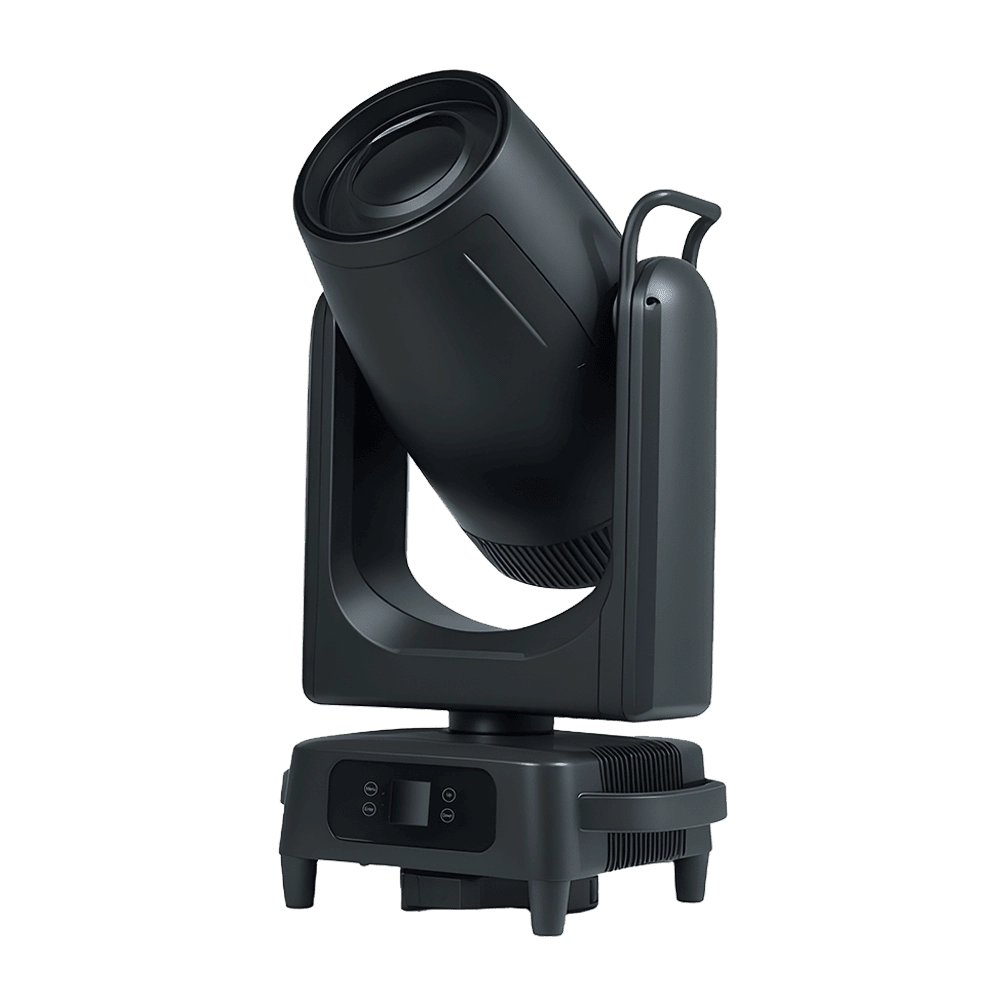
The 700W Waterproof Type B Cutting Light is a professional-grade stage lighting fixture designed for high-performance visual effects in both indoor and outdoor scenarios. Equipped with a 700W light source, it features precise cutting functionality (8 cutting blades), multi-channel DMX512 control (34/39/56 CH optional), and flexible operation modes (DMX, Master-Slave, and Auto).
With a 540° horizontal pan range and 270° vertical tilt range, it delivers dynamic beam positioning, while built-in overheat protection, voltage stability control, and IP20 dust resistance ensure reliable operation.
The fixture supports three working modes (Standard for outdoors, Theater for high-ceiling interiors, and Film & Television for small indoor spaces) and offers an intuitive LED display with Chinese/English switching, making it ideal for professional performances, concerts, film shoots, and event venues.
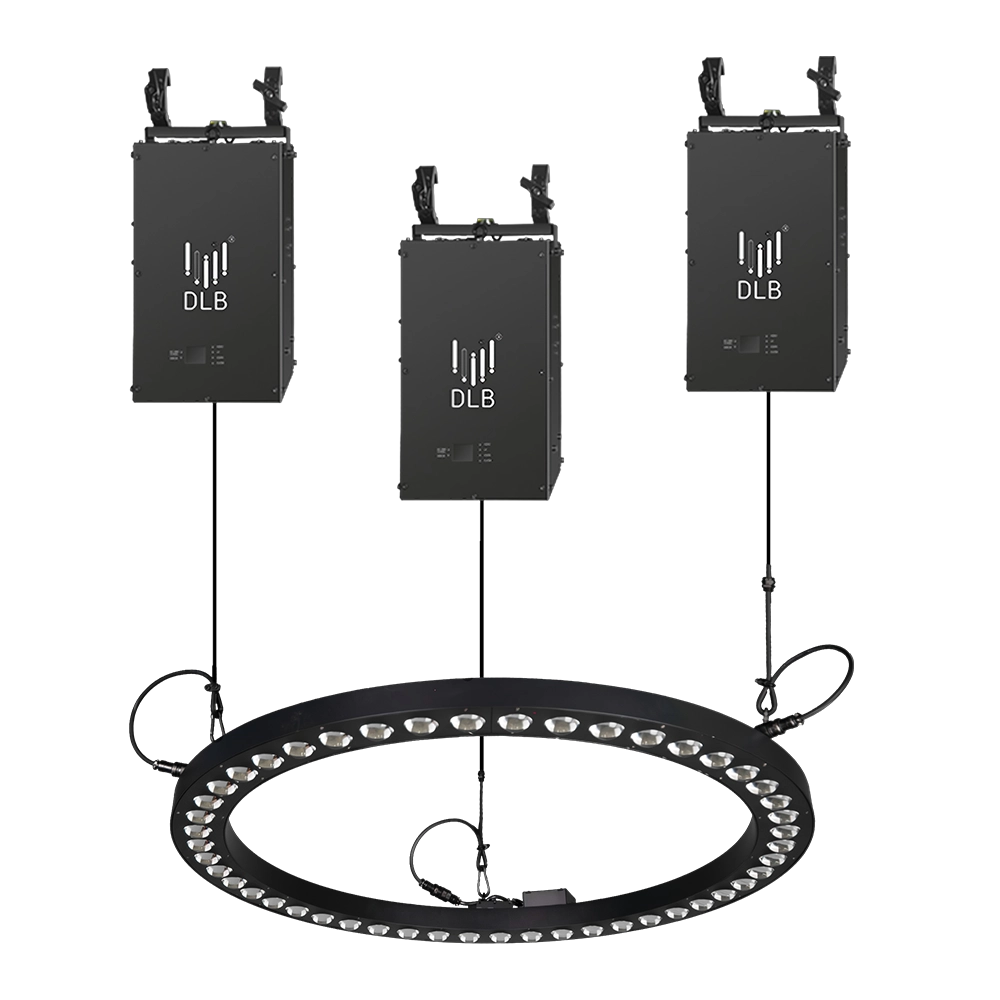
Kinetic Halo Ring——Ideal for a wide range of large-scale events: commercial spaces, TV shows, concerts, nightclubs, and various other settings.
Experience dynamic illumination with the FENG-YI Kinetic Halo Ring. This versatile kinetic light is perfect for large-scale events—commercial spaces, TV shows, concerts, and nightclubs—delivering stunning kinetic ring light effects that captivate every audience.
Kinetic Arc Light——Ideal for a wide range of large-scale events: commercial spaces, TV shows, concerts, nightclubs, and various other settings.
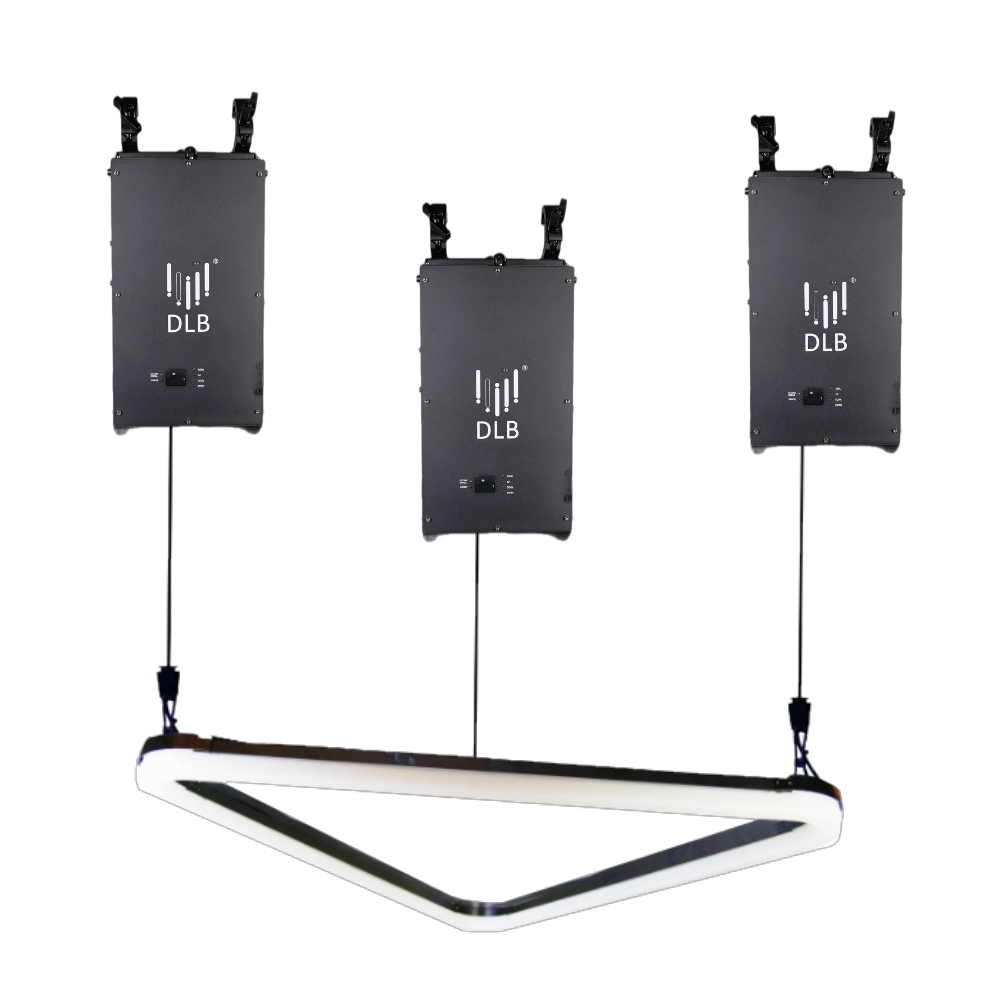
FENG-YI’s Kinetic Arc Light is a kinetic triangle LED light panel designed for large-scale events. Perfect for commercial spaces, TV shows, concerts, and nightclubs, it delivers dynamic lighting effects that captivate audiences and elevate any setting. Ideal kinetic light solution.
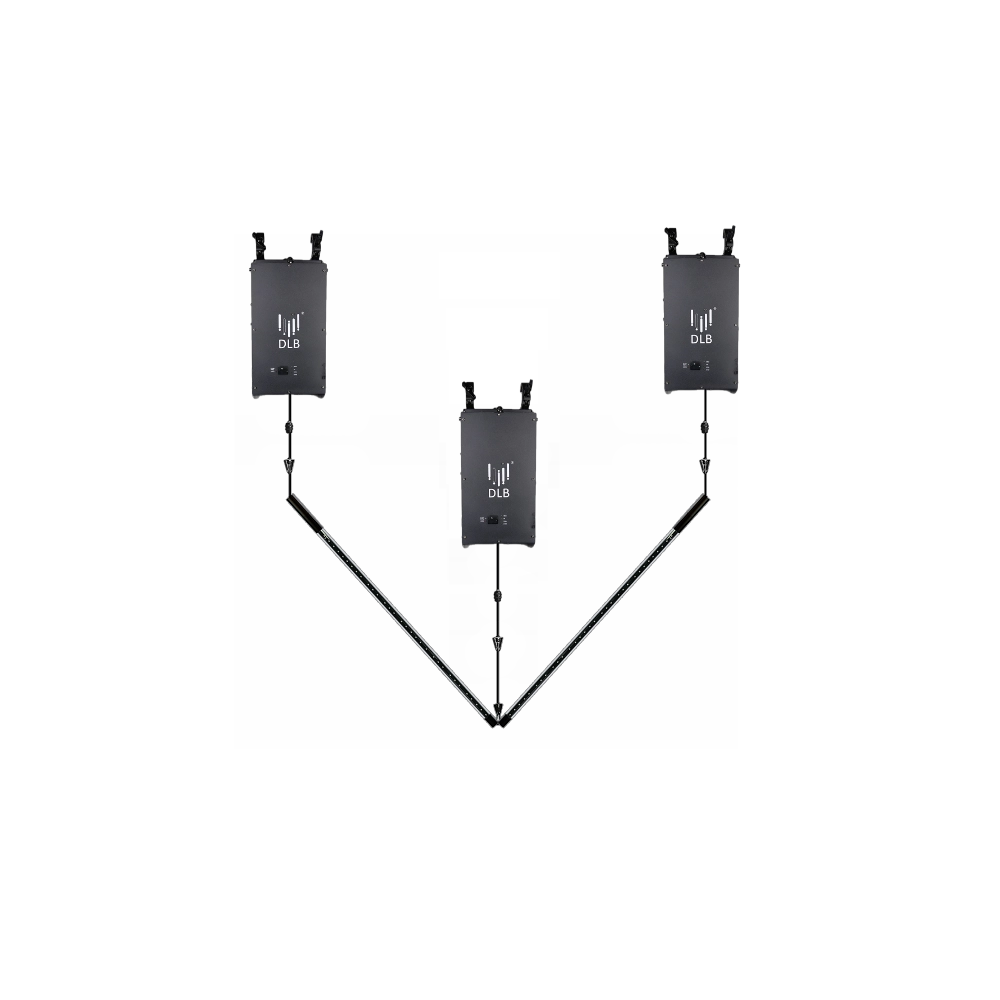
Kinetic Double Rod——Ideal for a wide range of large-scale events: commercial spaces, TV shows, concerts, nightclubs, and various other settings.
FENG-YI’s Kinetic Double Rod delivers dynamic kinetic light effects ideal for large-scale events—from concerts and nightclubs to TV shows and commercial spaces. Elevate your setup with this versatile kinetic light rod, designed for stunning visual impact and seamless integration.
Want to learn more about the latest updates?
Have questions or ready to illuminate your project? Reach out to our expert team today.
Rest assured that your privacy is important to us, and all information provided will be handled with the utmost confidentiality.
By clicking "Send your message," I agree to your processing my personal data.
To see how to withdraw your consent, how to control your personal data, and how we process it, please see our Privacy Policy and Terms of Use.

FENG-YI has been continuously innovating and has grown into a Kinetic Lights Manufacturer and solution provider with unique advantages.
Contact
+86 181 2785 5301
Address
Building 5, No. 34, Fuyuan Road, Jinghu IndustrialZone, Xinhua Town, Huadu District, Guangzhou, China.
© 2025 FENG-YI. All Rights Reserved.
Facebook
Instagram
YouTube
TikTok